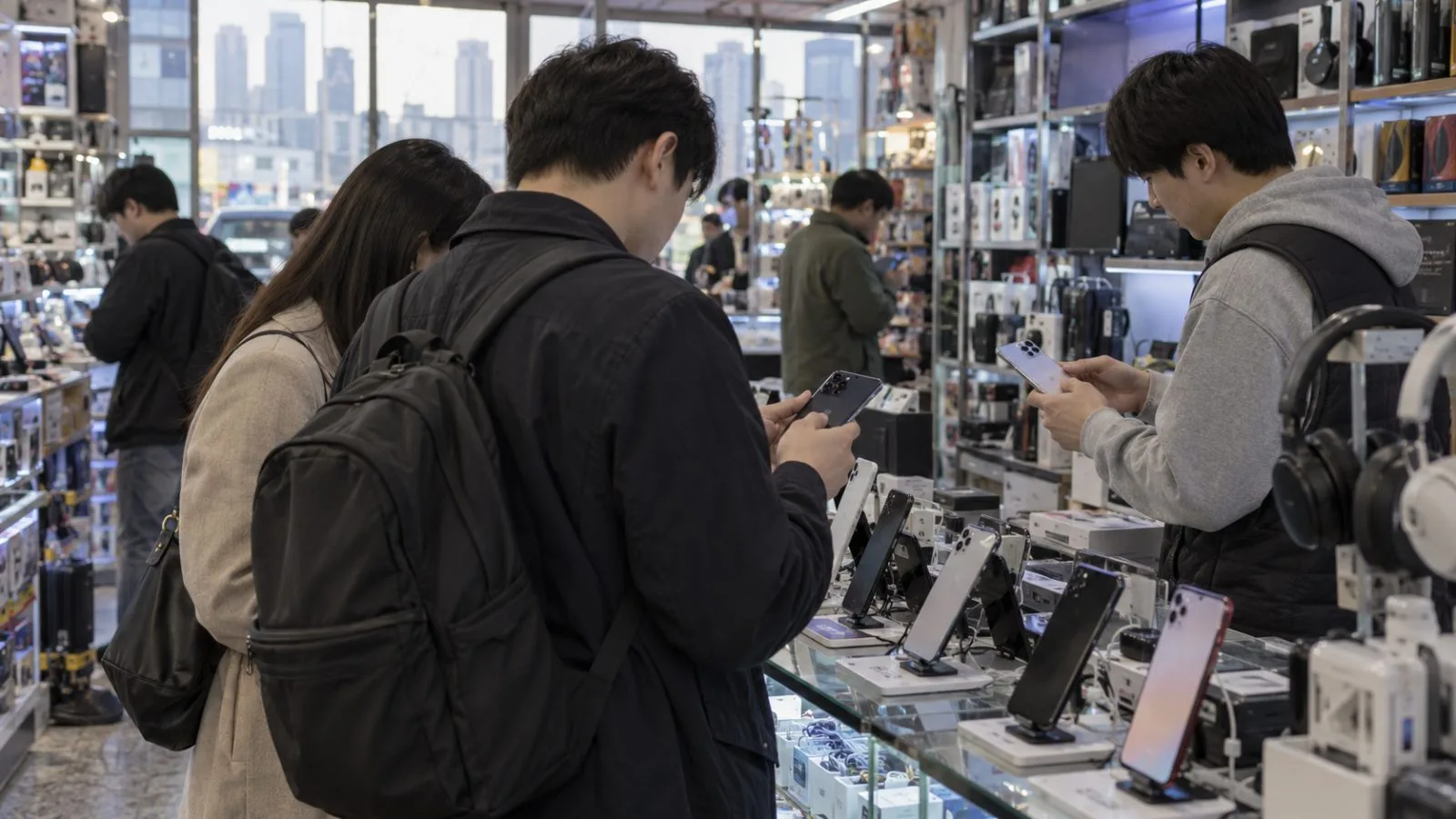
Samsung and Apple gained share in a shrinking global smartphone market in the third quarter of 2026, while preliminary estimates put year-over-year shipment losses between 20% and 22% amid rising memory costs.
IDC estimated global shipments at 255.3 million units, down 22% from a year earlier. The firm said the drop exceeded any previous quarterly year-over-year contraction in its records. Counterpoint Research and Omdia each estimated a 20% decline; Counterpoint said its figure represented the weakest third-quarter performance since 2012. All three estimates are preliminary.
IDC's preliminary figures showed Samsung shipped 57.8 million phones, down 5.8% year over year, while its share rose to 22.6% from 18.7%. Apple shipped 57.3 million, a 4% decline, as its share increased to 22.4% from 18.2%.
Shipments fell more sharply at three other major phone makers. Xiaomi shipped 30.7 million units, down 29.2%; OPPO shipped 25.6 million, down 34.5%; and vivo shipped 19.1 million, down 31.5%.
IDC said memory costs were about 350% higher in the third quarter than a year earlier. Separately, Counterpoint estimated that smartphone retail prices had risen 20% so far in 2026 as manufacturers passed higher component costs to consumers. The figures use different comparisons: one tracks memory costs against a year earlier, while the other measures retail prices over 2026 to date.
Counterpoint has linked tighter consumer-electronics supply and higher DRAM and NAND prices to memory suppliers directing more resources toward AI data-center demand. It said mass-market phones and price-sensitive buyers were feeling the greatest cost pressure. Counterpoint senior analyst Shilpi Jain said the squeeze was extending the time people kept their phones, while more shoppers considered refurbished models or higher-value devices.
Francisco Jeronimo, IDC's vice president for Worldwide Devices, said manufacturers with dependable access to components and more premium models were better placed to gain share as the market contracted. IDC expects growth to remain constrained through 2027, with a recovery possible in 2028 at the earliest. Counterpoint said a meaningful rebound in shipment volumes depends on improved memory supply and lower component costs.