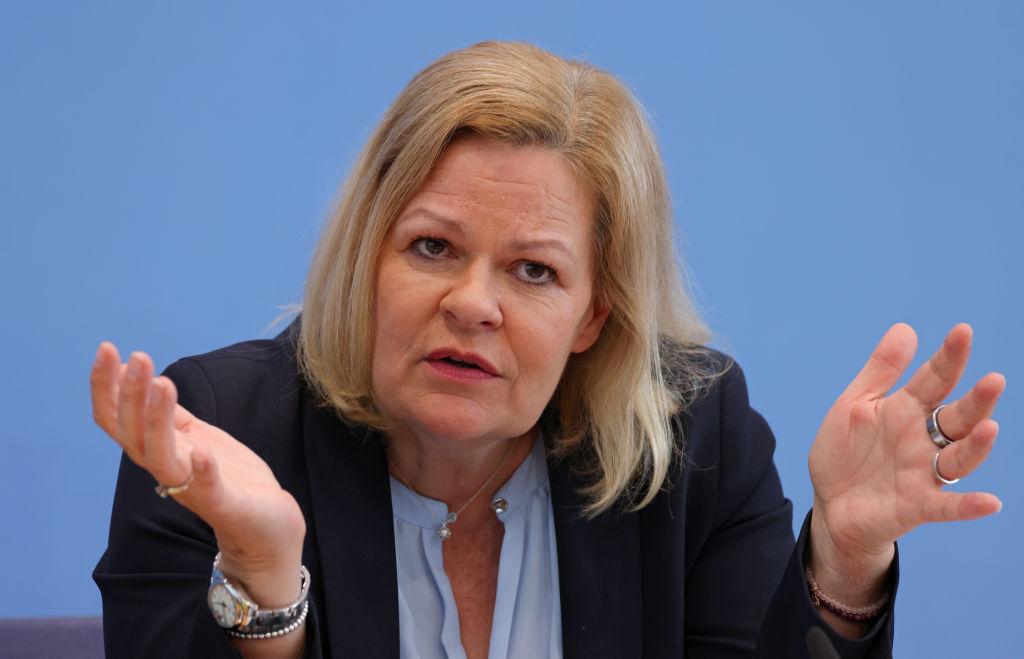
Germany’s Interior Minister, Nancy Faeser, revealed chilling details about the Saudi psychiatrist accused of the tragic car-ramming attack at a bustling Christmas market in Berlin. Faeser stated there are “striking signs” that the suspect, Taleb al-Abdulmohsen, suffers from a severe mental illness, leaving the nation grappling with unanswered questions.
Probe Highlights Suspect's Mental State
The devastating attack on December 20 claimed five lives and left over 200 people injured, shaking Germany during its festive season. Authorities apprehended Abdulmohsen at the scene and are now delving into his psychological history. Faeser confirmed the suspect’s social media presence revealed “tens of thousands of tweets,” which are yet to be thoroughly examined.
Speaking after a closed-door parliamentary committee meeting, Faeser acknowledged the complexity of the case, stating, “Such attackers do not fit any threat profile.” The absence of a clear motive complicates the investigation. Security agencies have been urged to adapt to the unpredictable nature of such acts, driven by individuals with “confused conspiracy theories” and psychological disturbances.
Calls for Reform in Tracking Threats
The Interior Minister emphasized the need for new tools to identify individuals who might pose such threats, underscoring that traditional profiling methods are insufficient. “Other indicators and action plans” are essential to mitigate risks, she said. German lawmakers are now debating policy changes aimed at addressing these gaps.
Social Media Speculation and Public Reaction
As the investigation unfolds, public opinion has ignited on social media platforms. Some expressed sympathy for the victims, while others questioned the handling of mental health cases in Germany. Twitter user @GiselaMuller45 wrote, “This is heartbreaking. We need better systems in place to help those struggling mentally.” Another user, @AhmedWrites, added, “Mental illness is no excuse for such violence. Where was the prevention?”
Others voiced concern over rising threats during festive events. User @BerlinCitizen23 shared, “Christmas markets should be a safe space. Why weren’t there better safeguards?” Meanwhile, @EuropeanWatcher89 stated, “Germany must act swiftly to address such vulnerabilities.” Some took a more compassionate tone, with @LenaThinks echoing, “Mental health crises are global; it’s time for serious reform.” Lastly, @GlobalVisionary argued, “A tragedy on this scale highlights our collective failure to detect the warning signs.”
The Road Ahead
The tragedy has sparked debates across Germany about the balance between civil liberties and security. Authorities face mounting pressure to deliver answers while ensuring similar incidents are prevented. The Christmas market attack stands as a stark reminder of the evolving challenges in safeguarding public spaces.