A paper in Nature describes four AutoDNA applications at Shanghai Jiao Tong University, spanning DNA synthesis, concurrent protocols, data storage and mutation detection.
AutoDNA links more than 20 types of instruments. The paper describes many autonomous laboratory systems as focused on one objective and relatively simple equipment arrangements. The researchers designed AutoDNA to coordinate diverse devices across complex workflows and assessed it in four applications. The work covered physical sample handling and multistep processes involving DNA synthesis, sequencing and data recovery.
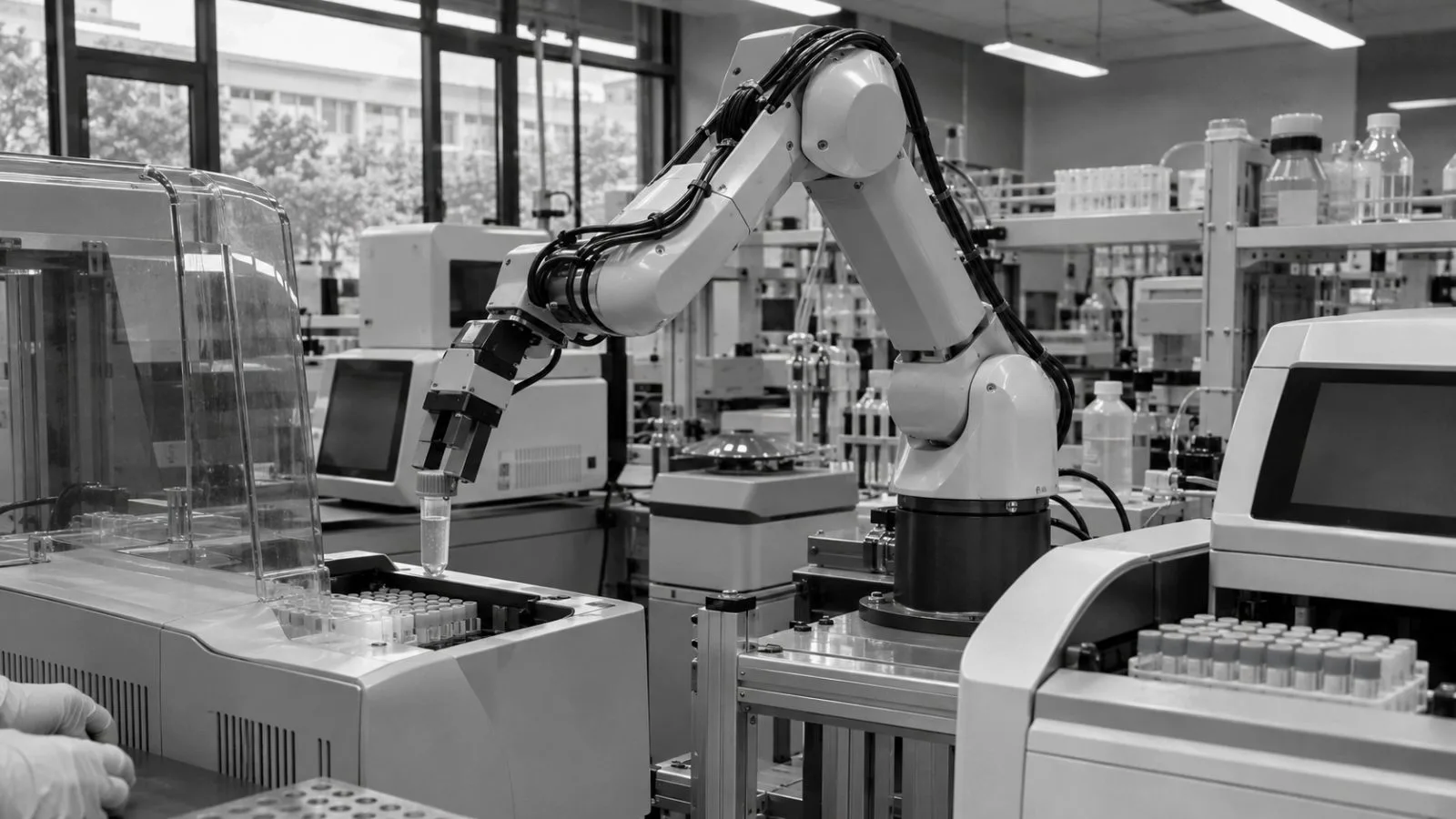
AutoDNA’s software agents build workflows, assess experimental results and translate plans into instrument commands, including by choosing reagents and protocol steps. During a run, robotic arms transfer samples from one instrument to another. Human involvement was limited to equipment maintenance, such as restocking reagents and labware.
The four applications included DNA-based data storage, detection of a genetic mutation, enzymatic DNA synthesis and concurrent protocols. For the storage trial, the system recovered the digital content exactly after it was read back from DNA. In another application, AutoDNA identified and confirmed KRAS G13D, a cancer mutation also found through clinical testing.
Shanghai Jiao Tong University counted 11,382 hardware operations during the complete experiment, which encoded the information and later retrieved it. The paper says projects of this kind can involve thousands of operations, including synthesis and sequencing. AutoDNA’s synthesis yields were comparable to results optimized by experts. In the concurrent-protocol test, execution was accelerated by 3.2-fold, the researchers reported.
The results cover separate measures across the four applications: data recovery, mutation detection, synthesis yield and concurrent execution.