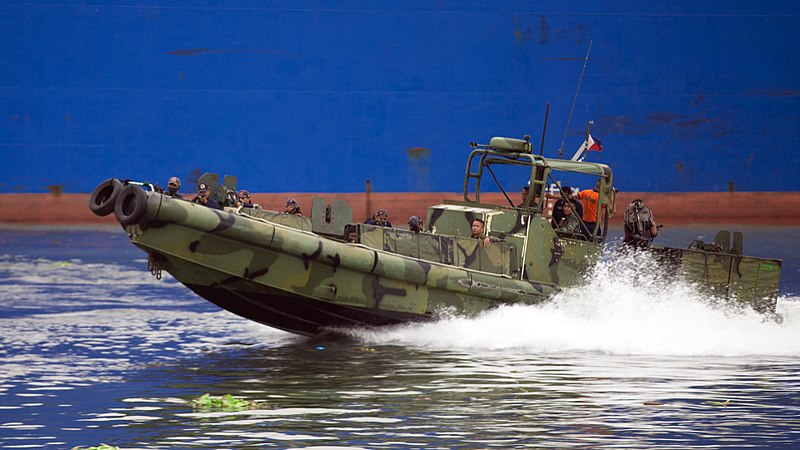
The Philippines and the United States launched their annual joint military drills this week. The three-week-long joint drills come amidst tensions in the region surrounding the disputed South China Sea.
The Philippines and the US armies launched the annual Salaknib joint exercises on Monday. The joint exercises include multiple small-arms live-fire drills, artillery, and mortar live-fire elements, as well as construction projects. The joint exercises follow Philippine President Ferdinand Marcos Jr.’s decision in February to expand access of the US to Philippine military bases.
“The scenarios would involve the defense of the Philippine archipelago from potential foreign aggressors,” Philippine Army Chief Lieutenant General Romeo Brawner told reporters after the opening ceremony. “Since this is an army-to-army exercise, we will focus on defense operations such as air defense and also our defense from the shorelines.”
Most of the joint drills will take place in Fort Magsaysay, the largest military camp in the Philippines and one of the military sites that the US has access to under the Enhanced Defense Cooperation Agreement with Manila. Under the agreement, the US can use the bases for joint training, pre-positioning of equipment, and building facilities, including runways, fuel storage, and military housing. The US, however, will not maintain a permanent military presence.
The Philippines has yet to reveal which additional bases it has granted the US access to. However, a former Philippine military chief said the bases included are in Luzon facing north toward Taiwan and in Palawan in southwestern Philippines near the disputed Spratly islands in the contested waters.
China claims most of the South China Sea as its territory, angering the neighboring countries that also have overlapping claims. An international tribunal ruled against Beijing, but China has since continued to assert its claims on the waters, including that in the Taiwan Strait.
Also, in February, Marcos Jr. said the Philippine military must focus on protecting the country’s territorial integrity at a time of growing disputes between China and the countries in the region, including the Philippines.
“I’m saying that your mission in the AFP has changed,” said Marcos Jr. referring to the Armed Forces of the Philippines during a speech to the army. “For many, many years we were able to maintain that peace and maintain that understanding with all of our neighbors. Now things have begun to change and we must adjust accordingly.”