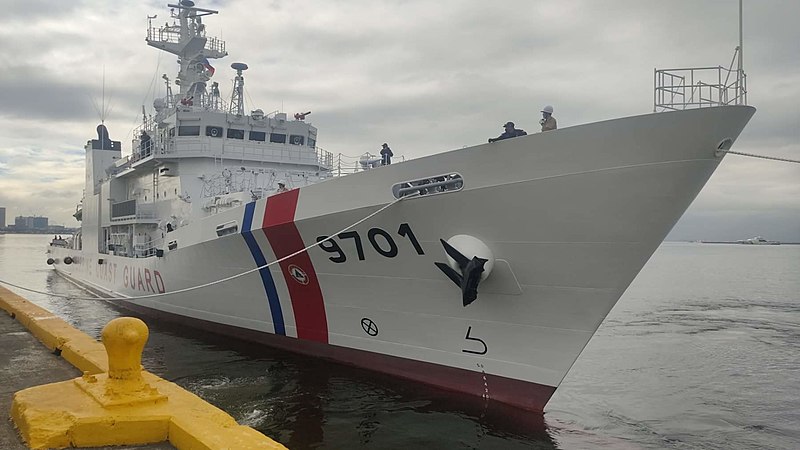
The Philippines and the United States are discussing the possibility of carrying out joint coast guard patrols in the disputed South China Sea. The move comes amidst recent incidents between Chinese and Philippine ships including the use of lasers by the Chinese Coast Guard on the Philippine Coast Guard.
The Philippine Coast Guard’s spokesperson on South China Sea issues Jay Tarriela told CNN Philippines on Monday that the discussions with Washington have advanced and that there is a high possibility of conducting joint patrols in the disputed waters.
Tarriela did not disclose any details on the timing or the scale of the joint patrols, but Tarriela’s comments follow the Pentagon’s announcement this month that the US and the Philippines have “agreed to restart joint maritime patrols in the South China Sea.”
“There is already a clear path of possibility since the Defense Department of the United States has also supported the joint patrol with the Philippine Navy and the US Navy so there is a certainty for this particular joint patrols to happen between the coast guard of both countries,” said Tarriela. “There is also a possibility that it will be conducted in the South China Sea in support of the freedom of navigation of the United States government.”
On Monday, Philippine Navy commander Rommel Jude Ong told Reuters that a coast guard deployment in the South China Sea instead of the navy will “mitigate any miscalculation and prevent China from finding an excuse to escalate tension” in the disputed waters.
China claims the majority of the South China Sea, which has angered the neighboring countries that have overlapping claims to the waters. A 2016 tribunal ruled against China’s claims, saying that they have no basis in international law. Beijing has ignored the ruling and increased its assertion of control over most of the waters.
Over the weekend, Philippine President Ferdinand Marcos Jr. said the country will not cede “an inch” of its territory as Manila continues to protest against what it described as China’s “aggressive activities” in the South China Sea.
“The country has seen heightened geopolitical tensions that do not conform to our ideals of peace and threaten the security and stability of the country, of the region, and of the world,” said Marcos in remarks at a military homecoming event.
“This country will not lose an inch of its territory. We will continue to uphold our territorial integrity and sovereignty in accordance with our constitution and with international law. We will work with our neighbors to ensure the safety and security of our peoples.”