


 Pakistan Declares Emergency in Khyber Pakhtunkhwa, Suspends Imran Khan’s PTI Government
  Zelenskiy Offers Russia Energy Truce Amid Trump Pressure
  North Korea Fires Ballistic Missiles as Tensions With South Korea Escalate
  Venezuela’s Machado Calls for Elections by July 2027
  Trump Sanctions International Criminal Court, Sparking EU Backlash
  Trump Calls for Zelenskyy Replacement Amid Russian Diesel Deal
  Trump Announces Russia-Ukraine Energy Ceasefire Amid U.S. Pressure on Kyiv
  Mahmoud Abbas Postpones Palestinian Elections to September 2027
  Yandex Data Center Hit by Drone Strike as Russia-Ukraine Cyber Infrastructure Attacks Escalate
  Russian Strikes Kill Six in Ukraine, Including Three in Kharkiv
  Houthis Warn Saudi Airports After Deadly Riyadh Attack
  Panama Declares Emergency After 7.7 Earthquake Triggers 200 Aftershocks
  Zelenskiy Slams US Over Deadly Russian Strikes on Ukraine
  Ripple Chairman Chris Larsen Donates $22.5 Million Ahead of US Midterms
  European Auto Stocks Rise as EU-China Trade Deal Targets Hybrid Imports
  JD Vance Questions Pentagon Plan to Livestream Fort Hood Shooter’s Execution
  Trump Secures Russian Diesel Deal as US Fuel Prices Surge


 Add as a preferred source on Google
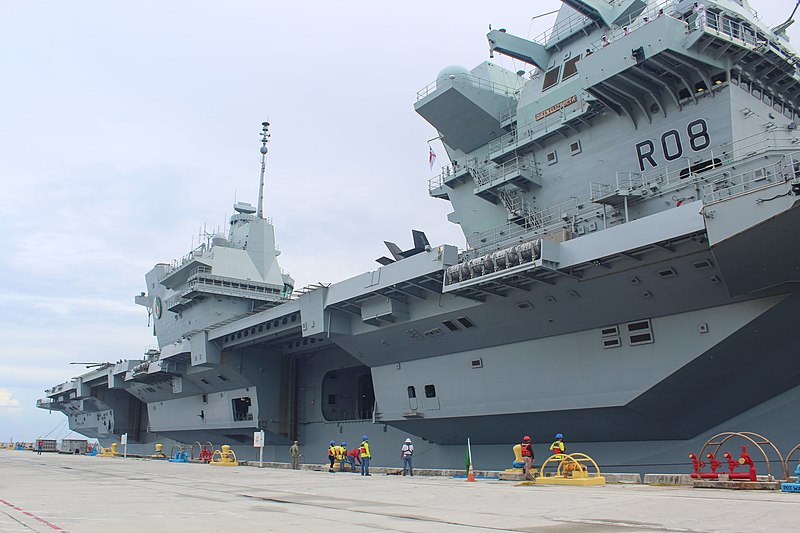
Western countries are on alert over the situation in the South China Sea as China continues to assert control over the majority of the waters. With fears of an open conflict in the region, an expert says the United Kingdom can inflict damage against China should it be underestimated.
Shanghai Institutes for International Studies European affairs specialist Long Jing warned that the UK could inflict just as much damage in the disputed region should China underestimate the nation. Jing cited that the UK has many resources, including its affiliations with the Commonwealth of Nations and the Five Eyes Alliance. The Five Eyes Alliance, made up of the UK, US, Canada, Australia, and New Zealand, share intelligence, their partnership coming as a result of the Cold War.
“Britain has many resources, such as the Commonwealth of Nations and the Five Eyes Alliance to achieve its goals so it can wage real havoc if its actions are underestimated,” said Jing.
Jing added that because the UK is a “pragmatic country, it would pursue the best of its national interests and adjust its approach to China when the US-China relations become more stable.”
This also comes as Japan is calling for Western and European allies to increase their presence not just in the South China Sea but also in the East China Sea. Japan and China are in conflict over the East China Sea. China claims sovereignty over most of both regions, but an international tribunal ruled against China’s claims in 2016, especially over the South China Sea. Beijing continues to exert control over unoccupied islands.
As nations increase their presence in the waters, China is looking to take control even through more discreet means, building surveillance platforms that are planted in parts of the South China Sea. Many of Beijing’s radars are in international waters as well as Chinese waters, according to Chatham House Asia-Pacific Program associate fellow Bill Hayton. Speaking with Express, Hayton said that China has been building surveillance systems to monitor activities in the South China Sea.
“Obviously they’ve built these seven new artificial islands on coral reefs in the Spratly Islands and that adds to other things they’ve built elsewhere,” said Hayton. “That gives them a pretty good view of what’s happening around them and even over the horizon. This allows them to send ships whether they be Navy or coastguard ships or militia to stop things they don’t like.”







