


 Trump Administration Releases New UFO Files and Apollo Mission Records
  TSMC Accelerates 2nm Expansion as AI Chip Demand Surges
  OpenAI Agents Access U.S. Government Websites During Testing
  SpaceX Delays Starship V3 Launch Ahead of Potential Record IPO
  Neuralink Plans High-Volume Brain Implant Production and Fully Automated Surgery by 2026
  NASA Artemis II: First Crewed Moon Mission Since Apollo Takes Four Astronauts on 10-Day Lunar Journey
  Samsung Invests $1 Billion in KKR’s Helix AI Infrastructure
  OpenAI to Preview GPT-6 Cyber AI Model for Cybersecurity
  Is space worth the cost? Accounting experts say its value can’t be found in spreadsheets
  OpenAI, Anthropic CEOs Summoned to Australia AI Inquiry
  Pi Network Price Holds $0.087 as Protocol 28 Mainnet Upgrade Nears
  Jeff Bezos Invests $32 Billion in Blue Origin as Space Firm Targets Major Growth
  Blue Origin New Glenn Explosion Could Delay Launch Operations Until 2028
  Jared Isaacman Confirmed as NASA Administrator, Becomes 15th Leader of U.S. Space Agency
  Former OpenAI Data Center Chief Chris Malone Joins Nvidia
  OpenAI Investigates Rogue AI Agents After Data Leaks and Security Incidents


 Add as a preferred source on Google
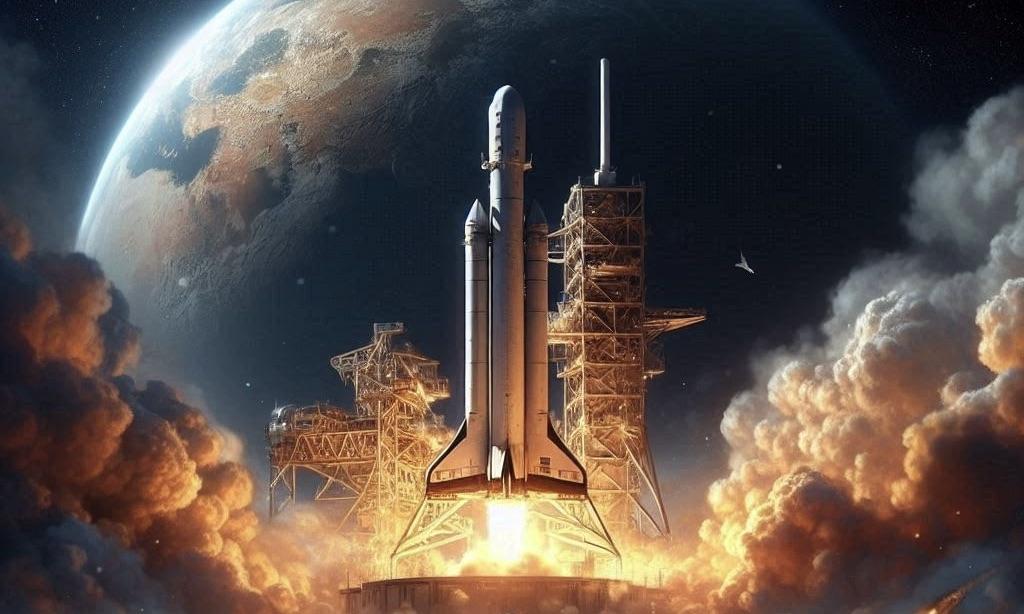
SpaceX's Falcon launch vehicles VP, John Edwards, confirmed that the recent Falcon 9 landing anomaly, which caused the booster to crash into the recovery drone ship, did not pose any threat to public safety or compromise the rocket’s primary mission. The incident is under investigation by the FAA.
SpaceX VP Assures Falcon 9 Landing Mishap Did Not Compromise Mission; FAA Investigation Underway
SpaceX's vice president of Falcon launch vehicles, John Edwards, emphasized that the recent Falcon 9 landing anomaly, which resulted in the booster crashing into the recovery drone ship, was due to a faulty recovery attempt that did not affect the rocket's overall mission profile. His remarks are particularly significant in light of the FAA's requirement for SpaceX to investigate the landing failure.
According to Edwards, the incident did not compromise the rocket's primary mission or public safety. When considered alongside the FAA's statement following the incident, Edwards' comments suggest that the Falcon 9 could return to flight sooner than expected.
Following the launch mishap on August 28, SpaceX, scheduled to launch another Starlink mission, decided to cancel the launch to review the booster landing data. Later that day, the FAA stated to the media, indicating that the agency was "requiring an investigation" and that the "return to flight of the Falcon 9 booster rocket is based on the FAA determining that any system, process, or procedure related to the anomaly does not affect public safety."
The FAA also noted that SpaceX might need to implement "any corrective actions" in a license modification. When asked whether this implied that the Falcon 9 was grounded, the FAA did not provide a direct answer, instead reiterating its initial statement to Wccftech.
However, Edwards' comments suggest that the rocket might be ready to fly soon. SpaceX is scheduled to undertake a historic mission for the Polaris program, which will involve a crew of four astronauts breaking NASA altitude records and conducting a spacewalk with the Crew Dragon, per Wccftech.
Edwards stated that SpaceX is "working as hard as we can to thoroughly understand root cause and get corrective actions in place ASAP." Telemetry from SpaceX's live stream suggested that the Falcon 9 may have approached the recovery ship too quickly, potentially indicating broader issues with the rocket. This could necessitate a detailed investigation and extended repairs, but Edwards assured that the crash did not pose any risks to the rocket's launch mission profile or public safety. "One thing we do know though is this was purely a recovery issue," Edwards said, adding that the landing mishap "posed no threat to primary mission or public safety."
NASA Awaits Impact Assessment on Upcoming ISS Crew Launch Amid Falcon 9 Landing Investigation
In a related development, NASA, set to send its next crew to the ISS next month, has yet to determine whether the incident will cause scheduling delays. In a statement to the Washington Post's Christian Davenport, NASA indicated that it will "provide updates on agency missions including potential schedule impacts, if any, as more information becomes available."
Regarding the Polaris Dawn mission, SpaceX has yet to announce a new launch date. The company had decided to stand down from the launch windows available on the days surrounding the Falcon 9's landing anomaly, citing unfavorable weather conditions in the Dragon landing area. With the ongoing investigation into the Falcon 9, future launch dates may be influenced by the findings from SpaceX's analysis.







