


 Blue Origin’s New Glenn Achieves Breakthrough Success With First NASA Mission
  NASA and Roscosmos Chiefs Meet in Florida to Discuss Moon and ISS Cooperation
  Chainlink Launches CCIP 2.0 With Enhanced Cross-Chain Security
  Strategy Buys 1,665 Bitcoin as BTC Holdings Reach 847,666
  Robinhood Chain Token Ring Allegedly Extracts $18.4 Million Across 53 Launches
  Stellar Hits Record 217 TPS as Institutional RWA Activity Surges
  China vs. NASA: The New Moon Race and What's at Stake by 2030
  Toyota Global Sales Fall for Seventh Month as China Demand Slumps
  Pi Network Price Holds $0.087 as Protocol 28 Mainnet Upgrade Nears
  Trump Administration Releases New UFO Files and Apollo Mission Records
  Hengrui Shares Rise on $2.6 Billion Novo Nordisk Obesity Drug Deal
  Northern Star Shares Surge After Rejecting Gold Fields Takeover Bid
  SpaceX Delays Starship V3 Launch Ahead of Potential Record IPO
  Eli Lilly’s Inluriyo Gains FDA Approval for Advanced Breast Cancer Treatment
  Neuralink Plans High-Volume Brain Implant Production and Fully Automated Surgery by 2026
  Trump Administration to Launch Autism Initiatives Targeting Acetaminophen Use and New Treatment Options
  CSL Partners With AWS to Bring AI Into Drug Research


 Add as a preferred source on Google
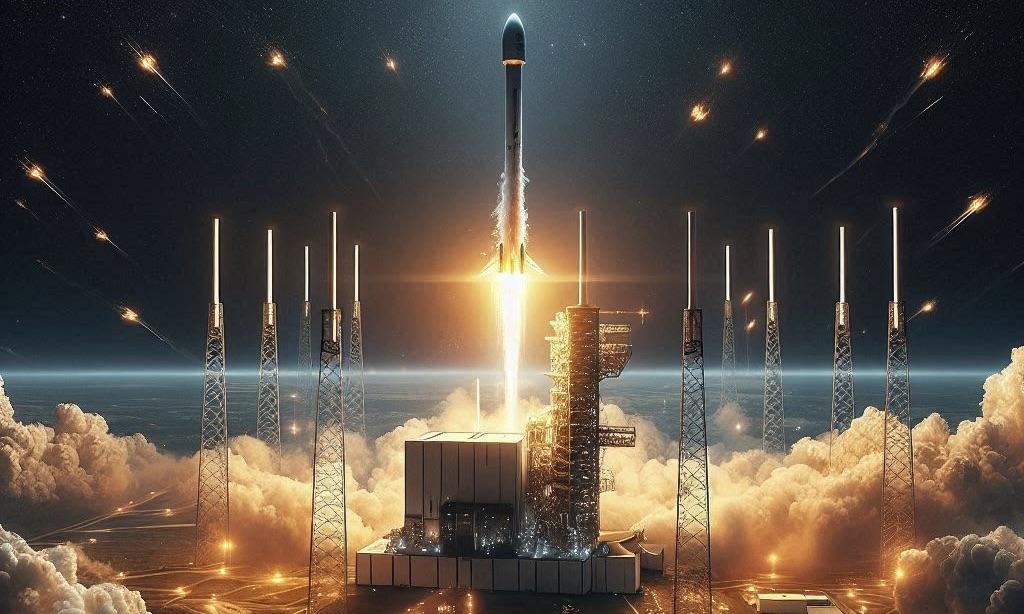
SpaceX achieved a significant milestone on September 5, launching 21 additional Starlink satellites, surpassing 7,000 in orbit. The Falcon 9 rocket lifted off from Cape Canaveral, marking the 15th flight for this specific booster, which safely returned to Earth post-launch.
SpaceX Reaches 7,000-Satellite Milestone with Latest Starlink Launch, Adding Direct-to-Cell Capability
SpaceX achieved a new milestone with its Starlink high-speed internet program during the Falcon 9 launch on September 5, per Teslarati.
One day after unfavorable weather conditions delayed departure, SpaceX launched 21 additional Starlink satellites from the Cape Canaveral Space Force Station in Florida at 11:33 a.m. EDT. Space Launch Complex 40 served as the launch site for the Falcon 9 first stage.
The Starlink program has officially reached the 7,000-satellite milestone with the addition of 21 satellites. Following the most recent successful launch, there are now 7,001 satellites in low Earth orbit, up from 6,980.
Thirteen direct-to-cell satellites offering direct internet access to smartphones were also included in the most recent shipment. SpaceX verified this information in its post-launch press release on September 5 in the afternoon.
Jonathan McDowell, an astrophysicist who has monitored the number of Starlinks in the sky with each launch, has verified the 7,000-satellite threshold. Space.com was the first to disclose the figure.
The Falcon 9, utilized in the launch, returned to Earth and landed on the “Just Read the Instructions”droneship in the Atlantic Ocean after the successful separation. This was the 15th launch with this specific first-stage booster. Starlink missions comprised nine of the fifteen.
SpaceX Overcomes Falcon 9 Anomaly with Successful Starlink Launch, Polaris Dawn Mission
This particular Starlink launch was the third since an anomaly occurred with a Falcon 9 first stage, which collapsed on the “A Shortfall from Gravitas” droneship in late August.
Initially, the FAA suspended all Falcon 9 launches; however, SpaceX was permitted to proceed.
The launch was the initial of two scheduled for SpaceX on consecutive days.
The eagerly anticipated Polaris Dawn expedition will launch from NASA's Kennedy Space Station on September 6. The astronauts on that mission have been quarantined for days in anticipation of confirmation that they can travel to space.
The Polaris Dawn mission was scheduled to launch last week; however, the launch was postponed due to unfavorable conditions in the Atlantic Ocean.







