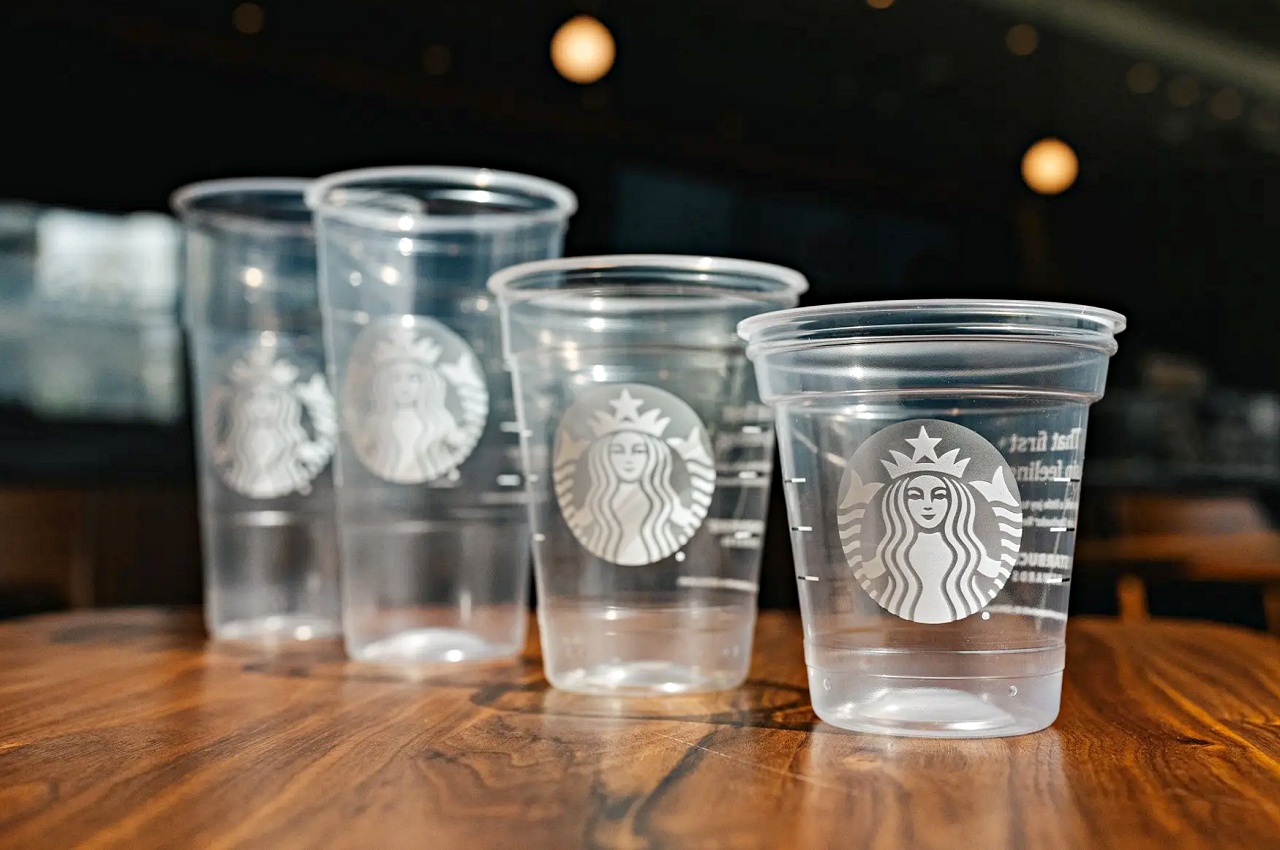
Starbucks announced it has tweaked its plastic cups. The redesigned ones will be released in some stores in the United States and Canada this year. The company expects to complete the full rollout in select regions by spring 2025.
According to the Associated Press News, Starbucks' vice president of product innovation, Amelia Landers, said the company invested the last four years in developing the new cups. Before the containers were approved, engineers repeated the same process a thousand times to determine how much plastic could be removed while still producing a sturdy cup.
Revising Containers to Cut Waste
Sales of Starbucks drinks are growing; however, this also creates a big problem as the amount of plastic waste from disposable containers also increases. Because of this, the coffee chain said on Thursday, April 18, that it is planning to reduce some of the waste by implementing the use of new single-use cups made with 20% less plastic.
The company further shared that its Frappuccino line of beverages and other cold drink products are now responsible for 75% of its beverage sales in the U.S. The percentage grew by more than half from 2013, which was only 37% then. Starbucks said that based on estimates, the new cups with less plastic will help take out more than 13.5 million pounds of plastic waste from landfills every year.
Redesigned Disposable Plastic Cups
On their next visit to Starbucks, customers may not notice any change in their beverage cups but there is a major change because they now contain less plastic so they are environmentally friendly. CNN Business noted the new cups are the company's latest effort to reduce plastic and carbon emissions which have always been criticized by environmentalists as major restaurants are top contributors of waste that harms the surroundings.
"We invented new ways to test the cup that we did not have before," Kyle Walker, Starbucks' senior packaging engineer, commented on their quest to find the best process to make the new plastic cups. "Like, what if we take this feature and we move it up or down? Or what if we change the shape or the radius in this very small way? We were making all these micro adjustments and when we found the optimal combination, it was a real Eureka moment!"
Photo by: Connor Surdi/Starbucks Newsroom