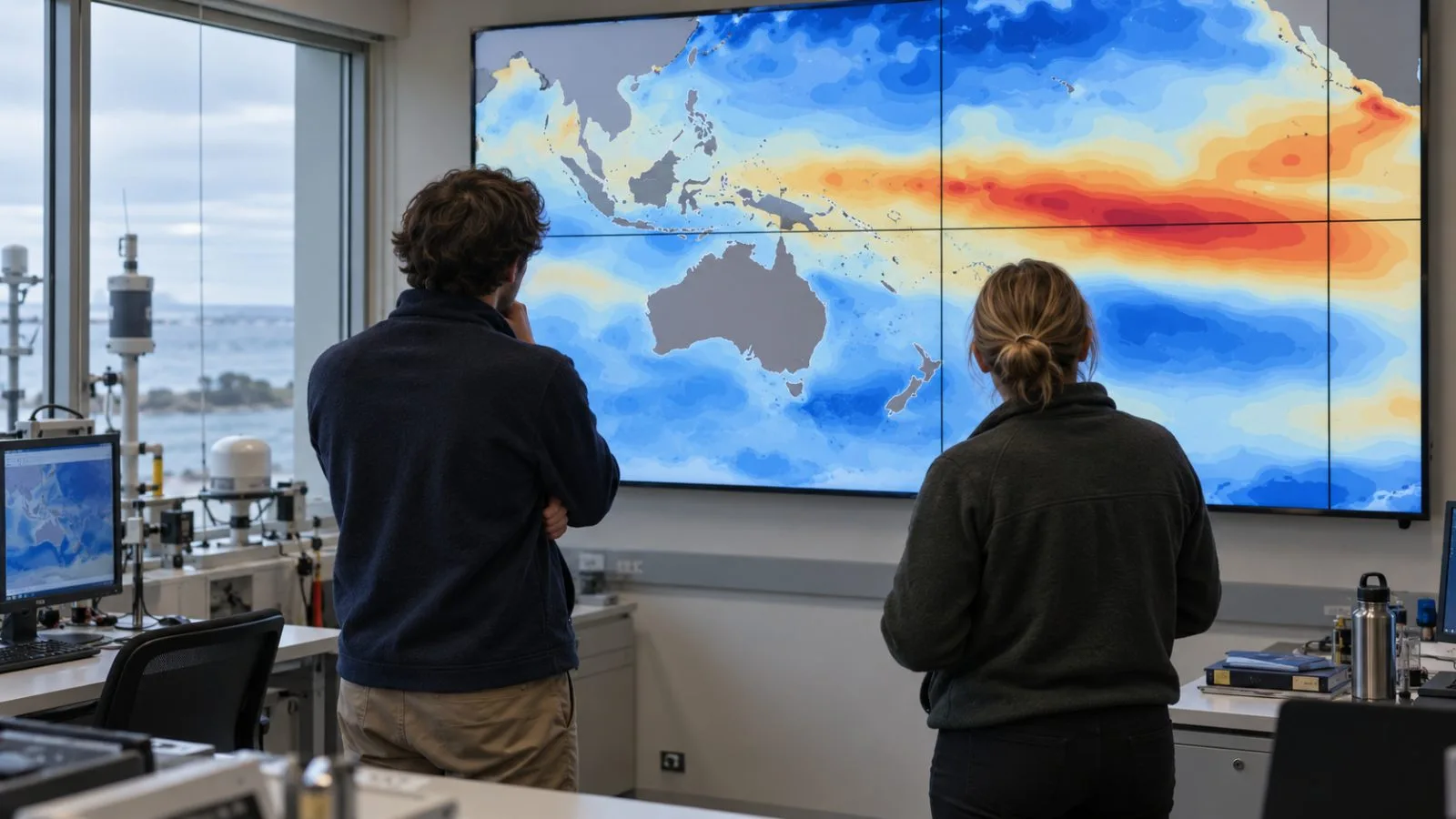
A useful signal for long-range El Niño–Southern Oscillation (ENSO) planning may come from the Pacific itself: a new study linked forecast skill a year later to conditions present when model runs began.
Published Oct. 23 in Science Advances, the study assessed more than 7,500 past ENSO forecast runs from climate-model teams in nine countries. The researchers found that runs initialized during La Niña showed skill when assessed 12 months ahead in each of the nine model systems; neutral starts produced weaker forecasts.
The finding concerns forecast performance given the Pacific's starting phase. It does not show that every El Niño can be identified a year before it begins. The researchers said statistical approaches, including machine learning, may help forecasts launched in neutral conditions, where physics-based models struggled. Nandini Ramesh, a senior research scientist at Australia's Commonwealth Scientific and Industrial Research Organisation (CSIRO), said the approach remains “a few steps away” from use in forecasting-agency models.
More reliable year-ahead outlooks may give communities and decision-makers additional time to prepare. WMO Secretary-General Celeste Saulo's Sept. 3 statement listed agriculture, trade, fisheries, health, energy, transport, water resources and disaster management among sectors affected by El Niño, with impacts varying by region and season.
The World Meteorological Organization (WMO) says El Niño generally occurs every two to seven years and lasts about nine to 12 months. It also said the strong 2023-24 event contributed to 2024 being the warmest year on record.
In a separate forecast issued Sept. 3, the WMO put the likelihood that the El Niño then underway would continue through February 2027 at nearly 100% and said it was expected to peak late in 2026. That outlook is separate from the study's assessment of model skill. The WMO said it would keep monitoring the event and regularly update its forecasts, without setting a date for its next update.