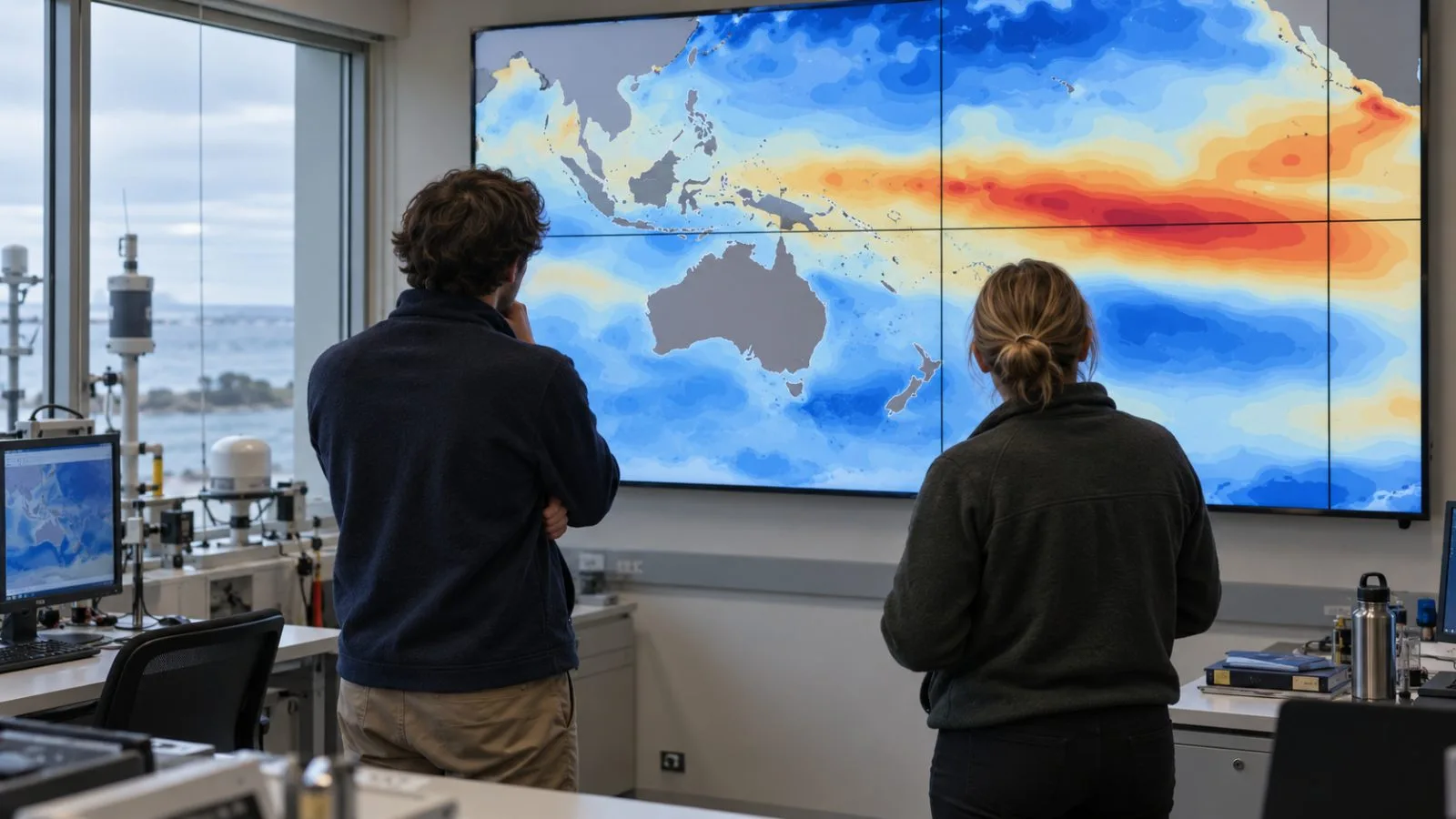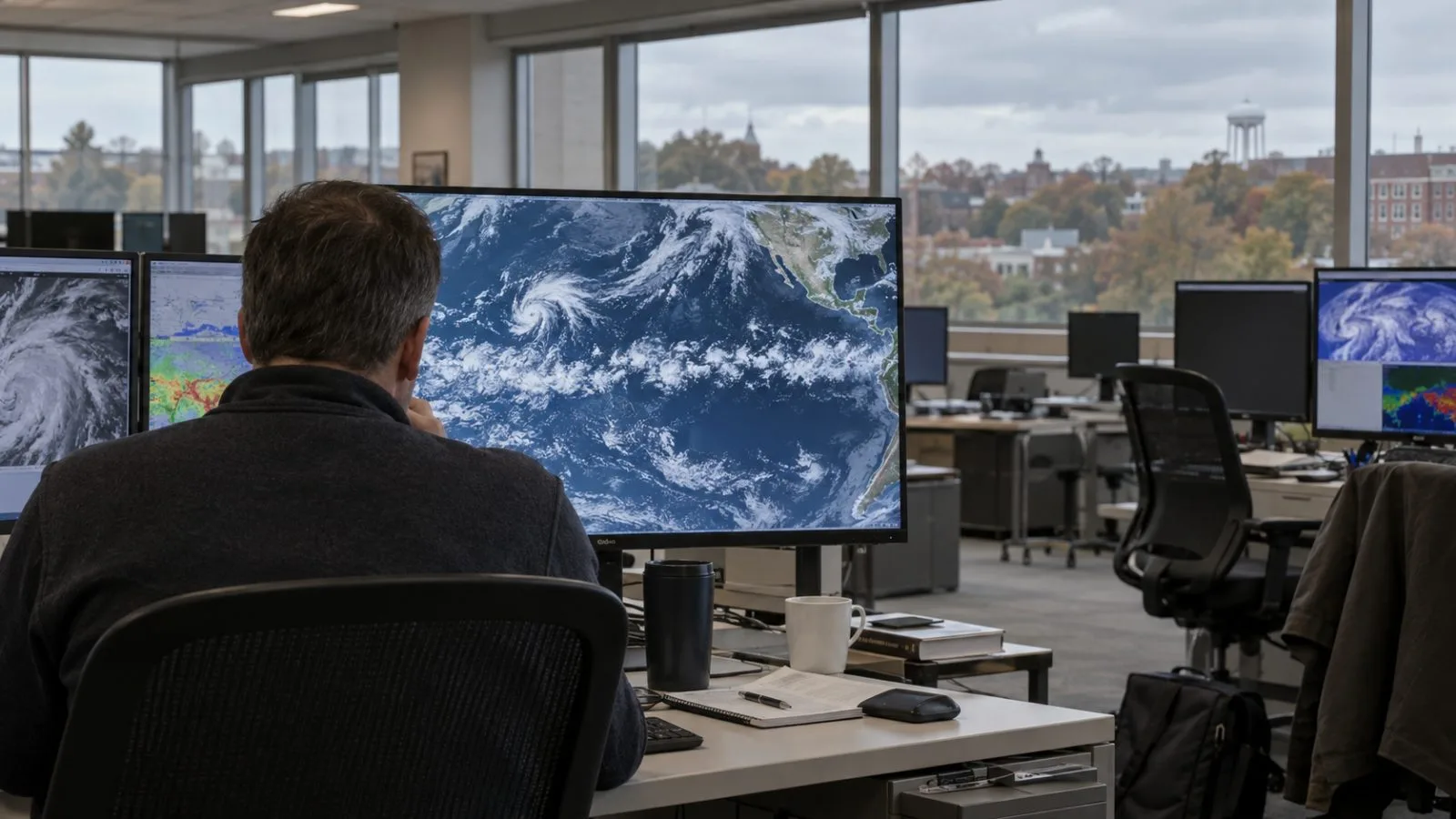
The National Oceanic and Atmospheric Administration (NOAA) sees neutral Pacific conditions as the likeliest phase after the current strong El Niño, a shift that matters for global weather risks in 2027.
NOAA’s Climate Prediction Center (CPC) gave neutral conditions a 54% probability for April-June 2027 and 70% for May-July, according to its October table. The combined probabilities for La Niña were 1% and 13%, respectively. The CPC said Oct. 8 that strong-to-very-strong El Niño conditions had more than an 83% chance of lasting through January-March 2027, a projection also discussed in earlier coverage of NOAA’s workforce and El Niño.
An experimental forecast from NOAA’s Geophysical Fluid Dynamics Laboratory (GFDL), issued Oct. 7, points to a move toward neutral conditions in spring or early summer 2027. NOAA GFDL meteorologist Nathaniel Johnson said the model runs indicate that transition is expected during that period. GFDL used 30 runs, which diverge more as the forecast extends into spring and summer, and says the experimental outlook is not an official NOAA forecast.
GFDL’s comparison with three of the strongest El Niño events in the past 30 years found that those events weakened during spring and returned to neutral before summer. That history offers context for the forecast, but does not establish a fixed schedule: NOAA says the interval between ENSO episodes has ranged from two to seven years.
El Niño and La Niña are opposing phases of the El Niño-Southern Oscillation (ENSO), a climate pattern centered in the equatorial Pacific. During El Niño, easterly trade winds weaken; during La Niña, they strengthen. The World Meteorological Organization (WMO) forecast an average Niño 3.4 sea-surface temperature anomaly of about +3.7°C for October-December 2026, with a peak around December. WMO said its forecast of about +3.7°C would exceed the previous observed record of +2.6°C for November 2015-January 2016; the projected new record has not been confirmed.
WMO says shifts in Pacific temperatures and winds can affect rainfall and temperatures well beyond the region, raising risks of drought, flooding and extreme heat. The organization also identifies agriculture, health, energy and water resources as climate-sensitive sectors. WMO Secretary-General Celeste Saulo cautioned that El Niño shifts weather probabilities but cannot determine conditions in every place or explain every heat wave.
NOAA’s next ENSO diagnostic discussion is scheduled for Nov. 12, 2026.