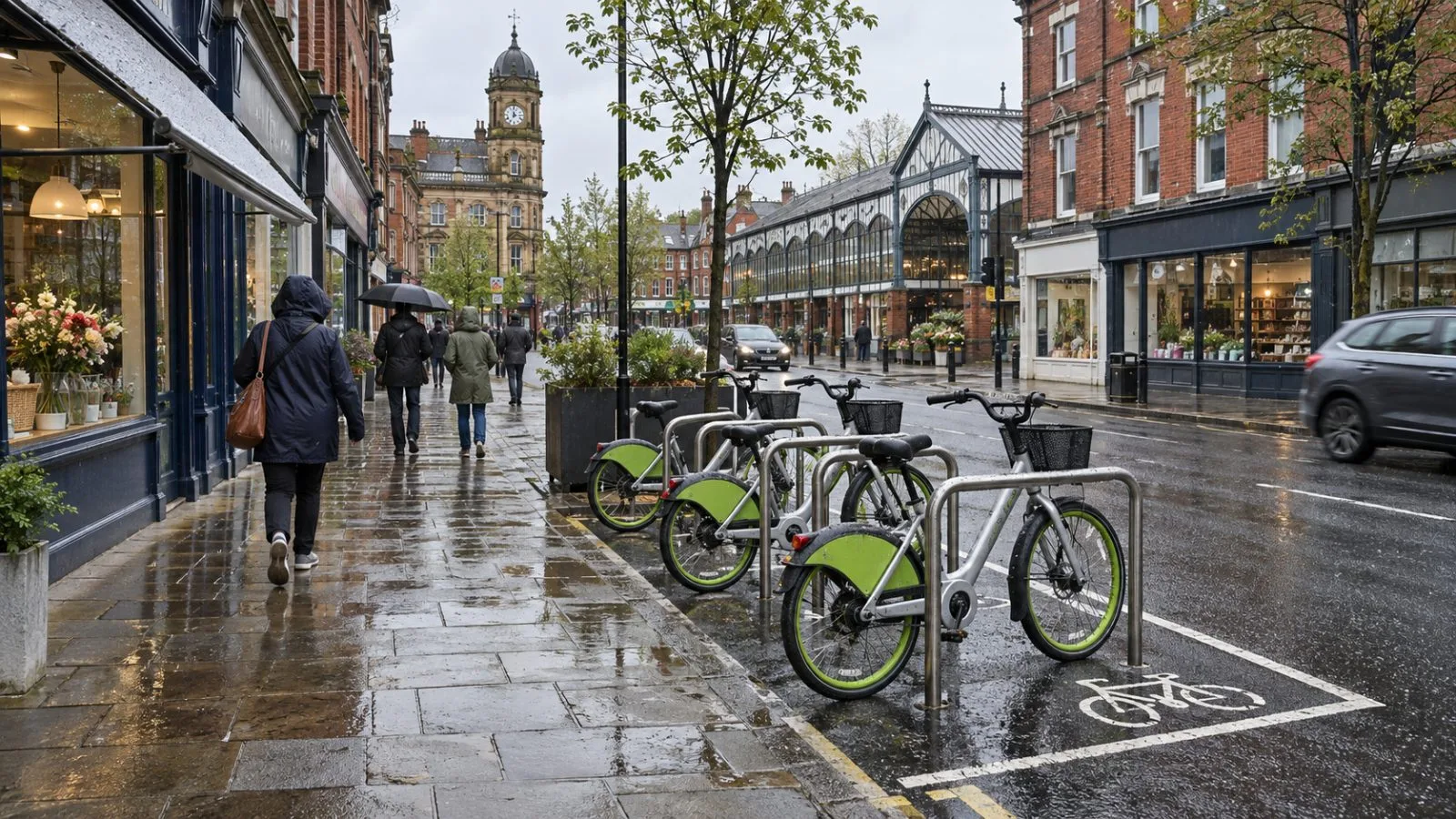
Shared-bike and scooter bays may be associated with more retail and hospitality spending in British town centers than car-parking spaces, according to a Create Streets and Cyclehoop study modeling the local economic case for reallocating street space.
In the report’s typical market-town scenario, a bay for nine shared bicycles is linked to £146,578 in annual spending at nearby shops and hospitality businesses; the car-parking comparison is £73,164. For a city, the respective estimates are £303,264 and £125,424.
Those figures estimate consumer spending, not municipal income. In a separate calculation, the report estimates a net annual council gain of £900 to £2,475 for each shared-mobility bay. It puts the yearly cost of free parking to councils at £42 to £44 per bay, while pay-and-display parking produces net income of £700 to £1,100. The authors say councils are often assessed on vehicle throughput, insurance claims and maintenance backlogs, while capital funding tends to favor larger projects.
The report uses Altrincham as a regeneration example: retail vacancies there fell from nearly one in three units in 2010 to 7.3% in 2018, while annual footfall grew by more than 1 million visitors. It describes those changes alongside improvements to walkability and investment in active travel. In Grimsby, residents and teenagers designed a 150-square-meter park on an unused church car-park site; it cost £19,350 to build.
The Guardian reported that a spokesperson for the Ministry of Housing, Communities and Local Government said councils can decide whether pedestrianization fits local needs and can use available funding for high-street projects.
Create Streets and Cyclehoop recommend that highway authorities regularly review fixtures on major shopping streets and remove those that fail accessibility and design standards. The report also calls for a simpler process to convert general parking bays to bike and e-scooter spaces, plus a funding route for smaller projects costing less than roughly £250,000. Its proposed market-town pilots would be delivered within a single financial year, with costs, delivery times and footfall reported after completion.