The Korea Herald reported that Posco Holdings and Korea University researchers linked lower-temperature treatment of cathode precursor materials to less voltage loss during cycling, a possible durability gain for high-capacity batteries.
After 500 charge-discharge cycles, cathodes made with the cooler precursor process showed a 250-millivolt voltage decline, compared with 358 millivolts for the hotter process, the outlet reported. It described the result as about 30% less voltage loss with the cooler process.
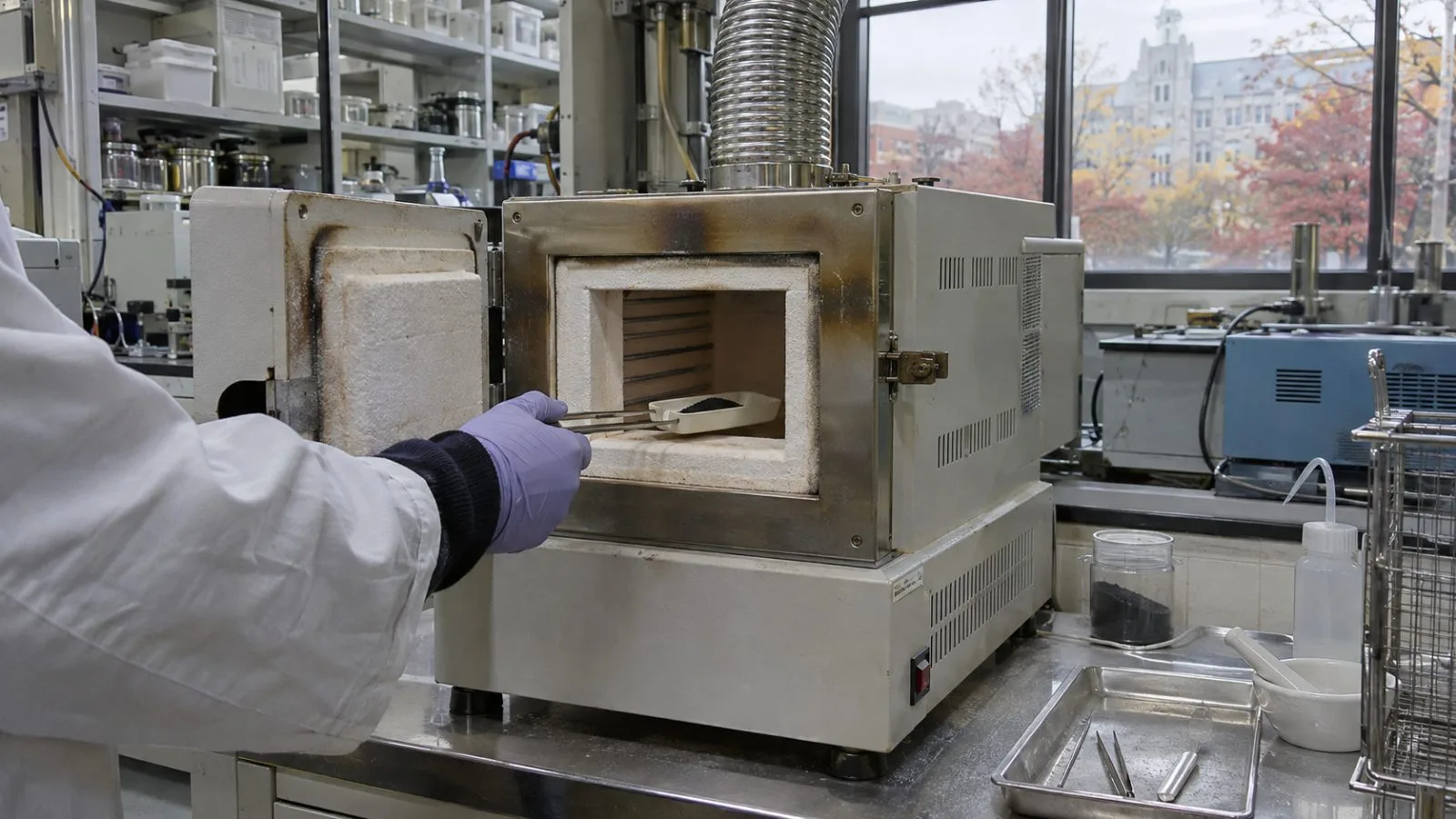
Researchers changed the precursor heating temperature at the start of production while leaving later manufacturing steps unchanged, the Herald reported. Its account said the cooler treatment produced a more even arrangement of metals in the finished cathode. The hotter process led to metal clusters associated with structural weakness and faster performance decline.
The study concerns lithium-manganese-rich (LMR) cathodes. The Korea Herald said these materials can store more energy than conventional cathodes through reactions involving metals and oxygen. Structural instability and a gradual drop in voltage during repeated charging have limited their commercial use, the outlet reported.
The researchers’ approach adjusts a production step rather than adding new materials, according to the Herald. The outlet said the team viewed process optimization as a possible way to improve durability without significantly changing the cathode’s chemical composition. Electric vehicles and energy storage systems were cited as potential applications.
The Korea Herald identified Korea University materials science and engineering professor Hyeokjun Park as the study’s lead, alongside researchers at Posco Holdings’ N.EX.T Hub. The paper, Manipulating Li₂MnO₃-Like Domain Dispersion in Lithium-Rich Layered Oxides Inherited from Precursor, appeared in ACS Energy Letters on Oct. 19. The Herald reported that the research received support from the National Research Foundation of Korea and Posco Holdings.