


 Bill Gates Warns Governments Are Unprepared for AI Disruption
  US Confirms Weapons in Orbit as Space Tensions Rise
  Houthis Escalate Saudi Attacks as Red Sea Oil Risks Grow
  Ukraine Tests New Anti-Drone Weapon After Successful Shahed Intercept
  Trump Touts $5,000 Checks if Republicans Win Congress
  Philippines Holds Historic Bangsamoro Election Amid Tight Security
  Mahmoud Khalil Sues Columbia Over Alleged Pro-Palestinian Harassment
  U.S. Imposes New Visa Restrictions Over South Africa Policies
  Europe can’t achieve space sovereignty alone. Here’s why
  Vietnam, U.S. Firms Plan 29 Deals Across Energy, Tech and Aviation
  Lula, Flavio Bolsonaro Deadlocked in Brazil Election Polls
  UK PM Andy Burnham Set for First Trump Meeting in New York
  Sweden Election: Centre-Left Holds Narrow Lead
  Rodrigo Duterte Makes First Public Appearance at ICC in 18 Months
  Trump Rejects Calls for Tougher AI Regulation
  Takaichi-Backed Koja Wins Okinawa Governor Race
  Kim Jong Un Pledges Deeper Russia Cooperation


 Add as a preferred source on Google
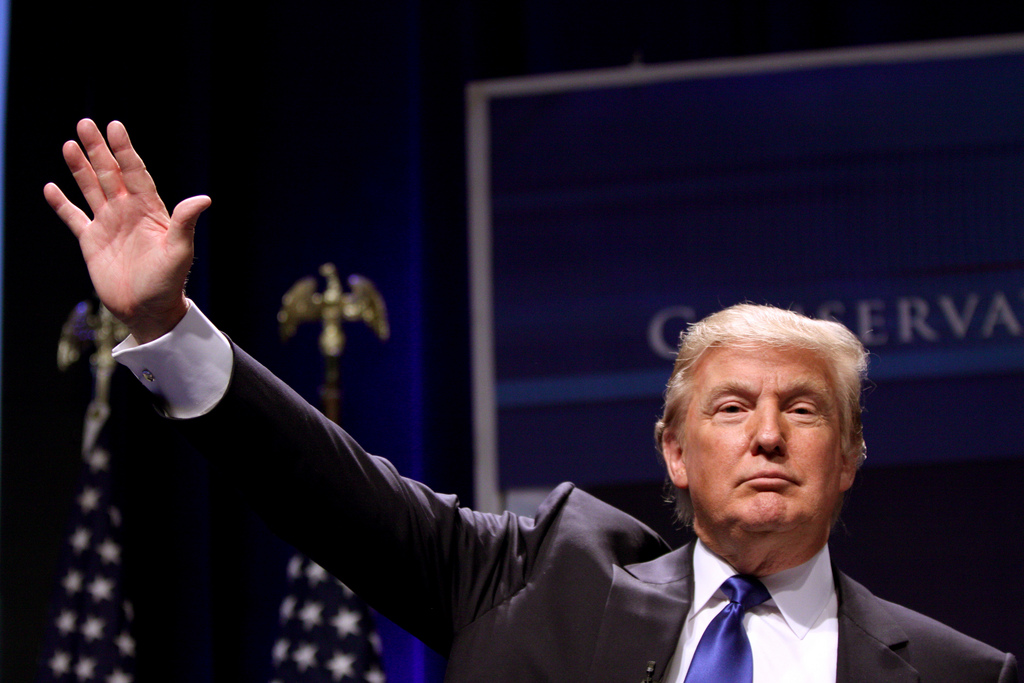
The results of “Super Tuesday”, when a clutch of US states voted to choose the two parties' nominees, have seriously ironed out both the Republican and Democratic primary campaigns. Both Donald Trump and Hillary Clinton scored major gains, and their rivals are now fully on the ropes. It may be that the campaigns are finally stabilising after a truly wild start to the primaries.
Donald Trump has bounced back remarkably from his loss in Iowa. He went into Super Tuesday having won New Hampshire, Nevada, and South Carolina; he’s also seen off experienced Republican candidates including onetime frontrunner Jeb Bush and New Jersey Governor Chris Christie – who has made the shocking move of endorsing Trump, to widespread disgust.
That left Trump with three principal rivals: Marco Rubio, Ted Cruz and John Kasich. All three headed into Super Tuesday in hopes of a major turnaround. Instead, they got routed. While Cruz won his home state of Texas (as expected) and netted Oklahoma as well, other delegate-rich states on the Republican side were called for Trump as soon as the polls closed, including Virginia, Tennessee, Massachusetts, Georgia, Alabama, and Arkansas.
Meanwhile, Marco Rubio, who has made a show of being the Republican mainstream’s best hope of stopping Trump, walked away with only one win, in Minnesota.
Hillary Clinton, meanwhile, confirmed that she has fully hit her stride after a rocky start to the primaries. She effectively tied Bernie Sanders in Iowa and lost big to him in New Hampshire, but then beat him convincingly in Nevada before trouncing him by an astonishing 47% in South Carolina – where, crucially, she won 90% of the black vote. That didn’t bode well for Sanders, whose campaign has been a barnstorming attack on income inequality and the deep divisions in American society – and on Super Tuesday, Clinton ultimately followed it with a huge sweep.
Georgia and Virginia were called for her as soon as the first polls closed (and tiny American Samoa soon followed). The delegate-rich southern states then quickly began falling into her column by big margins, and then a win in the New England state of Massachusetts with 116 delegates. Sanders won his small home state of Vermont and picked up Oklahoma, Colorado and Minnesota, but Clinton’s strength was simply too great across the rest of the states. Sanders is now clearly far behind, with very few hopes of recovery.
So what now?
Ready for Hillary
Now that Trump’s macho populism has all but steamrolled Cruz’s evangelical conservatism and Rubio’s moderation, and with Sanders' democratic socialism fading against Clinton’s pragmatic realism, this has fast started to become a contest between Trump and Clinton. And in that contest, the presidency is now Clinton’s to lose.
This would be true whoever was running. The other contenders on both sides simply cannot match her appeal: Sanders is too narrowly leftist for the general electorate, while Cruz and perhaps even Rubio would be too far right.
Trump, meanwhile, polls well among disaffected low income white Americans, which works well for that particular rump of the Republican Party, but much to the disappointment of its elite, who have so far been unable to stop the Trump machine – even as they desperately remind everyone that he’s simply too much of a risk, particularly on matters of national security and foreign policy.
Clinton, by contrast, polls especially well among middle-aged and older women, the poor, and middle class Americans, as well as minority communities. This is a winning coalition, one made up of many of the same groups that favoured President Obama in 2008 and 2012. These demographics have continued to swell their ranks, and in the absence of a major event (say, an utterly damning revelation in the drip feed of Clinton’s state department emails), the odds are ever in Clinton’s favour.
Even leaving aside the toxic, chaotic nature of the campaign so far, the prospect of a Trump presidency – or even a Republican one – seems very remote indeed.

Todd Landman receives funding from the Nuffield Foundation for his podcast series The Rights Track, and is a Fellow of the Royal Society of Arts (FRSA).
Todd Landman, University of Nottingham
This article was originally published on The Conversation. Read the original article.







