


 Global Stocks Mixed as Oil Falls Ahead of US Earnings
  Oil Prices Rise as Houthi Attacks Threaten Middle East Supply
  Philippines Current Account Deficit Seen at $19.1 Billion in 2026
  Oil Prices Fall as Trump Ceasefire Claim Shifts Market Focus to U.S. CPI
  Trump Secures Russian Diesel Deal as US Fuel Prices Surge
  Samsung, SK Hynix Shares Plunge as China Chip Competition Grows
  European Auto Stocks Rise as EU-China Trade Deal Targets Hybrid Imports
  IMF, World Bank Meetings Face Global Economic Risks Amid Iran War
  Asian Stocks Plunge as AI Chip Selloff Hits South Korea and Japan
  US Dollar Rises for Fourth Week as Fed Rate Hike Bets Grow
  Gold Prices Rise Above $4,200 as Russia-Ukraine Energy Truce Eases Oil Concerns
  S&P 500 Rally Masks Losses for Over 40% of Stocks in 2026
  Gold Prices Hit One-Week High as Oil Falls, Fed Rate Outlook Weighed
  Fed's Hammack Urges Faster Rate Hikes to Fight Inflation
  European Stocks Rise as Oil Prices Fall Ahead of US CPI
  Trump Calls for Zelenskyy Replacement Amid Russian Diesel Deal


 Add as a preferred source on Google
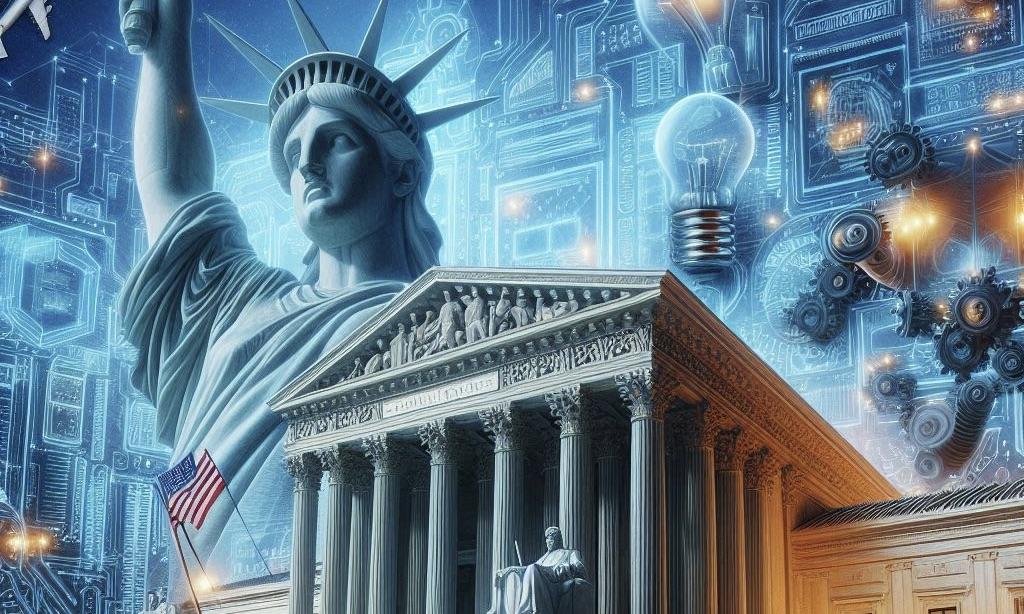
The Supreme Court's decision to overturn the four-decade-old Chevron deference doctrine threatens to disrupt U.S. economic stability and innovation. The ruling shifts regulatory power from federal agencies to courts, creating uncertainty and potential fragmentation of the national economy.
Supreme Court's Chevron Reversal Risks Fragmenting U.S. Economy, Stifling Innovation and Consistency
Despite the conventional wisdom, the United States Supreme Court's decision to reverse the four-decade-old "Chevron deference" doctrine is potentially one of its most anti-business rulings. The damage to companies, particularly highly innovative ones, could be significant, with severe long-term repercussions for the US economy.
In essence, the recent decision in Loper Bright Enterprises v. Raimondo establishes that courts are no longer required to defer to the interpretation of a statute by executive branch agencies when Congress has been either mute or ambiguous on specific rules to enforce the statute. Although this may appear obscure, the practical implications are substantial. In the United States, the definitive rule-makers on various topics, including drug approvals, transportation regulations, and food safety, will now be the courts rather than regulators. This change is being implemented without the necessary scientific and domain expertise.
Before this ruling, it was feasible for most American corporations to introduce new products in all 50 states simultaneously. The market's overwhelming size and consistent regulations generated vast economies of scale, and capital was allocated efficiently. This is one of the reasons why the United States has become such a potent magnet for innovators.
The Supreme Court has facilitated the Balkanization of the US economy by limiting the executive branch's capacity to establish and enforce regulations. As a result of the rulemaking vacuum at the federal level, states will increasingly address critical issues. The United States will likely result in smaller regional and state economies, frequently organized around local business interests and ideology, rather than a large and cohesive economy of 330 million people subject to the same rule of law.
While that may be feasible for an issue such as education, it could be a more efficient approach to economic policy. Household appliances may be subject to entirely different standards in Massachusetts than in Florida, and food considered safe in Texas may be deemed hazardous in California, among other possible outcomes.
Reversal of Chevron Doctrine Threatens Economic Stability, Elevates Legal Uncertainty, and Stifles Innovation
The Chevron doctrine's renunciation terminates the predictability indispensable for a robust economy and stable capital markets. Almost any regulation previously implemented by a federal agency is now subject to challenge. Judges and juries needing more specialized training will decide on issues previously resolved or informed by experts and scientific authorities. This is significant because the outcome of a dispute can be reasonably predicted when presented to experts. This is different when the same question is entrusted to judges and juries.
Federal regulation may have been objectionable under Chevron's deference; however, it was uniform for all economic actors. When a court determines that a federal rule is disagreeable, there is potential for a flurry of disparate rulemaking at the state level.
The initial casualty will be innovation. Consider the challenge of introducing a new Food and Drug Administration-approved product in this ambiguous environment. Claimants, who may have been financially supported by a company with a competing, inferior product already on the market, can now question the product's safety and second-guess career scientists. It appears that incumbents are consistently favored over innovators in litigation.
And the issue does not conclude there. Consider the possibility that federal agencies may determine that they cannot establish guidelines for the permissible quantity of "forever plastics" in packaging following the Chevron decision. One state may respond by prohibiting such packaging. In contrast, another state, home to numerous large plastics manufacturers, may prohibit the packaging that the first state favors. Companies would be compelled to exit specific markets or produce two distinct products.
According to Business Times, the Supreme Court's decision may impede economic development. Few business leaders believe that the federal government is effective at approving large initiatives. However, the reversal of Chevron could exacerbate the process by facilitating litigation that challenges federal permitting decisions, making the process less predictable.
It is no coincidence that the least innovative industries in the United States are those already regulated at the state level: financial services, utilities, and health care services. State-level enterprises can only capitalize on economies of scale if they provide distinct products in each state. Legislation and rulemaking at the state level are frequently even more opaque than at the federal level. As the number of state-level regulations increases, the United States will resemble Europe, where the complexity of varying standards and requirements impedes innovation from the outset.
A uniform rule of law and a cohesive national economy are the fundamental foundations of the American economic miracle, and the reversal of Chevron poses an existential threat to them. The decision has a detrimental impact on businesses, particularly those that are entrepreneurial, and all-American workers and consumers will bear the subsequent costs. Special interest groups, incumbent businesses, and attorneys will be beneficiaries. They will exacerbate the already overburdened judicial system by occupying the courts with cases that judges cannot adjudicate due to a lack of expertise.
This is an instance where the remedy is more detrimental than the illness. Chevron's reversal is not pro-business; it favors the court.







