
October reforms have been weighing heavily over the risk-free rates, since the beginning of the year. The proposed money market reforms will start commencing from this October and many of the institutional investors are bracing for up veal changes in how the money market funds operate. From October onwards, money market funds, which have been a major source of dollar funding around the world, will have to implement reforms like a floating NAV, charge liquidity fees, and introduction of suspension gates.
This means that the funds would have to worry more on what kind of securities they invest, especially in the corporate segment, since investing in U.S. government money markets won’t face the rules of floating NAV or redemption triggers. However, that would result in lower yields. In anticipation of the big changes in the market, the cost of funding at which banks lend each other is already moving higher. 3-month London interbank offered rate (LIBOR) based on the USD are already at the highest level since the crisis of 2008/09.
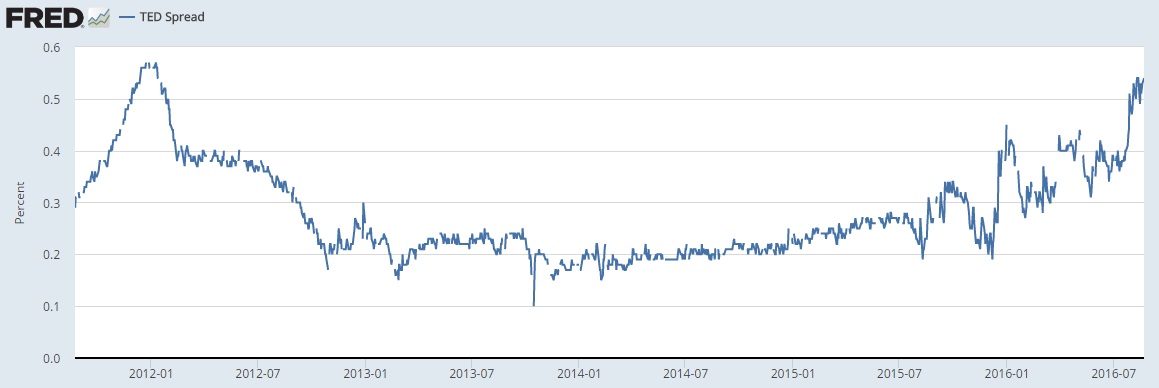
TED spread, which can be seen as the premium for additional risks over risk-free rate, is currently at the highest level since 2012 when the U.S. government came closest to a technical default.

