India’s Ministry of Tribal Affairs has reportedly asked The Energy and Resources Institute (TERI) to review minimum support prices for forest produce, The Economic Times reported Nov. 3, a policy affecting the incomes of forest-dependent communities.
The newspaper, citing unnamed sources, said TERI was asked to assess products covered by the program, conduct field surveys and consider a process for regular price increases. An unnamed senior official told the paper that some products sell above their assigned prices and that gluts complicate pricing. The ministry has not announced new rates.
At an Aug. 5 workshop in Manipur, TERI Associate Director Naba Kumar Goswami said the institute was studying prices for 87 existing items, possible additions and a consistent approach to future reviews, The Sangai Express reported. His remarks described a study in progress, not a final national policy or timetable.
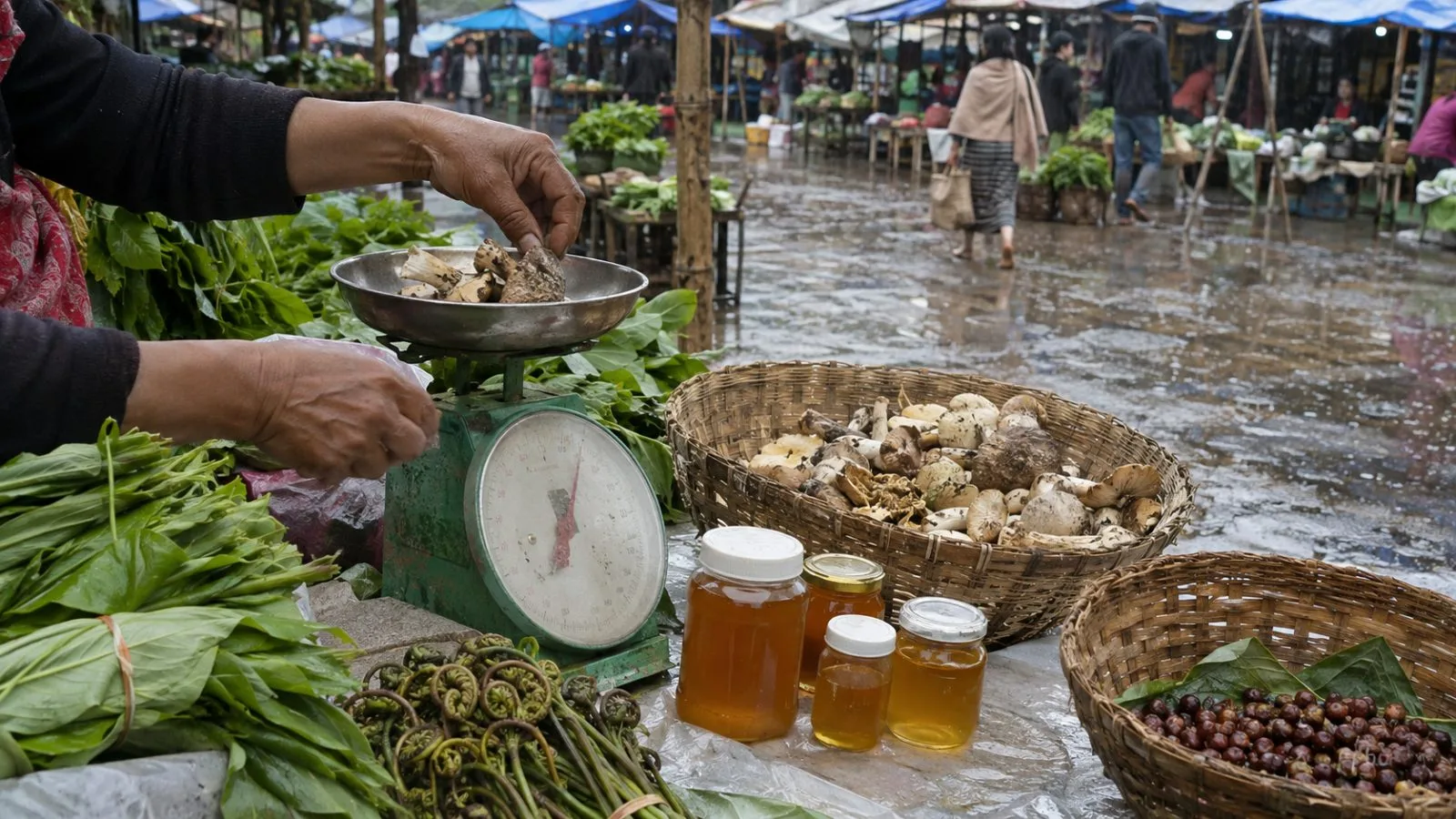
Minimum support prices (MSPs) set a floor for selected forest produce. Under the scheme, designated state agencies purchase and market listed items when prevailing prices fall below the government’s rate, according to the Ministry of Tribal Affairs’ annual report. A ministry reply to Parliament lists 87 items, including seeded tamarind at 36 rupees per kilogram and wild honey at 225 rupees per kilogram.
State governments have procured 267,954.36 metric tonnes of produce worth 693.98 crore rupees since the program began in 2013-14, the reply says. A government backgrounder says minor forest produce accounts for 20% to 40% of annual income for many of India’s Scheduled Tribes. The central government and states share procurement losses in a 75:25 ratio, according to the ministry’s annual report.
The ministry’s Minor Forest Produce Pricing Cell recommends price changes and additions to or removals from the list. Current guidelines allow the ministry to revise rates “from time to time” on the cell’s recommendation but set no fixed interval. Rules for the earlier scheme called for reviews every three years; the ministry relaxed that requirement during the COVID-19 pandemic and revised prices in 2020, with increases ranging from 16% to 66%, government records show.
The Economic Times reported that higher rates may take effect in the next financial year, but no official schedule has set a date or announced revised prices.