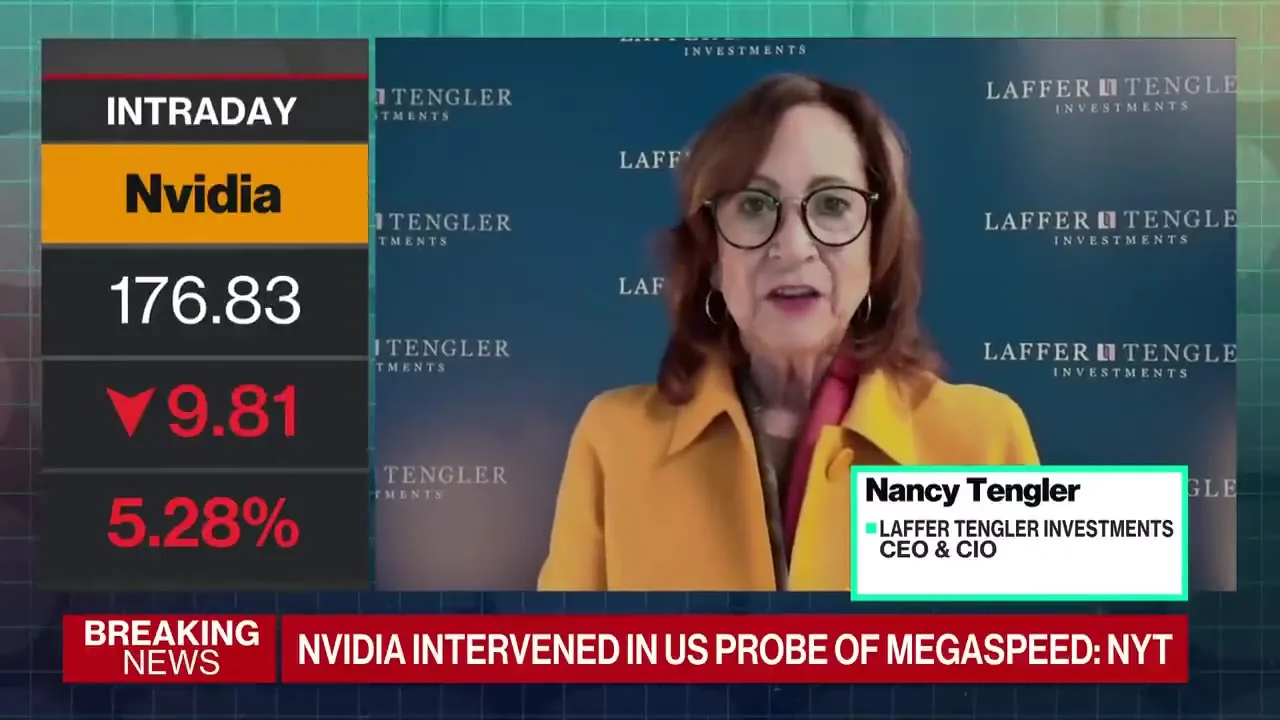
Nvidia Chief Executive Jensen Huang is likely to keep his job unless investigators find wrongdoing, Nancy Tengler, chief executive and investment chief of an investment firm holding Nvidia shares, said.
Her firm could sell into a share-price rise if Huang leaves, Tengler said on Bloomberg Technology, published Nov. 9. She distinguished demand for Nvidia’s chips from the leadership behind its strategy.
Tengler said her firm was not buying more shares that day, despite considering the stock inexpensive. She held that view even without assuming the 70% earnings growth she cited for next year, without identifying whose estimate it was.
She cited cumulative share buybacks announced by Nvidia totaling $230 billion, although she did not specify how much remained available. She argued that the company had enough cash to buy shares while questions about Huang were investigated.
“I suspect he survives, unless he was culpable,” Tengler said. If he leaves, Nvidia would need to turn to its other executives for a successor.
She compared that possibility with Apple after Steve Jobs, saying Tim Cook had delivered total shareholder returns of thousands of percent despite doubts about the company’s ability to innovate. She gave no measurement period.
Tengler said Huang’s departure would change her investment assessment because competitors could exploit the disruption. But she distinguished that risk from the backlog of orders and demand for Nvidia’s chips, which she expected to outlast his tenure.
“The vision and the strategy, however, is where we would probably use strength to exit if he is gone,” she said, referring to selling shares when their price rises.
The interview also addressed a New York Times account of a U.S. investigation into Mega Speed, a buyer of Nvidia chips suspected of smuggling them into China. The account said the investigation moved from the Commerce Department to the Justice Department after Nvidia intervened.
That account, relayed during the broadcast, said Commerce’s investigation stopped after a senior Nvidia executive contacted department officials. The supplied remarks did not establish Huang’s involvement or whether Nvidia had committed wrongdoing.
Tengler said evidence of knowledge or assistance in getting restricted chips to China would prompt her firm to reconsider its holding and seek an opportunity to sell. The identity of any replacement for Huang would also matter to that decision.
She said Nvidia’s CUDA software, which developers use to work with its chips, was widely used and expected construction of artificial intelligence infrastructure to continue. Those factors supported her view that the business could keep moving forward under either leadership outcome.
Tengler said broader company knowledge would make the matter more serious. Her assessment remained conditional on further evidence, and she did not identify a successor or give a timetable for a decision on the holding.