


 Moonshot AI Executives Seek Settlement Ahead of Hong Kong IPO
  Apple Names Steve Smith M&A Chief in Leadership Shakeup
  Amazon Cuts More Jobs as AI Investment Expands
  Amazon in Talks to Acquire AI Startup Decart for $7 Billion
  US Suspends Microsoft, Adobe From Green Card Program
  TSMC Q3 Revenue Beats Estimates as AI Chip Demand Surges
  Samsung, SK Hynix Shares Plunge as China Chip Competition Grows
  OpenAI Revenue Hits $50 Billion, Below Earlier $70 Billion Estimate
  Trump Buys Up to $25M in Meta Stock, Invests in SpaceX Debt
  Jameson Lopp Downplays AI Threat to Bitcoin Cryptography
  Nvidia’s China AI Chip Market Share Falls to 34% as Huawei Gains Ground
  Apple Supplier Luxshare Faces US Patent Probe, Sees Limited Impact
  TSMC Profit Set to Surge 65% as AI Chip Demand Drives Record Earnings
  Oracle Uses Trucked Natural Gas to Power AI Data Centers Amid Pipeline Delays
  Epic Games Delays Disney Shooter, Shifts to AI-First Development
  OpenAI Annualized Revenue Hits $50 Billion, Below Earlier Estimates


 Add as a preferred source on Google
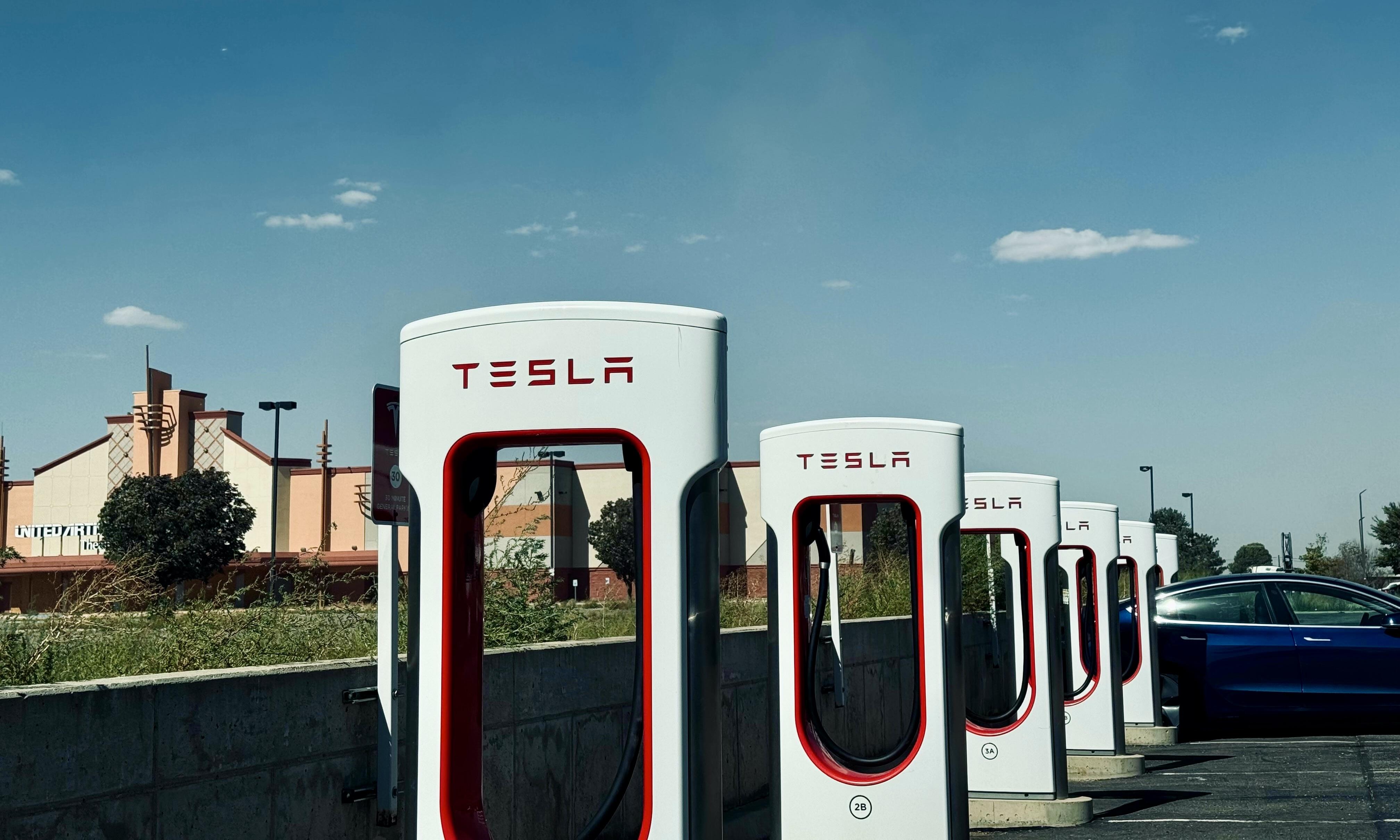
Tesla CEO Elon Musk and US President Joe Biden may not have the best relationship right now, but it appears that the White House understands Tesla's importance in the United States' rapid charging market.
SAE International, previously the Society of Automotive Engineers, has approved Tesla's North American Charging Standard (NACS) as a standard EV plug, according to recent reports.
Biden White House Supports Tesla NACS Standardization
The United States is a major market for electric vehicles. It is also home to Tesla, probably the world's leading manufacturer of pure electric vehicles. However, while the US progress in the EV market has been mostly driven by sales of mainstream Tesla vehicles such as the Model 3 sedan and Model Y crossover throughout the years, the US still lags behind China and certain European countries in terms of electric car adoption, as per Teslarati.
One major reason for this is the unavailability of fast chargers in the United States. Tesla's Supercharger Network has been in place for years, and customers have been making seamless long trips since the days of the Model S and Model X, but the situation is very different outside of Tesla's electric vehicles. There are rapid chargers, such as Electrify America, but they are nothing near the level of Tesla Superchargers.
As a result, when Tesla offered to open its NACS to other automakers, many automakers quickly agreed. Ford and GM were only the start, and more recently, even holdouts like Volkswagen have agreed to the pricing standard. According to an Associated Press article, SAE International, previously the Society of Automotive Engineers, said in June that it would develop standards for Tesla's EV charging connection so that it could work with other electric vehicles.
SAE International announced on Tuesday that Tesla's North American Charging Standard is a new standard electric car connector. The United States issued a statement. The new standard, according to the Joint Office of Energy and Transportation, "ensures that any vehicle or charging equipment supplier or manufacturer will be able to use, manufacture, or deploy the connector and expands charging access for current and future EV drivers across the country."
Loren McDonald, CEO of EVAdoption LLC, a company that currently studies NACS adoption, stated that SAE International's revelation indicates that Superchargers are no longer exclusive to Teslas. However, McDonald cautioned that the move from CCS connectors in non-Tesla chargers to NACS may cause some hassles for electric vehicle drivers in the near future.
"Now, nobody can say it's just 'the Tesla thing.' There's nothing now to hold them back… We are still going to have several years of millions of CCS connector vehicles on the road, and they're going to last a long time. Until we know how the automakers are actually going to distribute these adapters, to me, it's really unknown how it's going to help solve this problem over the next couple of years if you're an existing CCS owner. The reality of all of this is we're going to be living in adapter hell for the next several years, and that transition, then, is problematic for mainstream consumers who say, 'I don't get this,'" McDonald stated.
Tesla V4 Supercharger Installations Ramps Up in Europe
Installations of Tesla V4 Superchargers are increasing across Europe. The Tesla Charging team recently used Elon Musk's X platform to launch a few new V4 Superchargers in Europe, according to a separate Teslarati report.
Tesla won €149 million in funding from the European Union in September to maintain and extend its Supercharger network in Europe. According to the charging team's most recent declaration, the Texas-based automaker will use the funds to install or upgrade our 7,000 Superchargers to V4. Tesla appears to be making good use of the funding.
The majority of the new V4 Superchargers were announced on December 19, 2023. The vast bulk of the installations looked to be located in Germany. Tesla also focused on installing new V4 Superchargers in the United Kingdom (UK) and France. Italy also received eight new V4 Superchargers in Settimo Torinese.
The Tesla Charging team announced four additional V4 Supercharger installations in Heartlands, United Kingdom, on December 19. In addition, Tesla installed 16 V3 Superchargers in Pease Pottage, UK.
Meanwhile, Tesla installed 8 V4 Superchargers in Zweibrüken and another 8 V4 Superchargers in Altdorf in Germany. In addition, Tesla opened 20 V4 Superchargers in Bayreuth and 12 in Baden-Baden. In Munich, Germany, 12 additional V4 Superchargers were erected.
In Dinan, France, 16 V4 Superchargers went into service. In Saint-Dié-des-Vosges, 8 more V4 Superchargers were added. The first V4 Superchargers will be available in Europe in March 2023. The first stalls in the Netherlands opened in Harderwijk. Meanwhile, the first V4 Superchargers opened in the United States in Sparks, Nevada.
Photo: dark matter/Unsplash







