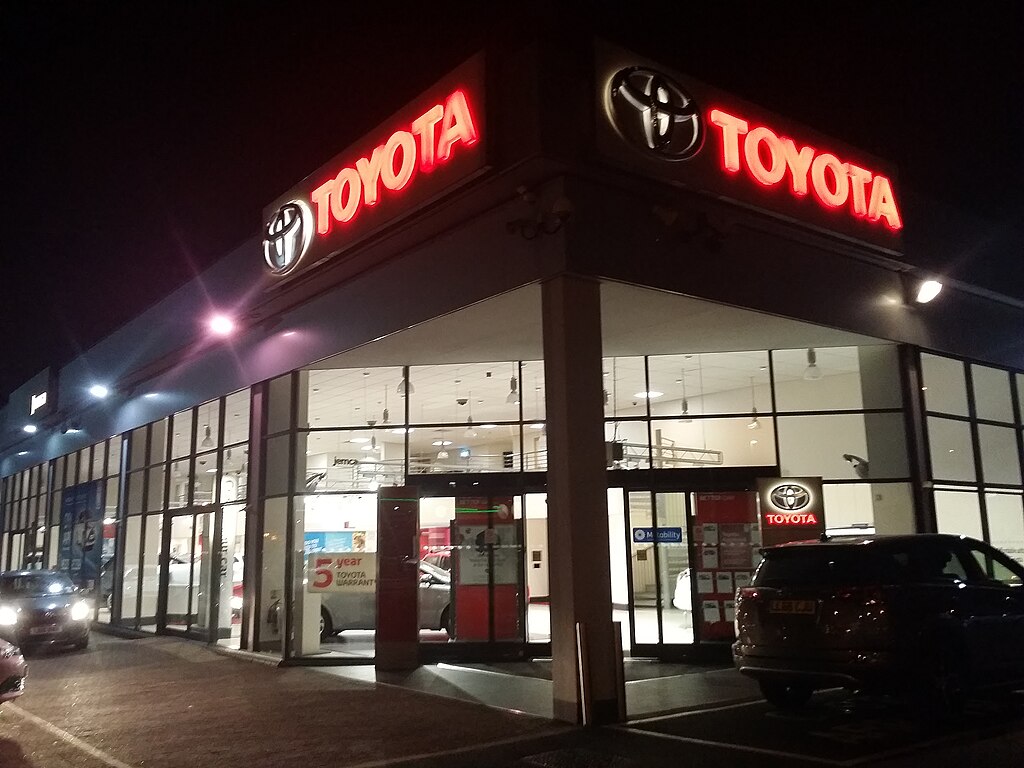
Toyota Motor reported a modest decline in fiscal first-quarter operating profit on Tuesday as disruptions linked to the Middle East conflict weighed on vehicle sales and supply chains. Despite the setback, Japan’s largest automaker raised its full-year earnings outlook and unveiled a massive ¥1 trillion ($6.4 billion) share buyback, signaling confidence in its financial position.
For the quarter ended June 30, Toyota posted operating income of ¥1.06 trillion, down 8.8% from a year earlier. However, revenue climbed 10.4% year-on-year to ¥13.52 trillion, reflecting resilient global demand and strong vehicle sales.
The company said its performance remained stable despite geopolitical challenges, supported by a weaker Japanese yen, ongoing cost-cutting initiatives, and robust demand for hybrid vehicles. The yen’s depreciation, which pushed the currency to multi-decade lows during the quarter, also boosted overseas earnings when converted back into yen.
Toyota’s net income attributable to shareholders surged 75.6% to ¥1.48 trillion, largely driven by a one-time gain related to the privatization of Toyota Industries.
In a move aimed at improving shareholder returns and capital efficiency, Toyota announced plans to repurchase up to ¥1 trillion worth of its own shares, citing its strong cash position.
The automaker also upgraded its financial guidance for the fiscal year ending March 2027. Toyota now expects operating income of ¥3.40 trillion, compared with its previous forecast of roughly ¥3.0 trillion. It also increased its revenue outlook to ¥54.0 trillion from ¥51.0 trillion.
Toyota slightly raised its vehicle sales forecast to 9.7 million units for the current fiscal year, up from an earlier estimate of 9.6 million units. The company expects North America and Japan to remain its strongest markets, while hybrid vehicles continue to drive growth as consumers seek more fuel-efficient options.
Despite the improved outlook, Toyota shares fell 1.2% on Tuesday, underperforming the Nikkei 225 index, which declined 0.6%. Investors will likely continue monitoring geopolitical risks, currency movements, and hybrid demand as key factors influencing Toyota’s performance in the coming quarters.