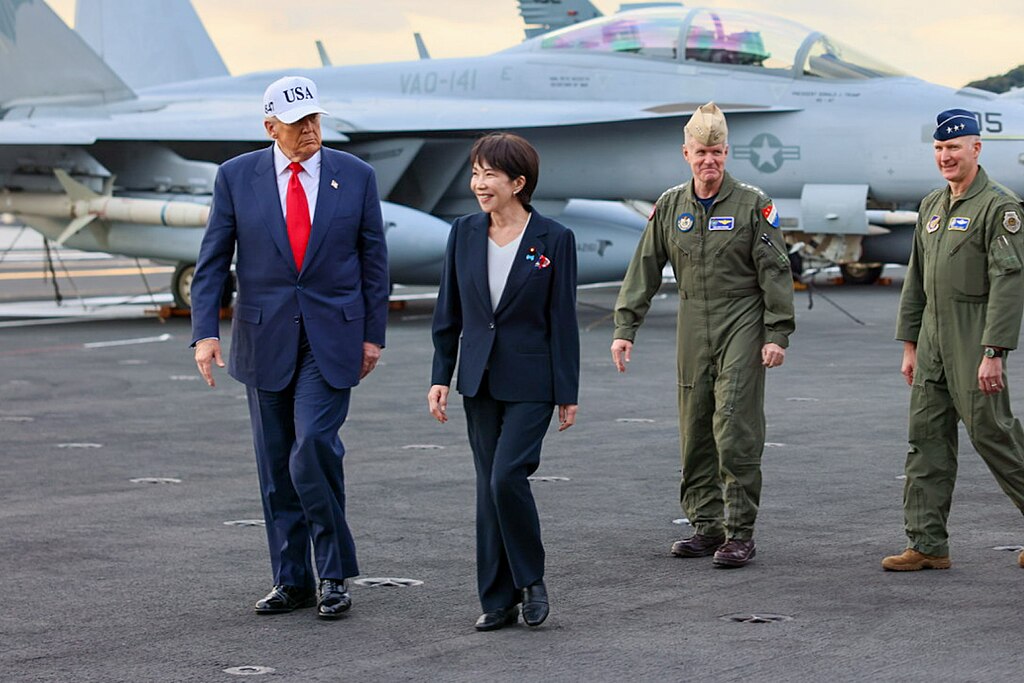
U.S. President Donald Trump has given his “complete and total endorsement” to Japanese Prime Minister Sanae Takaichi ahead of Japan’s national election this Sunday, signaling strong U.S. backing at a critical moment for Tokyo’s politics, markets, and foreign relations. Trump also announced plans to host Takaichi at the White House on March 19, underscoring the importance of the U.S.–Japan alliance.
Takaichi, Japan’s first female prime minister, is leading her Liberal Democratic Party (LDP) into the election alongside its coalition partner, the Japan Innovation Party (Ishin). Opinion polls suggest the coalition could secure around 300 seats in the 465-seat lower house, a significant improvement from its current narrow majority. Such a victory would give Takaichi a strong mandate to pursue her economic and security agenda.
Investor sentiment, however, has been shaken by Takaichi’s campaign pledge to suspend Japan’s 8% sales tax on food to help households cope with rising prices. Analysts estimate the move could reduce annual tax revenue by about 5 trillion yen ($30 billion), raising concerns in a country already carrying the world’s heaviest public debt burden. These worries have fueled a sell-off in Japanese government bonds and pushed the yen into volatile territory. Still, market observers note that alternative opposition proposals involving deeper tax cuts and higher spending could pose even greater fiscal risks, making an LDP victory the least disruptive outcome for markets.
On the geopolitical front, Takaichi’s push to significantly strengthen Japan’s defense capabilities has heightened tensions with China, particularly after she outlined possible responses to a Chinese attack on Taiwan. Beijing has accused her of reviving Japan’s militarist past. Trump, seeking to preserve a delicate trade truce with China, reportedly urged Takaichi in a private call not to further inflame relations, though a decisive election win could give her greater leverage.
Despite economic jitters and diplomatic friction, Takaichi remains popular at home, especially among younger voters. Turnout, weather conditions, and voter enthusiasm will ultimately shape the final result. If she loses her majority, Takaichi has pledged to resign, making this election a defining moment for Japan’s political and economic future.