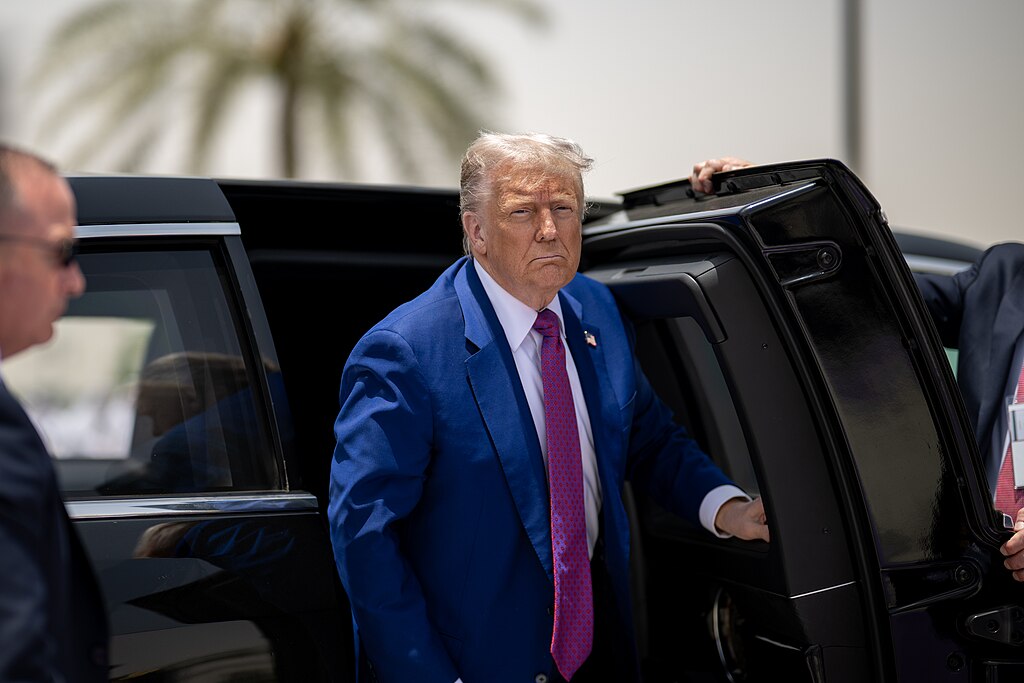
U.S. President Donald Trump said on Tuesday that his administration may be able to issue a $2,000 payout to American citizens without needing approval from Congress, citing the surge in revenue generated from his trade tariffs. Speaking during a press conference at the White House, Trump claimed that the federal government is collecting so much money from tariffs that it could return a portion directly to the public while also reducing national debt.
According to Trump, the proposed payout would take the form of a “dividend” funded entirely by tariff income. He emphasized that the scale of tariff revenue gives the administration flexibility to act independently, stating that Congress may not be required to authorize such payments. The comments echo Trump’s earlier statements that tariffs are not only a trade tool but also a revenue mechanism that can benefit American citizens directly.
Data compiled by the Bipartisan Policy Center shows that Trump’s sweeping tariffs, which range between 10% and 50% on imports from major global economies, generated approximately $288.5 billion in gross federal revenue in 2025. This represents a sharp increase from the $98.3 billion collected in 2024, highlighting the significant financial impact of the tariffs. Despite the rise in revenue, analysts note that the amount still represents a relatively small share of the overall federal deficit, which totaled around $1.78 trillion in 2025.
Trump has repeatedly promoted tariffs as a way to strengthen the U.S. economy, protect domestic industries, and reduce the deficit. However, critics argue that tariffs effectively function as a tax on Americans, since importers typically pass higher costs on to consumers through increased prices. Economists have also warned that sustained tariffs could weigh on economic growth and consumer spending.
Adding further uncertainty, the U.S. Supreme Court is currently reviewing the legality of Trump’s tariffs. While the court was expected to issue a ruling on Tuesday, no decision was announced, and no timeline was provided for when a judgment might come. The outcome could have major implications for future U.S. trade policy and the feasibility of any tariff-funded dividend plan.