
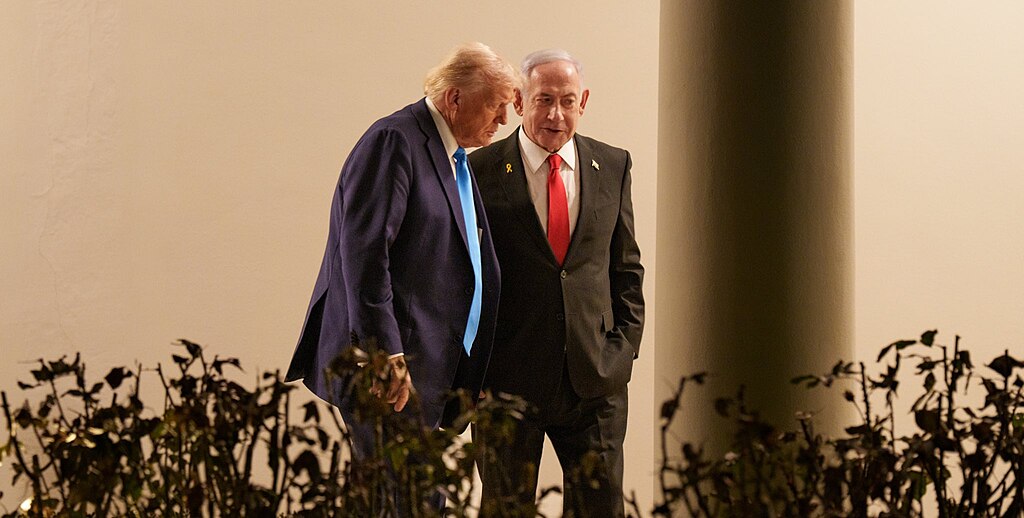
U.S. President Donald Trump announced on Monday that Israel will not deploy troops to Beirut following what he described as a productive conversation with Israeli Prime Minister Benjamin Netanyahu. The statement comes amid growing concerns over escalating tensions in the Middle East and fears of a wider regional conflict involving Israel and Hezbollah.
In a post shared on Truth Social, Trump said he held a constructive call with Netanyahu and received assurances that Israeli forces would not enter the Lebanese capital. According to Trump, any troops that had been heading toward Beirut were ordered to turn back.
“I had a very productive call with Prime Minister Bibi Netanyahu, of Israel, and there will be no troops going to Beirut, and any troops that are on their way, have already been turned back,” Trump wrote.
The former president also claimed that efforts to reduce hostilities extended beyond his discussion with the Israeli leader. Trump stated that he communicated through high-level representatives with Hezbollah and received commitments aimed at ending ongoing violence.
“Likewise, through highly placed Representatives, I had a very good call with Hezbollah, and they agreed that all shooting will stop,” Trump added in his social media post.
The announcement has drawn attention from international observers monitoring developments between Israel and Hezbollah, two sides that have experienced repeated clashes in recent years. Any military action involving Beirut could have significantly increased instability in Lebanon and the broader Middle East.
Trump’s comments suggest that diplomatic engagement may have played a role in preventing a further escalation of the conflict. However, officials have not yet provided additional details regarding the reported discussions or the specific terms of any agreement to halt hostilities.
The situation remains closely watched by global leaders, security analysts, and regional governments as efforts continue to maintain stability and prevent renewed fighting. Any reduction in military activity between Israel and Hezbollah would be viewed as a positive step toward easing tensions and avoiding a broader confrontation in the region.


