U.S. President Donald Trump has threatened sweeping economic consequences against countries providing what he described as a “lifeline” to Iran, escalating pressure nearly six months into the U.S.-Israel war with Tehran.
The conflict has killed thousands and disrupted global markets, particularly as Iran has demonstrated its ability to restrict shipping through the Strait of Hormuz. Before the war, roughly one-fifth of globally traded oil passed through the strategic waterway.
Washington and Tehran announced ceasefire agreements in April and June aimed at restoring shipping through Hormuz and moving toward an end to the conflict. Both agreements quickly collapsed, although Israel has largely withdrawn from the fighting.
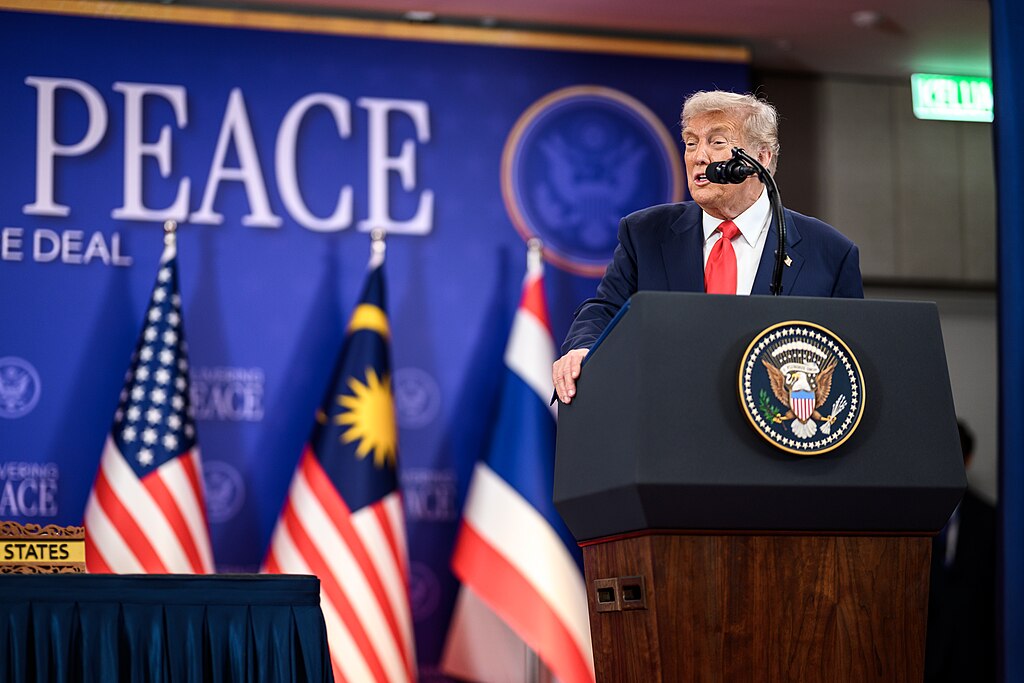
In a Wednesday social media post, Trump threatened unprecedented “Economic Warfare and Isolation” against Iran and warned that countries allowing financial institutions, businesses, airports or government agencies to support Tehran could face major U.S. economic penalties.
Trump did not specify what measures Washington would impose or identify potential targets. Such action could affect countries involved in mediating peace efforts and potentially complicate U.S. economic relations with China.
China purchases more than 80% of Iran’s seaborne oil exports, according to 2025 data from Kpler. Further U.S. economic pressure on Beijing could risk retaliation, particularly given China’s importance as an exporter of rare-earth minerals.
Meanwhile, the United Arab Emirates announced Tuesday that it was suspending trade, commercial exchanges and financial transactions with Iran until further notice. The move followed a UAE military report that two Iranian missiles had fallen into the sea, an allegation Tehran rejected.
Iranian officials maintain that Tehran remains open to negotiations but will not surrender under military or economic pressure. Trump said Tuesday that no U.S.-Iran talks were taking place, while special envoy Jared Kushner offered a contrasting assessment, saying negotiations remained active.
The Trump administration is also seeking Iran’s highly enriched uranium stockpile and a stricter nuclear agreement. Iran, a signatory to the Nuclear Non-Proliferation Treaty, continues to insist that its nuclear program is intended for peaceful purposes.