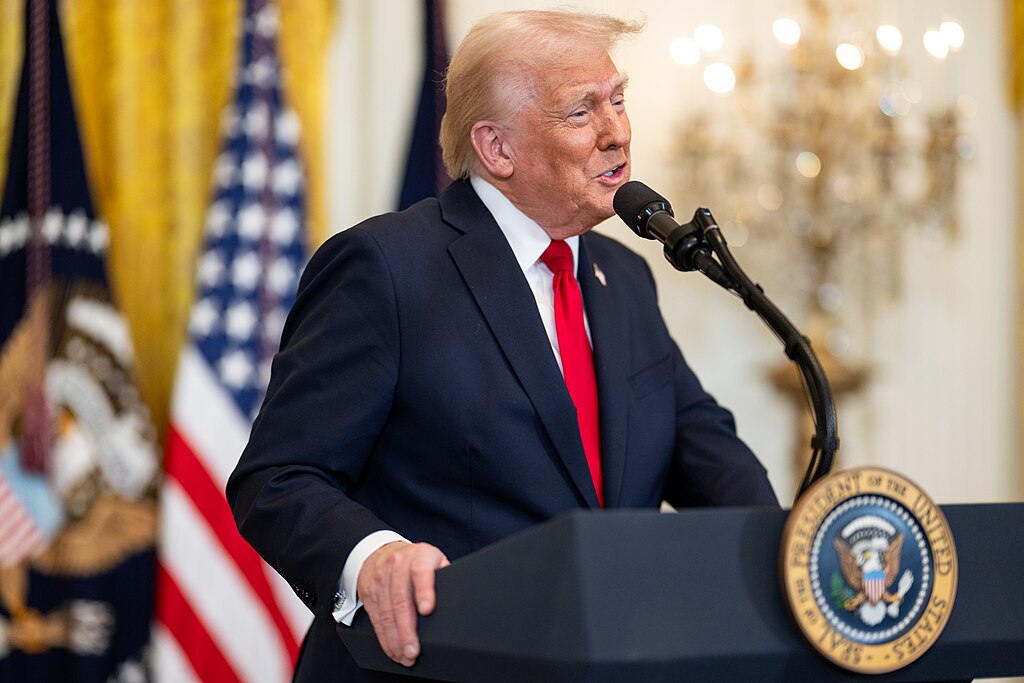
U.S. President Donald Trump has issued a strong warning to the United Kingdom and Canada over expanding business cooperation with China, describing such moves as “very dangerous” during a recent public appearance. His comments add to ongoing global debates about economic security, geopolitics, and Western relations with Beijing.
Speaking to reporters on Thursday during the premiere of the film “Melania” at the Kennedy Center in Washington, Trump was asked to respond to reports that the UK has pledged to strengthen its business and trade engagement with China. In response, Trump cautioned that closer economic ties with China could pose serious risks. “Well, it’s very dangerous for them to do that,” he said, referring to the United Kingdom. He went on to add that he believes it would be “even more dangerous” for Canada to pursue deeper business relations with China.
Trump’s remarks reflect his long-standing skepticism toward China’s role in global trade and politics. During his presidency, U.S.-China relations were marked by trade wars, tariffs, and repeated warnings about national security, intellectual property theft, and economic dependence on Chinese manufacturing and investment. His latest comments suggest that these concerns remain central to his worldview, particularly when it comes to close U.S. allies aligning economically with Beijing.
The warning comes at a time when China continues to seek stronger commercial relationships with Western economies, while countries like the UK and Canada attempt to balance economic opportunities with security and diplomatic considerations. China is a major trading partner for both nations, making the issue highly sensitive and strategically complex.
Trump’s statement is likely to resonate with audiences who share concerns about China’s global influence, as well as those closely watching the future direction of transatlantic and North American economic policy. As geopolitical tensions persist, business cooperation with China remains a controversial topic, with leaders divided over whether engagement or caution offers the safer path forward.
By publicly addressing the issue, Trump has once again positioned China at the center of international economic debate, signaling that any expansion of Western business ties with Beijing will continue to face scrutiny and political pushback.