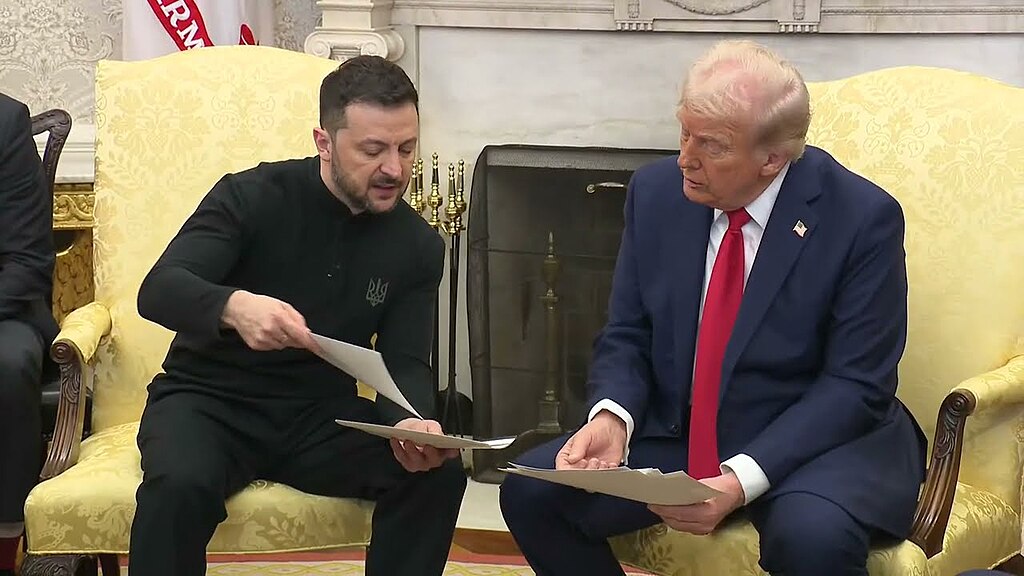
U.S. President Donald Trump said he and Ukrainian President Volodymyr Zelenskiy are moving “very close” to a potential agreement to end the war in Ukraine, following high-level talks at Trump’s Mar-a-Lago resort in Florida. While both leaders highlighted meaningful progress, they acknowledged that the future of eastern Ukraine’s disputed Donbas region remains a major unresolved obstacle in the peace negotiations.
Speaking at a joint news conference, Trump said negotiations were advancing on some of the most sensitive issues, including security guarantees for Ukraine and territorial questions linked to Russia’s invasion. Although no deadline was set, Trump suggested it would become clear “in a few weeks” whether a final peace deal is achievable, noting that several “thorny issues” still need to be addressed.
Zelenskiy stated that Ukraine and its partners had reached agreement on security guarantees, calling them a crucial foundation for lasting peace. Trump took a more cautious tone, saying talks on security were about 95% complete and emphasizing that European nations would play a leading role, with support from the United States. French President Emmanuel Macron later confirmed progress on this front, adding that members of the “Coalition of the Willing” would meet in Paris in early January to finalize their commitments.
The status of the Donbas region remains the most difficult challenge. Ukraine opposes a full withdrawal, while Russia continues to demand control of the entire area. Trump said discussions were “moving in the right direction,” but admitted the issue was far from settled. The U.S. has floated the idea of a free economic zone in Donbas as part of a compromise, though details remain unclear.
Ahead of the Zelenskiy meeting, Trump also spoke with Russian President Vladimir Putin in a lengthy call described as productive. Putin reportedly criticized a proposed 60-day ceasefire and urged swift decisions on Donbas. Trump said Putin pledged support for rebuilding Ukraine and expressed optimism about peace, despite ongoing Russian military strikes.
Zelenskiy emphasized that any final agreement would require approval from Ukraine’s parliament or a national referendum, underscoring the political and public stakes involved as negotiations continue.