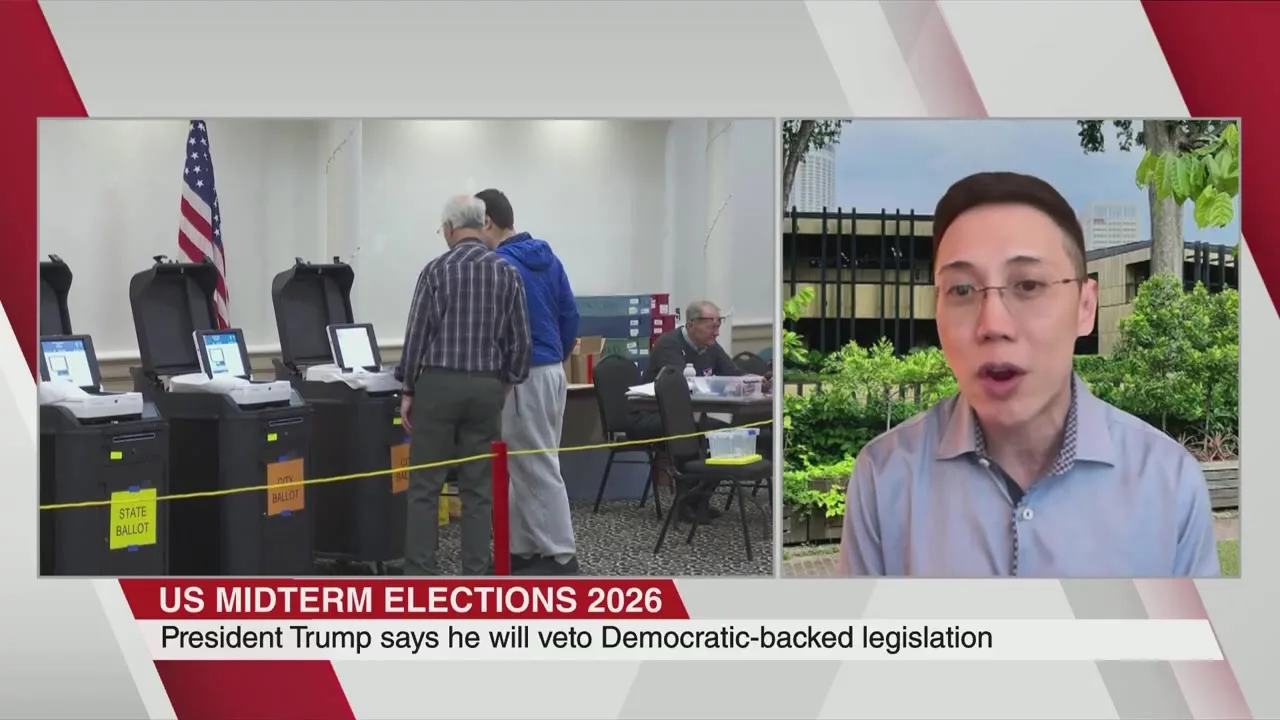
Donald Trump has little incentive to intensify tariffs after his midterm defeat and could seek compromise with Democrats, Elvin Lim, dean of Singapore Management University's College of Integrative Studies, said.
Democratic control of Congress could open a path to legislation changing tariffs that the executive branch largely determined. Lim made the comments in CNA's interview programme published Nov. 5, “Will Trump's tariff stance shift after midterm defeat? Analyst weighs in”.
Lim put household finances at the centre of the election result. About 40% of voters went to the polls explicitly to reject Trump, he said, citing exit polls without identifying their provider. He also put the share of Trump's Make America Great Again supporters who abandoned the Republican vote at about 7% to 10%.
“There is one thing that you cannot convince people of when they feel it in their pocketbooks and this is prices, affordability,” Lim said. He linked dissatisfaction to energy costs and the war in the Middle East.
Trump's response left room for both confrontation and cooperation with Congress. Lim said the president had repeated his intention to use his veto but also congratulated Democrats and expressed willingness to reach a deal. Democrats face competing demands to address domestic problems and hold the administration accountable.
Congressional hearings, subpoenas and oversight would occupy lawmakers over the next two years, Lim said. Government funding and the debt ceiling, the legal limit on federal borrowing, would create deadlines for negotiations in December and around June next year. He saw opportunities for legislation supported by both parties.
A Democratic Congress would not necessarily make relations easier for Asian countries. Lim said Democrats could take a harder line on China and Taiwan, citing Nancy Pelosi's Taiwan visit. Congress's authority over tariffs and taxes could nevertheless provide an opening to lower some tariffs through legislation.
Lim saw little political incentive for Trump to respond to defeat by raising tariffs further. “He owns this,” he said, linking the electoral setback to the cost of tariffs and war. Negotiating with Democrats could give Trump a way to retreat while protecting his reputation before leaving office.
Lim also raised the possibility of broader foreign policy changes after what he described as Trump's apparent remark about stopping aid to Israel. Whether that remark would become policy remained open. He said the president's pursuit of a foreign policy legacy could compete with Democrats' focus on domestic issues.
For Singapore and Southeast Asia, Lim questioned whether the result meant a weaker United States. He saw greater agreement on addressing tariffs and affordability. Attention would also turn towards potential presidential successors while Trump served his remaining two years, giving foreign leaders more people to engage.