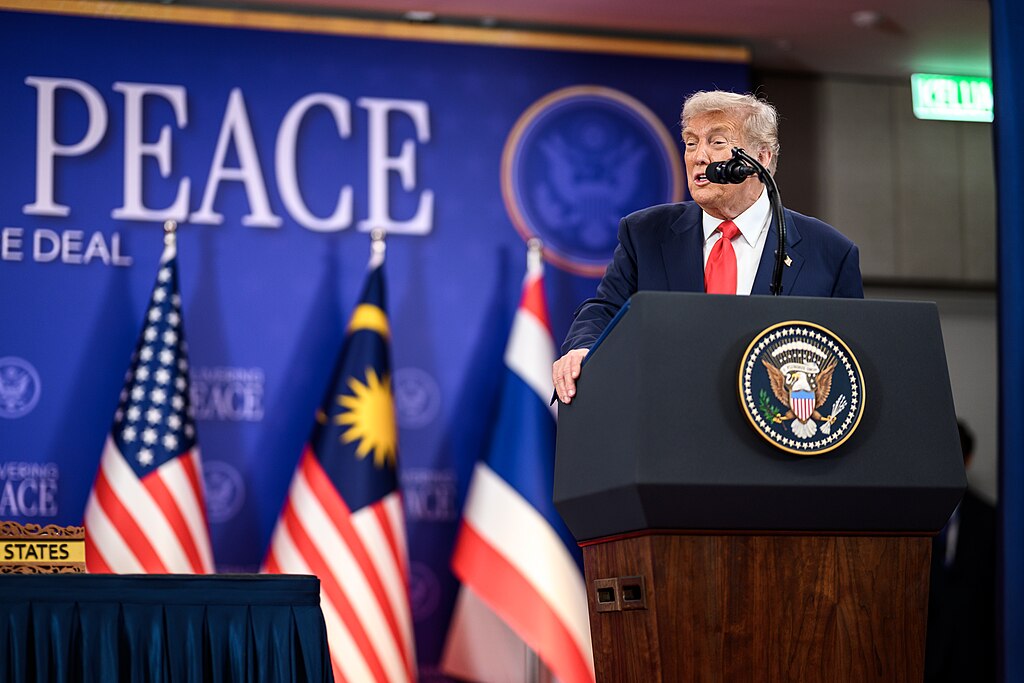
U.S. President Donald Trump has sought to ease concerns about his proposed “Board of Peace,” saying the United Nations should be allowed to continue its work despite criticism that the new initiative could undermine the global body. Speaking to reporters on Tuesday, Trump said the U.N. has “great potential” but has historically failed to live up to it, adding that his plan was not intended to immediately replace the organization, though he acknowledged it “might” evolve in that direction.
The Board of Peace, according to Trump, is designed to help resolve international conflicts and promote global stability. However, governments and diplomats around the world have responded cautiously, warning that the initiative could duplicate or weaken existing U.N. mechanisms for conflict resolution and peacekeeping. Many international experts fear it could shift authority away from multilateral institutions toward a U.S.-led structure.
The White House recently announced several high-profile members of the board, including U.S. Secretary of State Marco Rubio, special envoy Steve Witkoff, former British Prime Minister Tony Blair, and Trump’s son-in-law Jared Kushner. Their inclusion has fueled further debate, particularly among human rights advocates and foreign policy analysts.
In mid-November, the U.N. Security Council adopted a resolution authorizing the Board of Peace, alongside participating countries, to help establish an international stabilization force in Gaza. This followed a fragile ceasefire that began in October under a Trump-backed plan accepted by Israel and Palestinian militant group Hamas. Initially, the board was intended to supervise Gaza’s temporary governance, but Trump later said its mandate would expand to address conflicts worldwide.
Critics argue that the board’s role in overseeing foreign territories resembles a colonial-style governance model. Tony Blair’s involvement has also drawn criticism due to his role in the Iraq War and Britain’s imperial history in the Middle East. Meanwhile, the Gaza ceasefire remains unstable, with reports indicating that more than 460 Palestinians, including over 100 children, and three Israeli soldiers have been killed since the truce began.
As debate continues, Trump insists the United Nations should persist, even as his Board of Peace proposal reshapes discussions about the future of global conflict management.