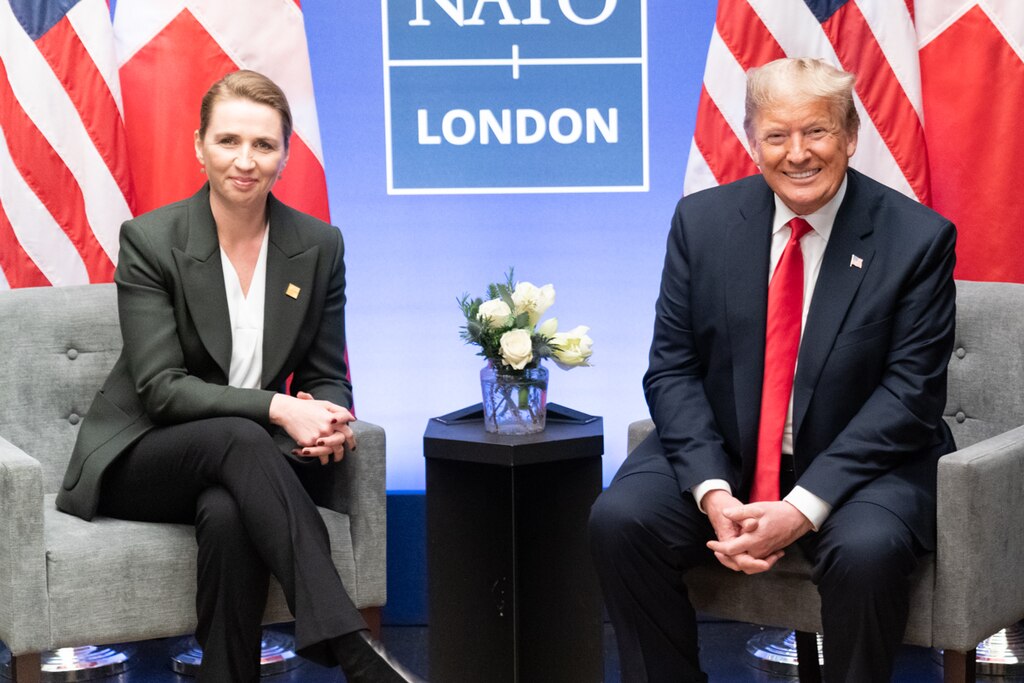
U.S. President Donald Trump has reignited international controversy by declaring there is “no going back” on his ambition to control Greenland, a move that has unsettled NATO allies, strained U.S.-Europe relations, and rattled global financial markets. Speaking on Tuesday, Trump refused to rule out the use of force to take the Arctic island from Denmark, a fellow NATO member, while later suggesting that a negotiated solution could still satisfy both the United States and NATO.
Trump’s Greenland stance, amplified through social media posts and AI-generated images portraying Greenland and even Canada as part of the United States, has alarmed European leaders gathering at the World Economic Forum in Davos, Switzerland. The issue has become a flashpoint for broader concerns about U.S. foreign policy, alliance unity, and the risk of a renewed trade war between Washington and Brussels.
Danish Prime Minister Mette Frederiksen struck a defiant tone, stating that Denmark would not abandon Greenland and warning that Trump’s refusal to rule out military action forces others to take the threat seriously. French President Emmanuel Macron criticized what he described as the “law of the strongest,” urging the European Union not to bend to pressure, while European Commission President Ursula von der Leyen called for greater European strategic independence amid what she described as a “seismic change” in global relations.
Trade tensions have also resurfaced, with Trump threatening steep tariffs on European goods, including French wines and champagnes. The European Union has warned it could retaliate with tariffs on €93 billion worth of U.S. imports or even deploy its powerful Anti-Coercion Instrument, targeting U.S. digital services. Canadian Prime Minister Mark Carney also voiced opposition to any U.S. tariffs linked to the Greenland dispute.
Global markets reacted sharply to the escalating rhetoric. Wall Street stocks slid, fears of a “Sell America” trade resurfaced, and gold prices surged to a record high above $4,700 an ounce as investors sought safe havens. Meanwhile, Russia weighed in, questioning Danish sovereignty over Greenland, further underscoring how Trump’s Greenland push is reshaping geopolitical fault lines and adding volatility to an already fragile global landscape.