
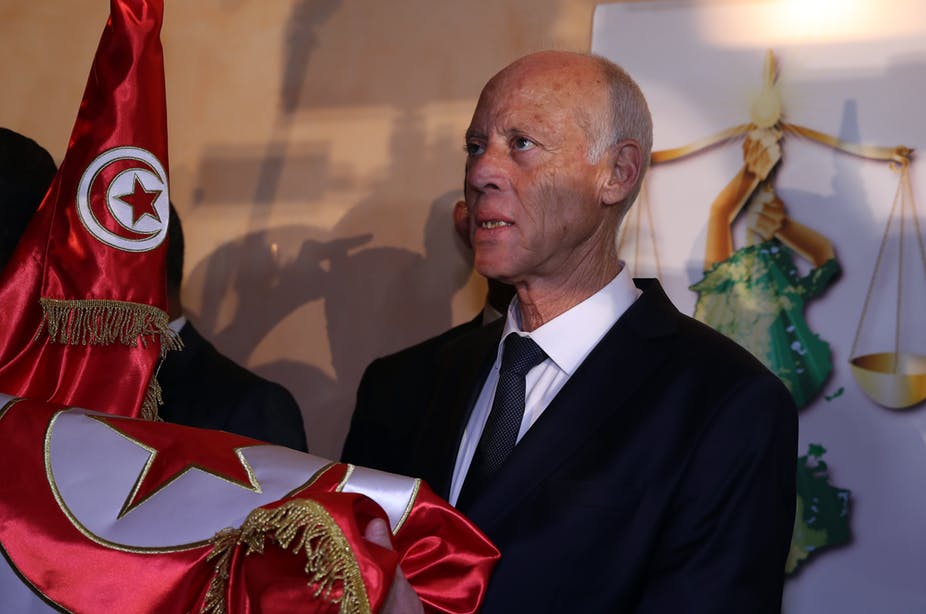
Activists and opposition figures from across Tunisia’s political spectrum took to the streets of the capital on Saturday in a rare and significant display of unity against President Kais Saied, calling for an end to what they describe as one-man rule and demanding the restoration of democracy. The demonstration marked the latest in three consecutive weeks of protests, highlighting growing momentum among opposition parties, civil society groups, and human rights activists who accuse Saied of dismantling democratic institutions.
Hundreds of protesters marched through central Tunis carrying portraits of jailed politicians, journalists, and activists, transforming the rally into a powerful weekly confrontation between the president and his critics. Chants denounced political repression and demanded the release of detainees, as demonstrators accused the government of silencing dissent through arrests, prosecutions, and intimidation.
Human rights organizations say President Kais Saied has steadily eroded civil liberties since seizing extraordinary powers in 2021, ruling by decree, and sidelining democratic checks and balances. Critics argue these actions have turned Tunisia, once hailed as a success story of the Arab Spring, into what they call an “open-air prison.” Saied has repeatedly rejected these accusations, insisting he is fighting corruption, traitors, and a deeply entrenched elite that he blames for the country’s economic and political crises.
Saturday’s protest was notable for its broad participation across ideological lines, a sharp contrast to previous years when political fragmentation weakened opposition efforts. Protester Noura Amaira told Reuters that widespread repression has made unity unavoidable, saying that nearly all opposition voices are now behind bars.
Tensions escalated further after a court sentenced prominent opposition leader Abir Moussi to 12 years in prison, a ruling that rights groups describe as another step toward entrenching authoritarian rule. Last month, an appeals court also handed down prison sentences of up to 45 years to dozens of opposition politicians, lawyers, and business figures on charges of conspiring against the state.
Police recently arrested additional opposition figures, including Chaima Issa, Ayachi Hammami, and Nejib Chebbi, triggering renewed criticism from both local and international human rights organizations. Authorities have also suspended several civil society groups over alleged foreign funding, deepening concerns about shrinking civic space in Tunisia.


