
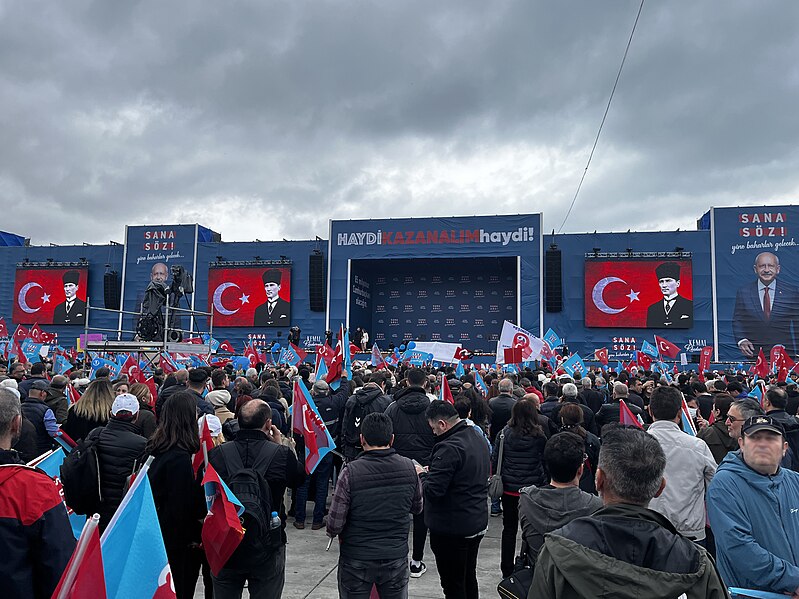
The recent presidential elections in Turkey resulted in a runoff as two major candidates, including incumbent Tayyip Erdogan, failed to reach the threshold of votes needed to claim victory. Despite the results, the country’s opposition candidate challenging Erdogan has struck a more optimistic tone in the race.
Opposition candidate Kemal Kilicdaroglu said over the weekend that they are gaining more votes than Erdogan in the initial election results, which are seen as a test of how long Erdogan can stay in power. Kilicdaroglu, who is backed by an alliance of six opposition parties, is said to be leading by a narrow margin against Erdogan based on the initial results. One tally, in particular, showed Kilicdaroglu leading Erdogan by more than one percentage point.
The opposition mayors of both Istanbul and the capital Ankara have also said that Kilicdaroglu is on track to claim victory based on almost a quarter of the ballot boxes that were counted at the time. They also warned against relying on the results reported by state media outlet Anadolu.
But with Turkey heading into a runoff election on May 28 to determine whether they have a new president or Erdogan has another term in office, pundits have been turning their attention to now-former presidential candidate Sinan Ogan, who placed third in the overall results. Ogan is backed by the ATA alliance and received 5.17 percent of the overall votes, and their support is needed for either Erdogan or Kilicdaroglu to win in the coming runoff.
“At the moment, I’m not saying we will support this or that,” said Ogan on Monday. “Those who do not distance themselves from terrorism should not come to us.”
“It seemed from the very beginning that the elections would go into the second round, and Turkish nationalists and Kemalists will be the ones who determine the second round,” said Ogan.
While it remains to be seen what Ogan’s definition of “terrorism” would be, Turkish nationalists see that both Erdogan and Kilicdaroglu are supported by those they consider to be aligned with terrorist groups. Kilicdaroglu is backed by the People’s Democratic Party, seen by nationalists as aligned with the Kurdistan Workers’ Party, also known as the PKK, and designated as a terror organization by Turkey, the United States, and the European Union.
Erdogan’s AK Party is backed by Huda-Par, a Kurdish Islamist party that has historic links to Hezbollah but is not connected to the group of the same name in Lebanon.
Photo by Kurmanbek/Wikimedia Commons(CC by 2.0)



_04.jpg)