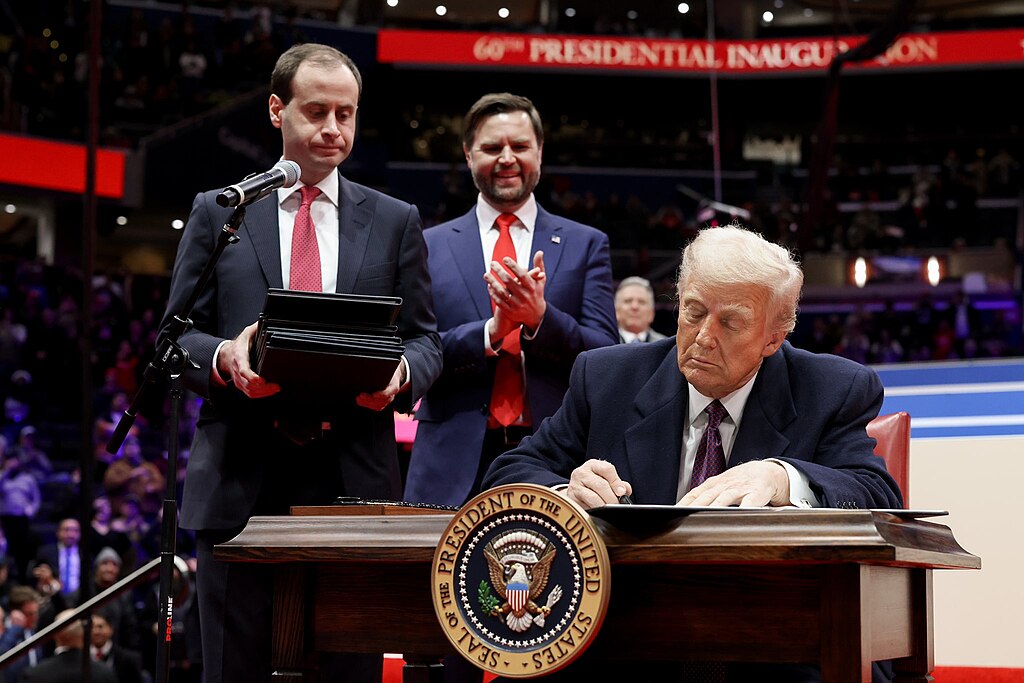
President Donald Trump is standing firm on his controversial tariff policy, even as global markets reel. During a joint press conference with Israeli Prime Minister Benjamin Netanyahu, Trump indicated that new reciprocal tariffs could become permanent, yet emphasized that negotiations remain on the table.
“Both can be true,” Trump said when asked about conflicting signals from his administration. “Tariffs can be permanent, and we can still negotiate, because we need more than just tariffs.”
Last Wednesday, Trump announced a 10% base tariff on imports and varying tariffs on over 180 countries, set to take effect April 9. The S&P 500 has dropped over 10% since the announcement, highlighting investor concerns over escalating trade tensions.
Trump pointed to non-monetary trade barriers—such as limits on U.S. companies and product standards in foreign markets—as major concerns. He cited the European Union’s alleged “bowling-ball test” used to reject American cars, claiming the EU favors its own automakers like Mercedes-Benz, Volkswagen, and BMW while limiting U.S. exports, including agriculture.
“The European Union’s been very bad to us,” Trump said. “They don’t take our cars, they don’t take our agriculture. And yet we take millions of their cars.”
According to Trump, his aggressive tariff approach has pushed countries to seek trade talks. “Virtually every country wants to negotiate,” he said. “If I didn’t do this, no one would come to the table.”
He also warned of a potential 50% tariff hike on China if it doesn't remove its 34% retaliatory tariff, which would raise total U.S. tariffs on Chinese goods to 104%.
“Tariffs will make this country very rich,” Trump claimed, adding that better trade deals could help eliminate the U.S.’s $36 trillion debt.