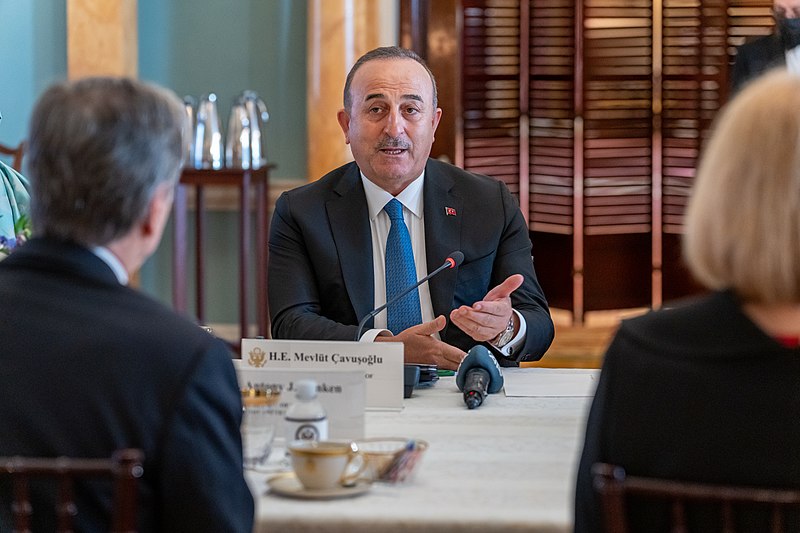
Turkish foreign minister Mevlut Cavosoglu said the trilateral talks with Finland and Sweden over their NATO bids would resume in March. The discussions were put on hold due to the protests that took place in Stockholm.
Cavosoglu said on Monday that the talks with Finland and Sweden over their membership bids to the NATO alliance will resume on March 9, adding that Ankara had yet to see Sweden fulfill its obligations as part of the memorandum the three countries signed last year. Turkey is one of the only two NATO countries that have yet to approve of Finland and Sweden’s accession into the alliance. Ankara accuses Stockholm of harboring members of what it considers to be terrorist groups.
“My colleagues will attend the meeting that will be held on March 9,” said Cavosoglu, adding that the meeting will be in Brussels.
“Unfortunately we’ve not seen satisfactory steps from Sweden on the implementation of the Madrid memorandum,” said Cavosoglu, referring to the agreement Finland and Sweden signed that led Turkey to lift its veto over their bids. “It is not possible for us to say ‘yes’ to Sweden’s NATO bid before we see these steps.”
Turkey paused the discussions toward Finland and Sweden’s accession to NATO in January when a Danish far-right politician burned a copy of the Koran during a protest outside the Turkish embassy in Stockholm, drawing the ire of Ankara.
The Swedish government plans to formally decide on March 9 on a long-planned proposal that would make it illegal to be part of or endorse a terrorist organization. Stockholm is looking to have the legislation implemented by June 1, but there has yet to be a parliamentary vote on the bill.
Over the weekend, Hungary, the only other NATO country that has yet to approve Finland and Sweden’s bids to join the alliance, signaled a further delay in its ratification of their applications. The chief of staff to Hungarian Prime Minister Viktor Orban said a vote by the Hungarian parliament may only be possible in the second half of March.
Gergely Gulyas told a news conference that parliament would put the ratification on the agenda on Monday and start debate on the legislation the following week. Gulyas noted that as adopting the bill would take four weeks, parliament can have a vote around the latter half of March.