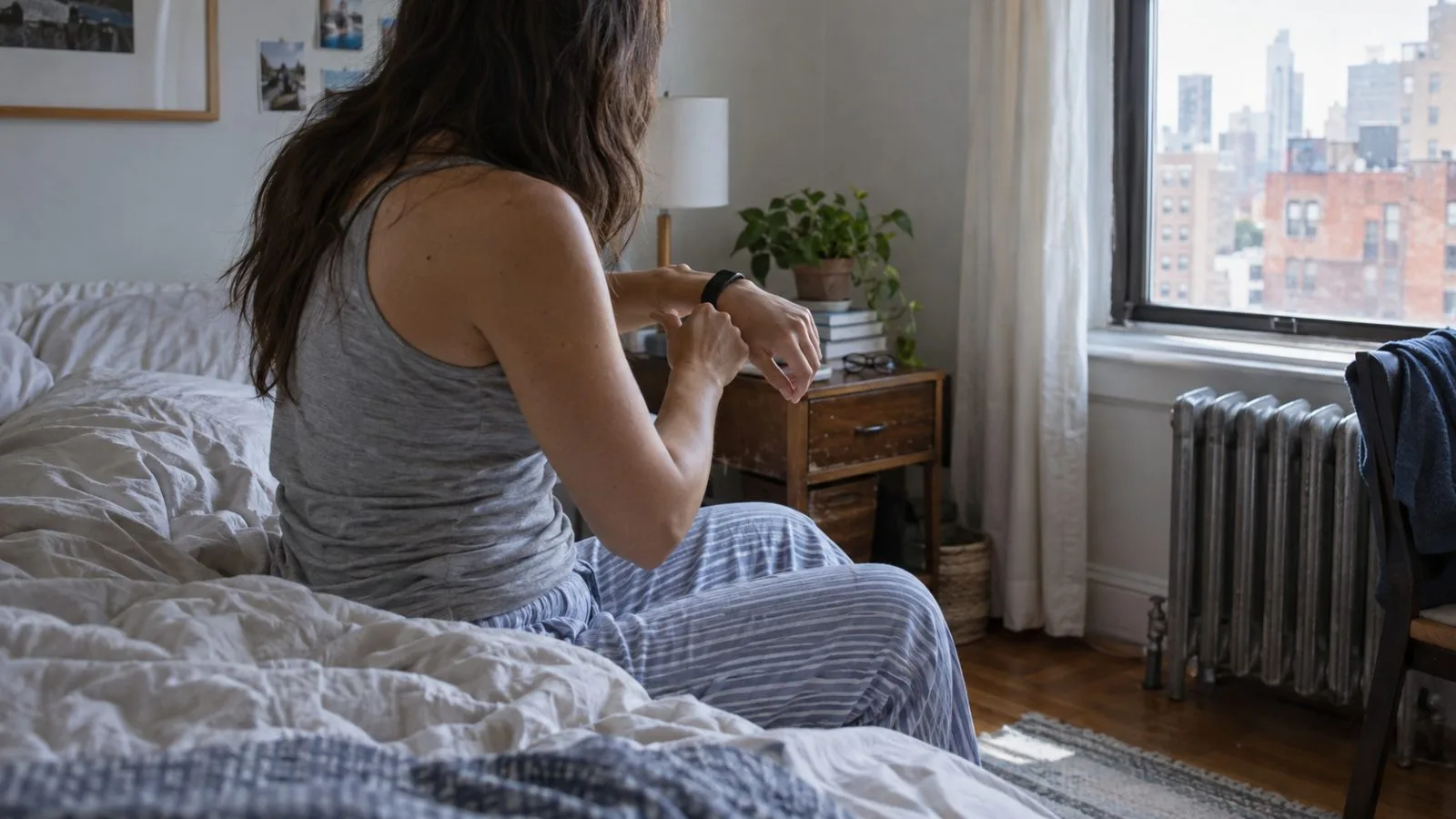
Withings said Oct. 15 that U.S. women had the lowest average sleep score before menstruation among 11 countries, while the company’s data showed a broadly shared pattern of changes.
The U.S. table showed a premenstrual score of 68.5. The same group had a nighttime heart rate of 68.6 beats per minute, the highest in the table, and an average of 5.4 sleep interruptions per night. Its score fell 3.4 points in the premenstrual week, while nighttime heart rate rose 2.9 beats per minute.
Across the analysis, 76% of women had lower sleep scores in the week before their period than in the days just after their period. The average score decline was 3.4 points. Nighttime heart rate increased for nine in 10 women, by an average of 2.8 beats per minute. Withings also reported that sleep duration was about five minutes shorter before a period, deep sleep fell 1.8 percentage points and heart rate variability declined 3 milliseconds.
The company said it analyzed about 469,000 cycles from roughly 69,000 women ages 18 to 50 who did not report using hormonal contraception and had at least three valid cycles. The data covered September 2025 through September 2026. Withings estimated cycle phases from logged period dates and compared each woman’s readings across phases. Across countries, sleep-score declines ranged from 2.9 to 4.0 points, with no statistically significant difference in the size of the decline. Country-specific sleep-score and heart-rate averages were unadjusted; score changes were age-standardized.
The release gives conflicting sample counts. Its opening refers to more than 16,000 U.S. women, while the country table lists 8,643 U.S. participants and 32,712 participants across all 11 countries. The methods section describes about 69,000 women overall. Withings did not reconcile the figures or specify which group was used to calculate the 76% finding.
“These are small shifts, but they are remarkably consistent from one country to the next,” said Livia Robic, women’s health expert at Withings. The company described the results as associations, not proof that menstrual cycles caused the changes, and said its device users may not represent the general population.
A 2018 review by Fiona Baker and Kathryn Aldrich Lee in Sleep Medicine Clinics found that sleep complaints were reported more often around menstruation, particularly among women with premenstrual symptoms or painful cramps. The review also noted that some studies found no cycle-related effect or only a small one.