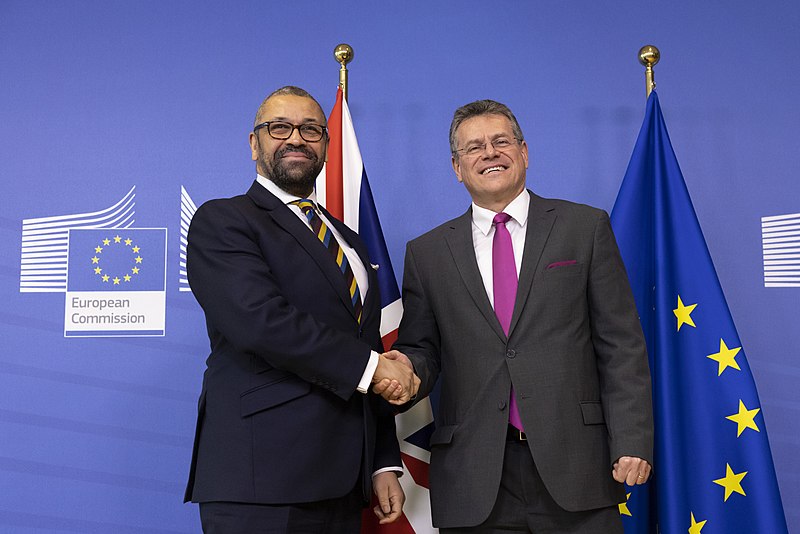
Talks are ongoing between the British government and the European Union over the post-Brexit trade agreement concerning Northern Ireland. While the potential deal may address certain trade issues, there may be other concerns that remain.
On Sunday, in interviews with local media, British deputy prime minister Dominic Raab said the potential deal to revise the Northern Ireland Protocol would address the trade issues by relaxing the physical checks on the goods that the EU wanted under the original agreement. Raab also said the deal would hope to address the concerns regarding the EU’s rules that cannot be influenced by Northern Ireland’s politicians and voters.
“If there are any new rules that apply in relation to Northern Ireland, it must be right that there’s a Northern Irish democratic check on that,” Raab told BBC.
However, Raab did not say if European courts would no longer have a say in the region. This was a key demand of Northern Ireland’s pro-British Democratic Unionist Party, which is currently boycotting a power-sharing parliament in protest to the trade deal. The DUP has also set seven tests for any potential deal.
The Sunday Times reported that Prime Minister Rishi Sunak said that the potential deal would be able to meet the DUP’s conditions. However, Sunak noted that DUP leader Jeffrey Donaldson was “minded to reject the deal.” Without the party’s support for a possible new agreement, Northern Ireland would remain with a devolved government.
Sunak is set to meet with EU Commission chief Ursula von der Leyen on Monday in the hopes of finalizing a new deal for the post-Brexit trade agreement.
Lawmakers under Sunak’s Conservative Party have been informed last week to be in parliament on Monday in a sign that the deal was close to being made. The lawmakers were told that there would be a “three-line whip” to be in parliament, the strictest order to date that could see disciplinary action taken against the lawmakers should they not show up.
Cabinet ministers were also told to be on alert for a possible conference call during the weekend to discuss the deal, which would still depend on the support of the DUP.