


 Gold Prices Fall as Fed Signals Another Rate Hike
  Venezuela’s Machado Calls for Elections by July 2027
  Trump Secures Russian Diesel Deal as US Fuel Prices Surge
  Gold Prices Rise as Dollar Weakens, Treasury Yields Fall
  RFK Jr. Launches Nationwide Vaccine Safety Review
  Bank of America Predicts Yen Rebound as USD/JPY Faces Risks
  Oil Prices Slip as Trump Rules Out Iran Strike Before Midterms
  Deere, CNH and AGCO Stocks Fall as FTC Launches Farm Equipment Probe
  Trump Sanctions International Criminal Court, Sparking EU Backlash
  Ripple Chairman Chris Larsen Donates $22.5 Million Ahead of US Midterms
  ICC Rules Duterte Fit to Stand Trial in Drug War Case
  Asian Currencies Steady as Dollar Eyes Fourth Weekly Gain
  Pentagon Orders Iran Strike Preparations as Trump Weighs Military Action
  Iran Refuses to Halt Uranium Enrichment Amid US Nuclear Demands
  Flydubai Co-Pilot Planned Suicide Attack on Israel Airport, UAE Says
  US Suspends Microsoft, Adobe From Green Card Program
  Trump Calls for Zelenskyy Replacement Amid Russian Diesel Deal


 Add as a preferred source on Google
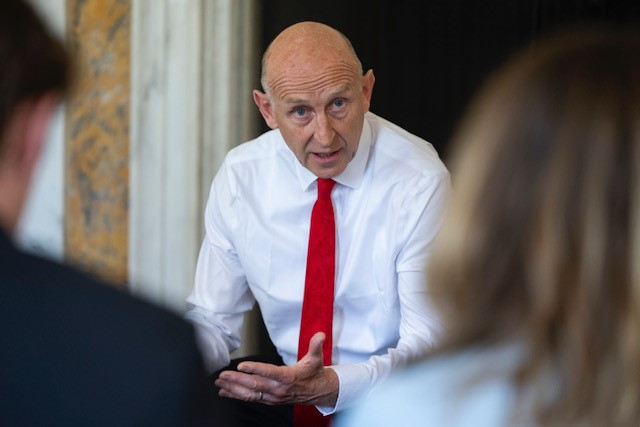
British Finance Minister John Healey is set to emphasize fiscal discipline and economic resilience during the International Monetary Fund (IMF) and World Bank annual meetings in Bangkok this week, as governments confront rising borrowing costs, inflation and geopolitical uncertainty.
The gathering marks Healey’s first appearance at the IMF annual meetings as finance minister, where he will meet international counterparts to discuss financial stability, global trade and the economic consequences of the escalating Middle East conflict.
“I will work with our international partners to keep trade moving, support families and businesses, and make Britain’s economy stronger and more resilient,” Healey said in a statement issued by his office.
The UK finance minister is expected to urge major economies to establish credible strategies for controlling government debt and reducing budget deficits. His message follows similar warnings from IMF Managing Director Kristalina Georgieva and Bank of England Governor Andrew Bailey about growing fiscal pressures.
Finance ministers and central bank officials attending the meetings will examine how the widening US-Iran war is affecting global energy prices, inflation and economic growth.
Government borrowing costs across major economies recently climbed to their highest levels in decades, reflecting investor concerns over persistent inflation, elevated public debt and expectations that interest rates could remain higher for longer.
Healey will also meet Ukrainian Finance Minister Sergii Marchenko to discuss economic resilience amid continuing geopolitical challenges.
Domestically, Healey faces mounting pressure ahead of Britain's annual budget announcement on October 28. He has pledged to maintain fiscal discipline while keeping government borrowing on a downward trajectory.
However, rising debt servicing costs, increased defence spending requirements and demands for additional energy support could complicate those commitments.
Britain's Institute for Fiscal Studies estimates that Healey may need approximately £36 billion in tax increases to fully compensate for inflation-driven pressure on public finances while financing additional defence expenditure.
That amount would be equivalent to increasing the main income tax rate by three percentage points.
The upcoming UK budget will therefore represent a major test of the government's ability to balance fiscal responsibility with economic support measures as geopolitical tensions continue to threaten global financial stability.







