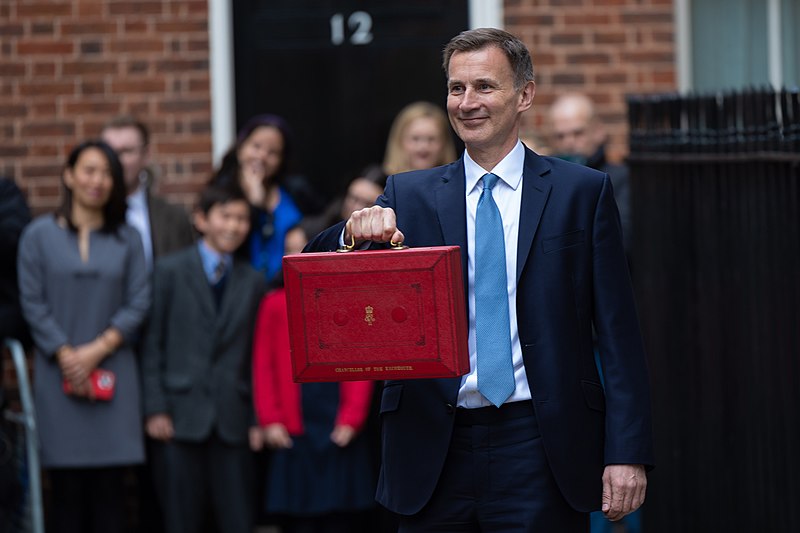
British finance minister Jeremy Hunt took a swipe at former Prime Minister Liz Truss’s economic plans this week. Hunt said Truss’s plan showed how tax cuts could not be funded by increased government borrowing.
During a parliamentary hearing on Wednesday, Hunt criticized Truss’s economic plans, which led to a major backlash from investors and her resignation in October. Truss introduced her economic plans in September last year, saying major tax cuts would drive an increase in economic growth. At the time, Truss pledged to pay for the increase in government borrowing.
“In particular, I think it’s clear you can’t fund tax cuts through increased borrowing. That is a clear thing that we changed course on,” said Hunt.
A spokesperson for Truss said Hunt, who is a fellow Conservative lawmaker, has also made mistakes.
“Liz was always clear that you can’t deliver economic growth and thus reduce borrowing by hiking taxes,” said the spokesperson. “Raising Corporation Tax from 19 percent to 25 percent looks like a pretty bad mistake now when you consider how a firm like AstraZeneca is locating its new plant in Ireland where Corporation Tax is half the rate being levied by the British Government.”
The Times reported that Hunt also said that the United Kingdom would not go “toe-to-toe” with the United States and the European Union in providing billions in green subsidies and tax breaks but would look into incentivizing public investment. Hunt reportedly said the British government’s approach would be different.
“We are not going toe-to-toe with our friends and allies in some distortive global subsidy race,” said Hunt, according to the report. “With the threat of protectionism creeping its way back into the world economy, the long-term solution is not subsidy by security.”
The US last year passed the Inflation Reduction Act, which offers $369 billion in subsidies for electric vehicles and other clean technologies. The EU, out of concerns that the IRA would put Europe-based companies at a disadvantage, introduced its own Green Deal Industrial Plan back in February.
Hunt referred to the IRA as a “very real competitive threat” last month but noted that due to the financial market turmoil in the UK in 2022, the government did not have the funds to provide such subsidies.