


 Oil Prices Surge as U.S.-Iran Tensions Fuel Supply Fears
  Citi Raises Bitcoin Price Target to $113,000 on ETF Optimism
  TRUMP Memecoin Launches New Dinner Contest
  Fed Unveils Stablecoin Rules Under GENIUS Act
  Best Gold Stocks to Buy Now: AABB, GOLD, GDX
  RBI Uses $10 Billion Currency Swaps to Drain Excess Rupee Liquidity
  Chainalysis AI Traces $387M Bitget Hack in Under 10 Minutes
  South Korea Exports Surge 83.5% on AI Chip Boom
  Gold Prices Fall Amid Rate Jitters; Copper Steady as China Stimulus Eyed
  Hyperliquid Sets $856 Million HYPE Token Unlock for October
  Cardano Price Struggles as NIGHT Token Surges 20%
  G20 Divided Over US Push to Curb Industrial Overcapacity


 Add as a preferred source on Google
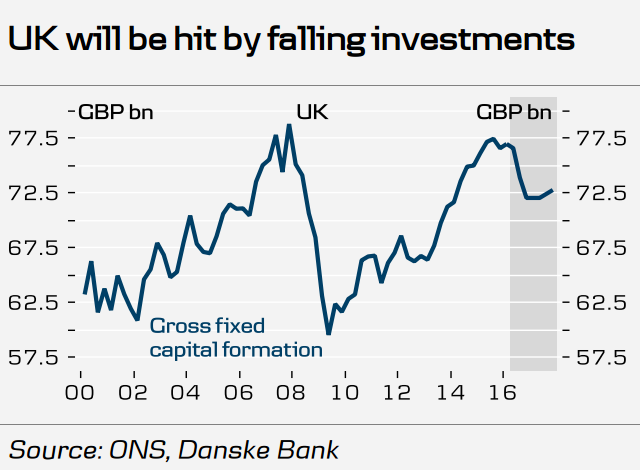
UK outlook following the decision to leave the EU largely depends on how the withdrawal negotiations progress. The longer-run consequences of a Brexit depend on the future UK/EU relationship. Risks of a marked deterioration of external financing conditions seen in light of the U.K.’s extremely elevated level of gross external financing requirements. Expect UK to fall into recession in H2 16 (or early 17) as investments fall due to higher uncertainty about the future economic environment for British firms.
S&P on Monday lowered ratings on United Kingdom by two notches to 'AA' from 'AAA' on Brexit vote, said outlook remains negative on continued uncertainty. The ratings agency said, "The negative outlook reflects the risk to economic prospects, fiscal and external performance, and the role of sterling as a reserve currency, as well as risks to the constitutional and economic integrity of the U.K. if there is another referendum on Scottish independence."
Negotiations are set to begin, with a great deal of uncertainty around what shape the U.K.'s exit will take and when Article 50 of the Lisbon Treaty will be triggered. Lack of clarity on key issues will hurt confidence, investment, GDP growth, and public finances in the U.K., and put at risk important external financing sources vital to the financing of the U.K.’s large current account deficits. Brexit result could lead to a deterioration of the U.K.’s economic performance, including its large financial services sector, which is a major contributor to employment and public receipts. It is also likely that private consumption will slow, especially if the labour market slows down.
"We now expect GDP growth of 1.0% this year and -0.4% next year (previously 1.8% and 2.1%, respectively). We expect low but positive growth again from Q1 17 although the growth outlook depends on how the withdrawal negotiations are progressing (given Article 50 is actually triggered)," said Danske Bank in a report.
UK voters' decision is a game changer for central banks. Both Bank of England and the ECB could ease monetary policy to support the economies. The BoE has communicated it prefers to lower the Bank Rate before using other tools. GBP/USD was trading at 1.3385 at 1215 GMT.
"We expect the BoE to cut the Bank Rate down from 0.50% to 0.00% and to resume the Asset Purchase Facility (APF), which we anticipate will be expanded in the range GBP150-200bn." adds Danske bank.







