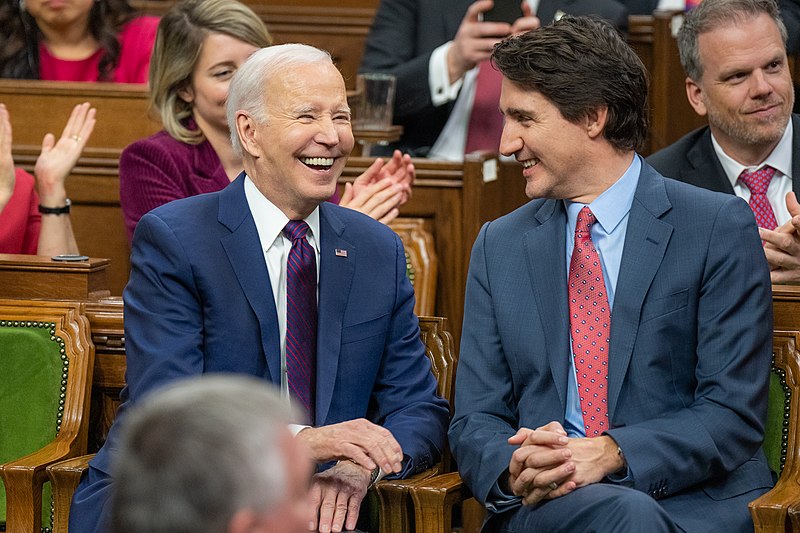
US President Joe Biden and Canadian Prime Minister Justin Trudeau agreed to stand united against authoritarian regimes in the world during Biden’s visit to Canada. Biden’s visit to Ottawa follows the recent summit held by China and Russia in Moscow.
Biden and Trudeau on Friday last week announced agreements on semiconductors and migration during Biden’s visit. During a joint news conference, Biden questioned the extent of China and Russia’s cooperation, noting that Beijing has not provided Russia with weapons to use in the war in Ukraine. Biden also said the US has expanded alliances, including with NATO, the G7, South Korea, and the Quad nations that make up the US, Australia, India, and Japan.
“Tell me how in fact you see a circumstance where China has made a significant commitment to Russia. What commitment can they make?” said Biden. During an address to the Canadian parliament, Biden said that as members of the NATO alliance, both the US and Canada will “defend every inch of NATO territory.”
Trudeau said during the news conference that Ukraine was a top issue and reiterated support for Ukraine as it continues to defend itself against Russian aggression.
Biden’s visit to Canada follows that of the Moscow summit between Chinese President Xi Jinping and Russian leader Vladimir Putin. During the Moscow summit, Xi and Putin expressed their friendship and pledged closer relations.
In Biden’s visit, the two leaders also discussed the issue of migration at the US-Canada border and made an amendment to the 20-year-old agreement on refugees in their efforts to address the surge of asylum seekers that are looking to enter Canada through unofficial border crossings.
The amendment was made to the 2002 Safe Third Country Agreement, which took effect in 2004 and originally referred to asylum seekers crossing into Canada or the US at formal border crossings was turned back and told to apply for asylum in the first “safe” country that they arrived in.
The revisions now apply to the 6,416-kilometer border the two countries share. Under the revised agreement, anyone who crosses into either the US or Canada through the land border and who applies for asylum within 14 days would be turned back. The revisions to the agreement took effect on Saturday.