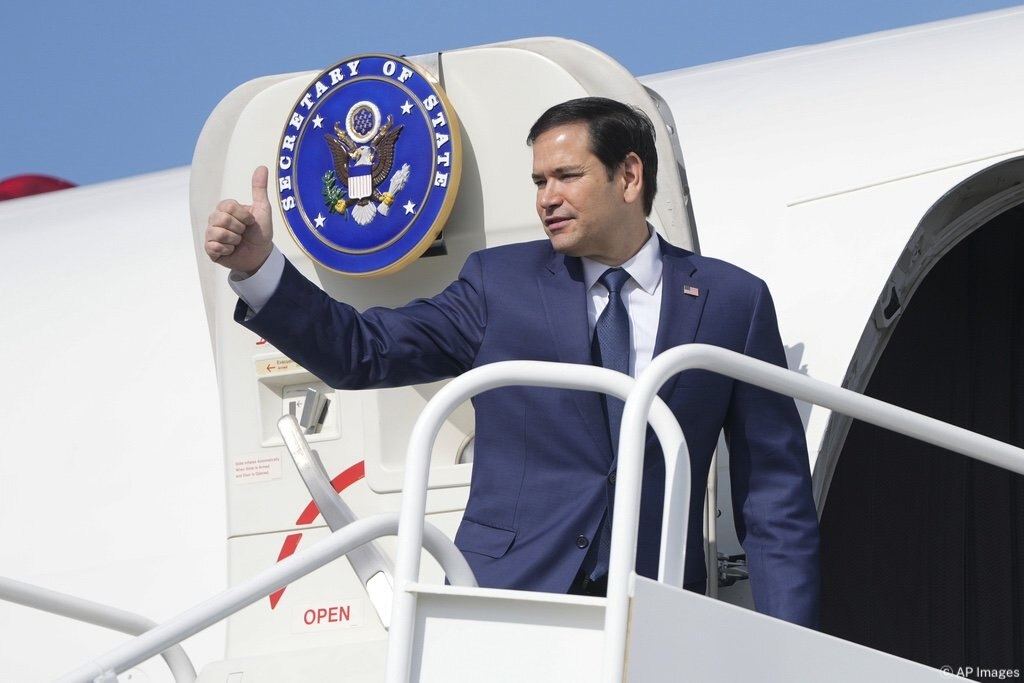
The United States has reignited geopolitical tensions after senior officials confirmed that President Donald Trump continues to consider acquiring Greenland, including through potential military means. U.S. Secretary of State Marco Rubio said on Wednesday that he would meet Danish leaders next week, but stressed that all options remain on the table, alarming European allies and raising concerns within NATO.
Rubio acknowledged that diplomacy remains Washington’s preferred path, yet did not rule out the use of force when questioned about Greenland. His remarks came amid heightened scrutiny following a recent U.S. military operation in Venezuela, which intensified fears about American unilateral action abroad. Greenland, a mineral-rich Arctic island with a strategic location between North America and Europe, has long been viewed by Washington as vital to U.S. security and missile defense.
Trump first floated the idea of acquiring Greenland in 2019 and has repeatedly argued that Denmark has failed to adequately protect the territory. However, Denmark disputes this claim, noting that existing defense agreements signed in 1951 and 2023 already grant the U.S. extensive military access. Despite this, the White House confirmed that Trump and his national security team are actively discussing options, including a possible purchase.
The proposal has drawn bipartisan criticism in the U.S. Congress, where lawmakers are preparing legislation to limit the president’s ability to seize Greenland. Republican Senator Mitch McConnell warned that threats or force against a close ally would severely damage America’s global standing.
European leaders and Canada have firmly backed Greenland and Denmark, emphasizing sovereignty and international law. France, Germany, Poland, Finland, and the United Kingdom have all called for a coordinated response, with some urging NATO to address the issue formally. The European Union also pledged support, stating it would not tolerate violations of international law.
Greenland’s leaders have repeatedly rejected annexation, stressing that the island is not for sale. Danish officials have called for calmer dialogue, dismissing U.S. claims of increased Russian and Chinese activity near Greenland, which vessel tracking data does not support. As diplomatic efforts intensify, the situation underscores growing transatlantic strains over security, sovereignty, and power in the Arctic.