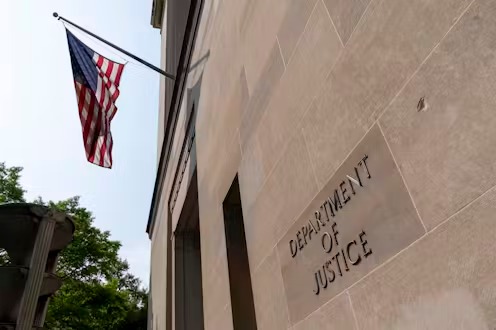
The US Air National Guardsman who is suspected of leaking classified intelligence documents online will remain detained. This follows the government’s request to a federal judge that the suspect remains detained pending trial.
On Wednesday, US Air National Guardsman Jack Teixeira was set to appear before a federal court in Boston, Massachusetts, to determine whether he would remain in jail pending trial. Federal prosecutors told US Magistrate Judge David Hennessy they plan on seeking detention.
Two hours prior to the hearing, however, Teixeira’s federal public defenders filed a request to ask the judge to delay the detention hearing for two weeks as they needed “more time to address the issues presented by the government’s request for detention.”
Teixeira appeared before the court, and the judge accepted his request to waive his right to a preliminary hearing. It is unknown if Teixeira will challenge the government’s request for detention.
The case is seen as the most serious breach of US security since the 2010 WikiLeaks incident, where more than 700,000 classified documents, videos, and diplomatic cables appeared on the website.
Senior intelligence, defense, and State Department officials briefed Congress on the leak on the same day. Following the briefing, lawmakers expressed surprise at how someone like Teixeira would have access to secret military intelligence records.
Democratic senator Mark Warner, who chairs the Senate Intelligence Committee, told reporters that the “internal security processes” and the “overall access questions get thoroughly examined.”
Warner added that he and ranking Republican lawmaker Marco Rubio requested a review of security and clearance issues to determine what changes need to be made.
Meanwhile, the Biden administration said the concerns of congressional Republicans that the record drawdown of oil from the Strategic Petroleum Resolve damaged the system’s salt caverns are baseless. The administration last year sold 180 million barrels of oil from the SPR, the system of natural salt caverns along the coasts of Texas and Louisiana.
President Joe Biden launched the sale to tackle the rising prices of gas as a result of Russia’s invasion of Ukraine.
Republican senator John Barrasso and Rep. Cathy McMorris Rodgers wrote a letter to Energy Secretary Jennifer Granholm back in November with concerns that the drawdown damaged the salt caverns.
The department’s infrastructure official Kathleen Hogan responded to lawmakers in a letter on April 12, saying that the emergency sales in 2022 did not damage the salt caverns and that the geoscientists in the department’s Sandia National Laboratory are monitoring the integrity of the caverns.