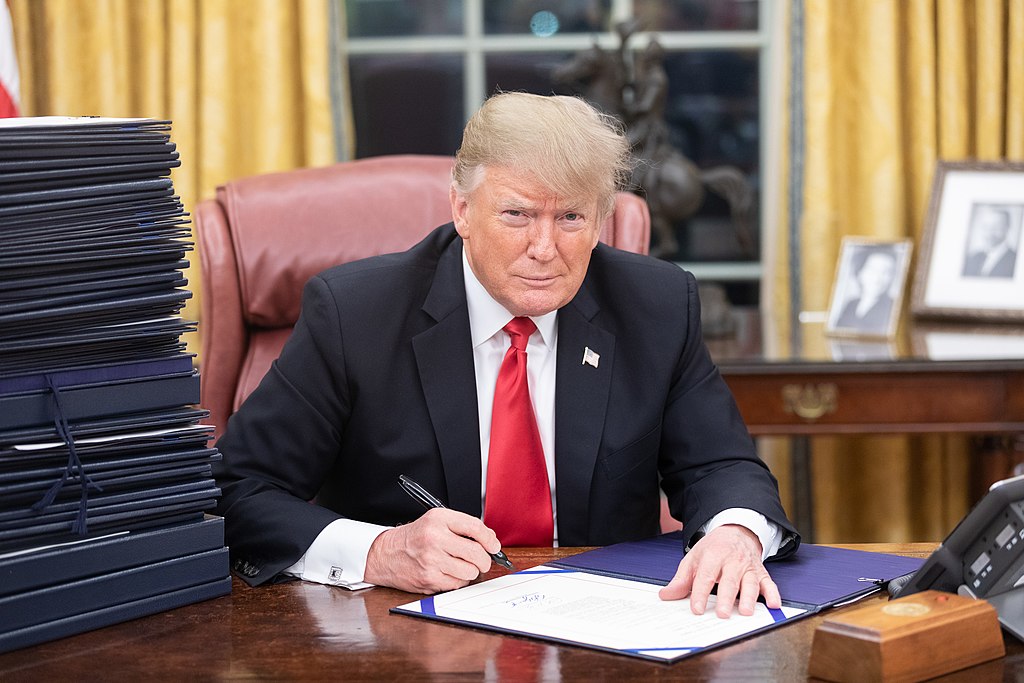
President Donald Trump has signed two executive orders to reshape U.S. education, prioritizing parental choice in school selection and banning federal funding for curricula promoting what he calls "anti-American" ideologies on race and gender.
The first order directs the Department of Education to guide states in using federal funds for school choice initiatives, including private and religious schools. Trump emphasized parental rights, stating, "Too many children do not thrive in their assigned, government-run K-12 school." The directive also allows military families and Native American students to use federal funds for school selection.
The second order blocks federal funding for curricula involving "gender ideology" and "discriminatory equity ideology." Trump and his allies argue that public schools promote radical views, including concepts like "white privilege" and "unconscious bias." Critics say this move could stifle discussions on race and limit educational materials.
Conservatives see the move as a strong endorsement of school choice, while opponents, including teachers' unions, argue it undermines public schools that educate 50 million children. Federal education funding accounts for about 14% of public K-12 school budgets, and the order could impact up to $40 billion in grants.
With U.S. student performance declining, as shown in the latest National Assessment of Educational Progress results, Trump's administration is pushing for alternatives to traditional public education. The decision aligns with Republican-led states expanding school voucher programs. Education experts note that while the president’s power to reallocate funds is limited, the executive order sends a strong message about prioritizing school choice at the federal level.
A new bill introduced in Congress this week could further reshape education by creating a federal voucher program with an estimated $10 billion in tax credits. Critics warn these efforts may weaken public education, while supporters view them as necessary reforms.