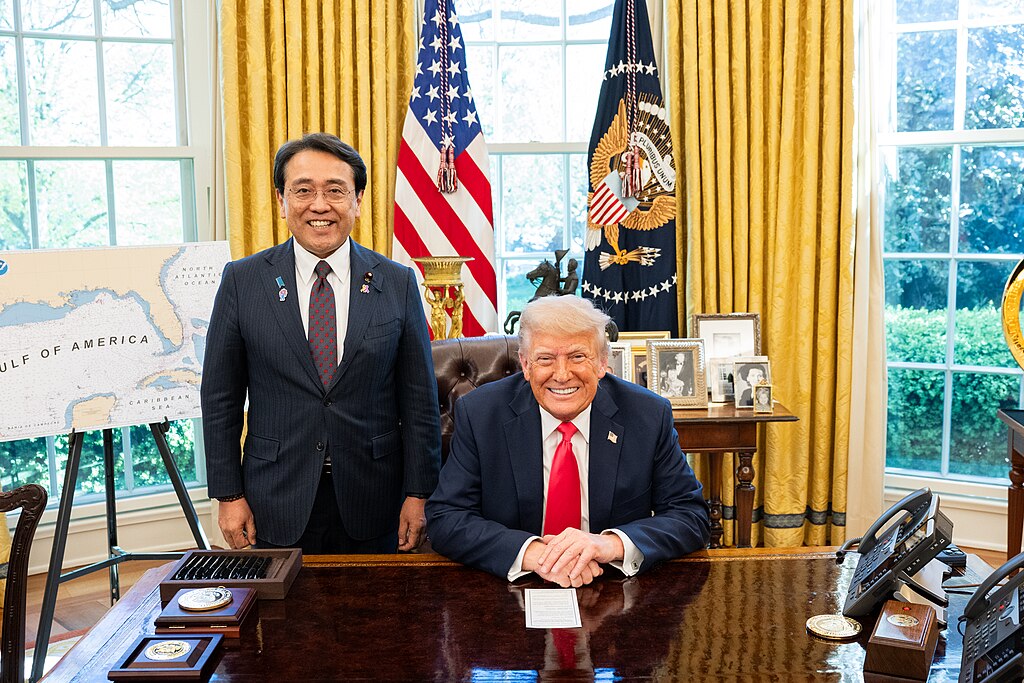
The United States and Japan have agreed to accelerate coordination on their Strategic Investment Initiative, a major bilateral framework backed by a $550 billion fund established under the two countries’ tariff agreement. The move highlights deepening economic cooperation between the world’s largest and third-largest economies, with a strong focus on strategic industries, trade stability, and long-term growth.
According to an official statement released by Japan’s Ministry of Economy, Trade and Industry, both governments are working toward announcing the first project under the Strategic Investment Initiative as soon as possible. The initiative is designed to channel large-scale investment into priority sectors that strengthen supply chains, enhance energy security, and promote technological innovation across both nations.
The agreement was confirmed during an online meeting held on December 23 at 10 p.m. Japan Standard Time. The call brought together senior officials from both sides, including U.S. Commerce Secretary Howard Lutnick and Japan’s Economy Minister Ryosei Akazawa. U.S. Energy Secretary Chris Wright also participated, underscoring the importance of energy-related cooperation within the broader investment framework. Additional government officials from the United States and Japan joined the discussions, signaling high-level commitment to advancing the initiative.
The Strategic Investment Initiative represents one of the most significant financial commitments ever made under a bilateral tariff agreement. The $550 billion allocation provides a substantial pool of capital to support joint projects that align with shared economic and geopolitical interests. While specific project details have not yet been disclosed, expectations are high that early investments will focus on areas such as clean energy, advanced manufacturing, critical minerals, and emerging technologies.
By fast-tracking coordination and aiming for an early project announcement, the United States and Japan are sending a clear message about their intent to strengthen economic ties and promote resilient, rules-based trade. The initiative is expected to play a key role in shaping future cooperation, boosting investor confidence, and reinforcing the strategic partnership between the two nations in an increasingly complex global economic environment.