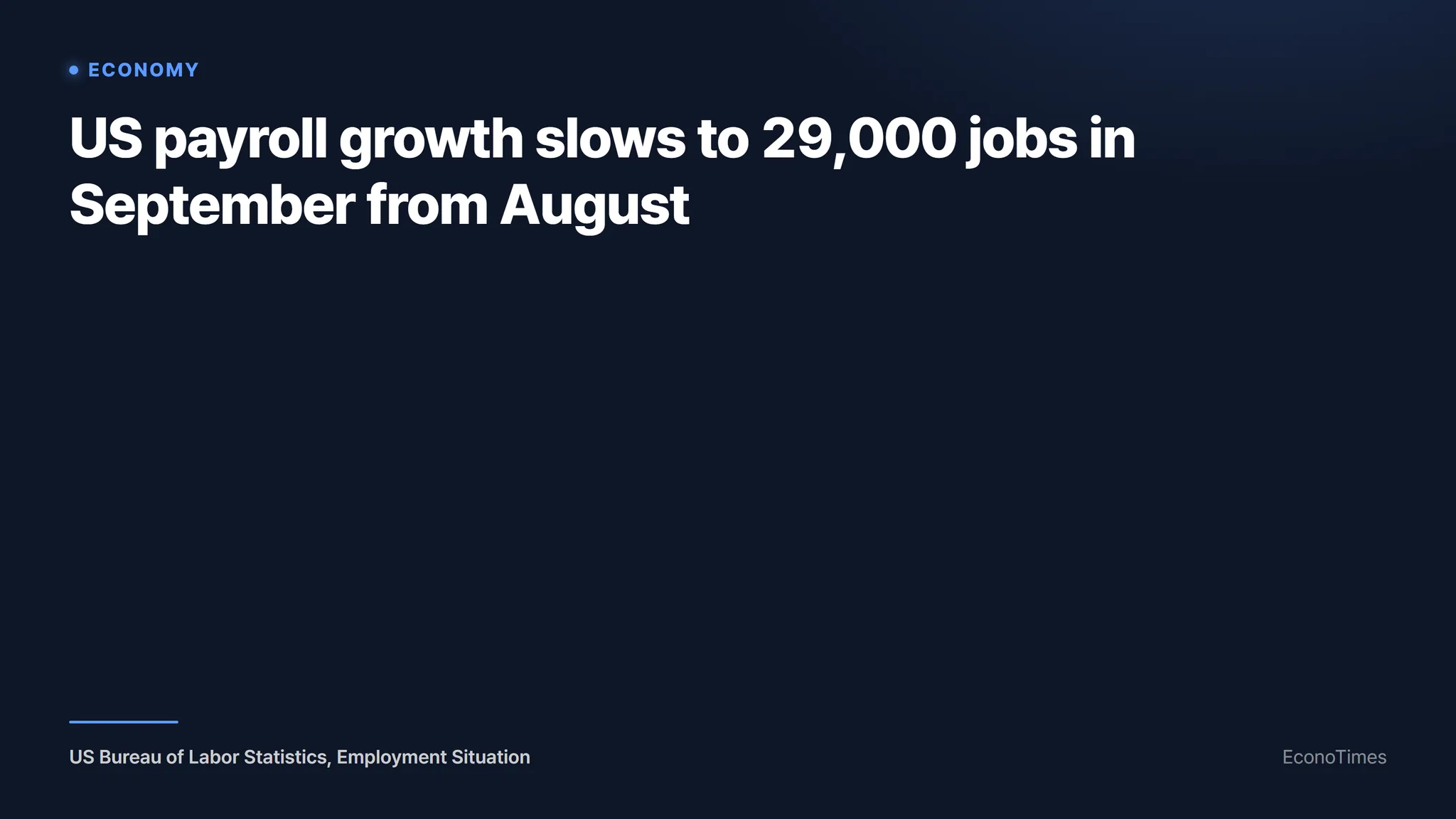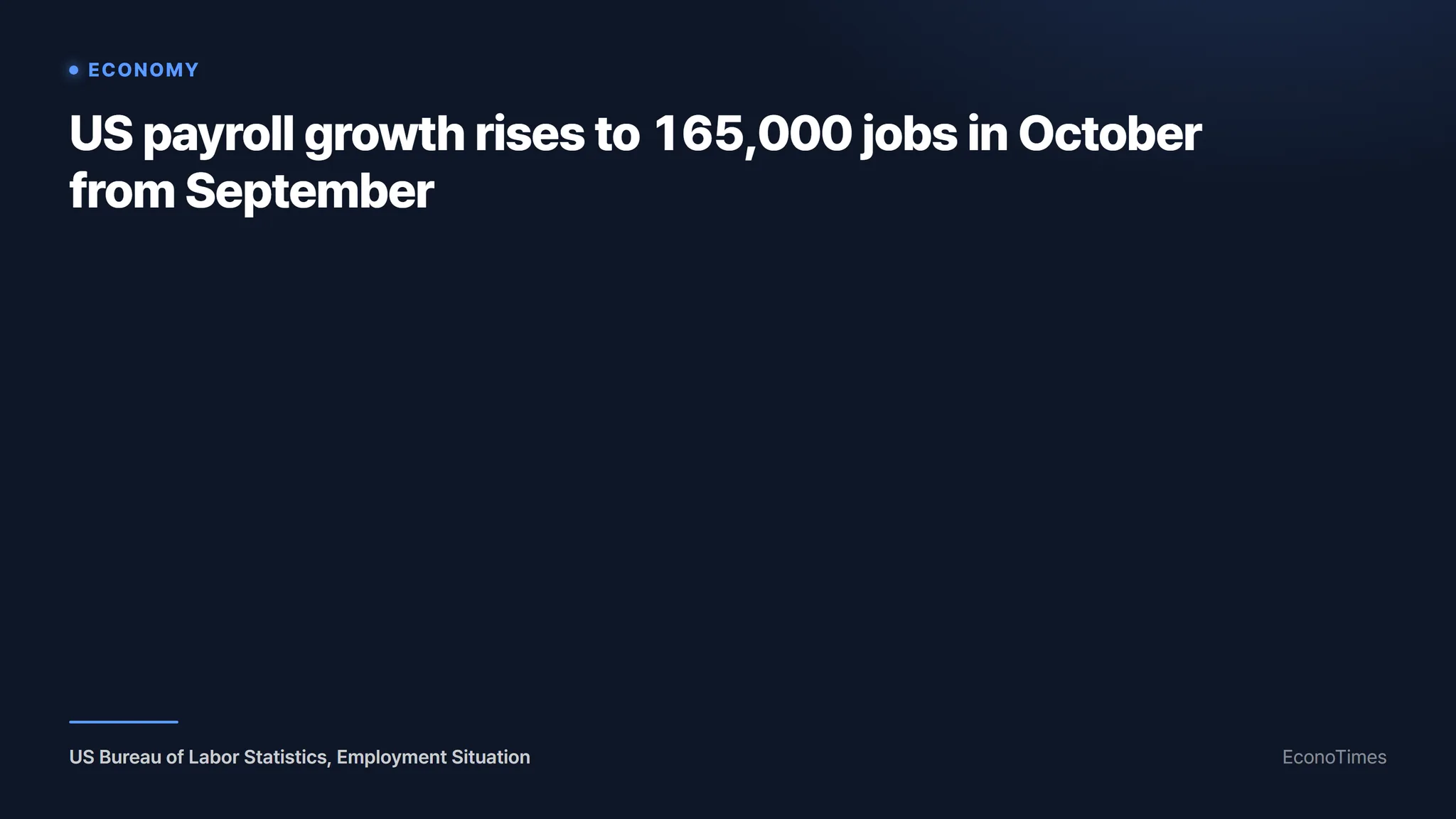
US employers added 165,000 non-farm jobs in October, up from a gain of 60,000 in September, the Bureau of Labor Statistics said in figures available through the Federal Reserve Bank of St. Louis.
The October increase exceeded September's gain by 105,000 jobs. Employers added 225,000 jobs across the two months, with October accounting for nearly three-quarters of that increase.
The unemployment rate fell to 4.1% from 4.2% in September, a decline of 0.1 percentage point. The bureau's figures put the total number of non-farm payroll jobs at 159.3 million in October.
Average hourly earnings for all employees rose 3.1% over twelve months, while average pay reached $38 an hour. The annual comparison measures the change in hourly earnings against their level a year earlier.
The labor force participation rate, the share of people working or looking for work, stood at 61.9% in October. That measure covers participation in the workforce, while unemployment measures joblessness among those in it.
Initial applications for unemployment benefits totaled 189,000 in the week ended Oct. 31, down from 195,000 the previous week, the Labor Department said in figures available through the same database.
The weekly decline amounted to 6,000 applications, or about 3%. Both the latest weekly count and the preceding week's figure were below 200,000 applications.
The four-week average of initial claims was 194,750. The latest weekly count came in 5,750 below that average and also below the preceding week's total.
Claims are weekly figures and provide a more recent reading than the October monthly employment report. They count applications for unemployment benefits, while payroll figures measure the number of jobs.
The four-week average combines claims across several weeks, giving a broader comparison than a single weekly total. The latest count was about 3% below that average.
The monthly figures showed a larger payroll gain alongside a lower unemployment rate. The earnings figure covered twelve months, while payroll growth measured the change from September to October.
The payroll total and the monthly increase describe different aspects of employment. The total records the number of jobs, while the increase records how many more jobs employers had than a month earlier.
The participation figure provides a separate measure of involvement in the labor force. At 61.9%, it covers both people with work and those seeking it, rather than counting only people already employed.