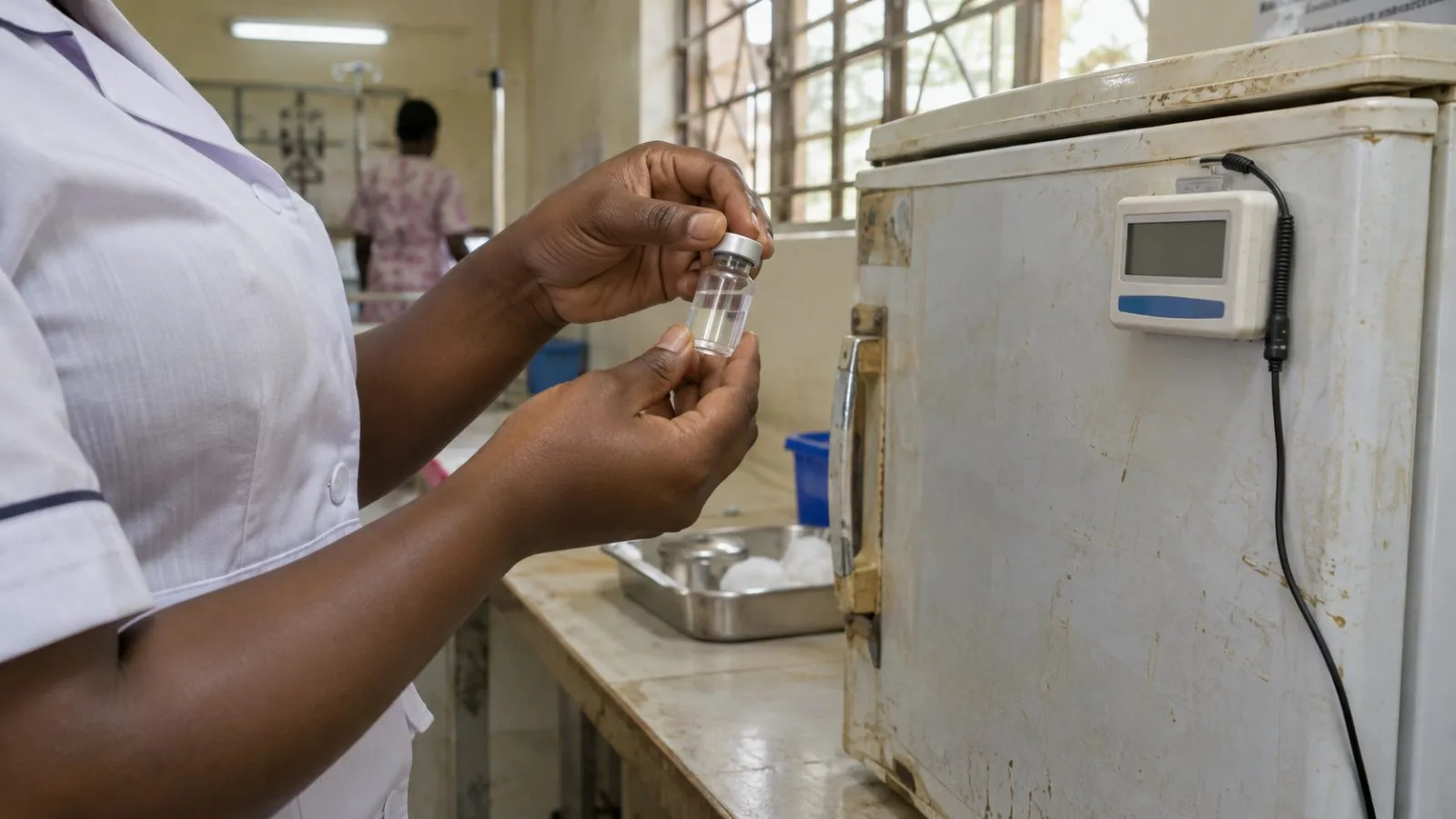
A new Unitaid initiative will map heat and moisture exposure across medicine distribution routes, aiming to identify vulnerable products as warming raises risks for health systems worldwide.
Dr. Vincent Bretin, Unitaid’s Director of Climate, described SHIELD, an £8 million effort focused on heat stability in essential medicines and diagnostics, in a Nov. 17 article for The Independent. He said the project will monitor conditions from seaports to points of care, identify medicines at risk and assess possible protections, including different molecules, packaging and supply-chain changes. The findings are intended to be free for every country to use.
Bretin wrote that elevated temperatures can reduce a medicine’s potency without visible changes. For some chemical processes, the reaction rate may be twice as high after a 10°C rise. He said most medicines approved for room-temperature storage are assumed to be kept at no more than 30°C, while repeated exposure to heat and humidity remains a concern.
The risks include oxytocin, used to prevent severe bleeding after childbirth. Bretin cited an estimate that postpartum bleeding kills about 70,000 women a year. Oxytocin must be stored between 2°C and 8°C, he wrote, and a loss of refrigeration can weaken it without leaving a visible sign on the vial.
A large World Health Organisation (WHO) trial found heat-stable carbetocin comparable to oxytocin in safety and effectiveness for preventing postpartum bleeding, Bretin wrote. He said carbetocin can remain potent for up to three years at 30°C without refrigeration.
Bretin also cited a review in The BMJ that found the odds of premature birth were about 5% higher for each 1°C temperature increase and 16% higher during a heat wave. He said poorer women in hotter places face the greatest burden.
Donors supporting SHIELD include the UK, which founded Unitaid and continues to support it, Bretin wrote. He pointed to Britain’s role in bringing health into COP26 discussions, its support for health care emissions cuts through the Sustainable Markets Initiative and the National Health Service’s net-zero commitment. He urged the UK to back research, innovation and partnerships that could help countries beyond Britain prepare medicines for hotter conditions.