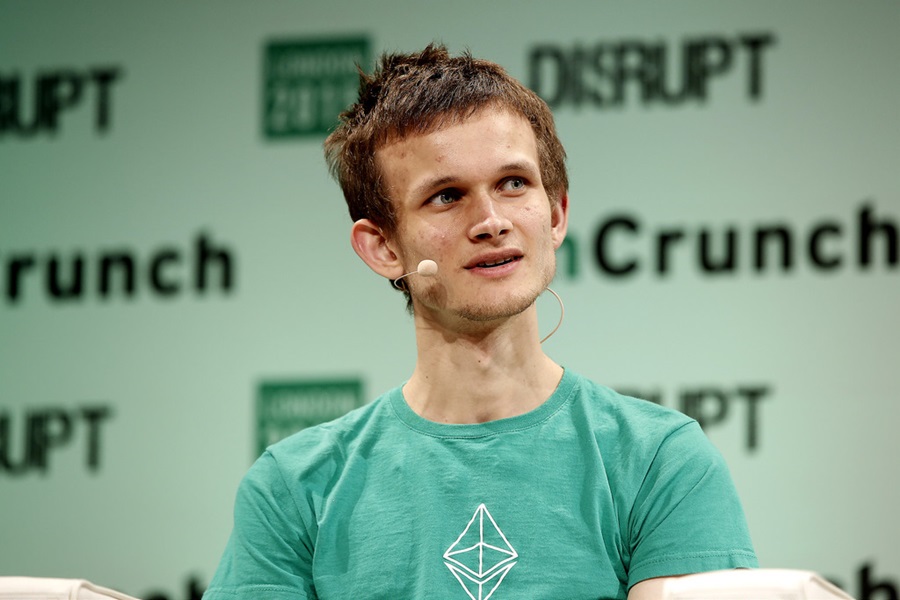
Vitalik Buterin, the co-founder of Ethereum, recently released a paper detailing how to improve existing methods for compensating miners while benefitting users in return. What Buterin proposes is the implementation of a uniform price auction, which is far superior to the current model that the network is using, BTCManager reported.
As of now, a majority of the blockchain-based system is using a process akin to the first price auction. This method involves a user attaching an amount to a given transaction along with a fee known as “gas.”
The higher the gas allocated to a transaction, the faster the processing time since miners will prioritize it over any other on the platform. The problem is that users have no way of calculating the optimal transaction fee at any given time, which can then lead to them paying more than the standard rate.
“If you value a transaction getting included right now at $1, you would be willing to bid anything up to $1, but if everyone else is bidding $0.05, then you could keep more money by bidding $0.08 instead. Optimizing this requires complex models of the economy and real-time blockchain usage,” Vitalik Buterin said.
For instance, say, the bids are 0.03, 0.04, 0.06, 0.09, 0.13, 0.15, and 1.00 -- if a miner can accommodate the top five of the seven transactions, users will only have to pay the lowest of the five, which in this case is 0.06.
As per the example, Vitalik Buterin’s proposed alternative is more efficient since users are paying fees equal to the transaction’s value. So even if they provide a higher gas to a transaction compared to others on the platform, they will not have to pay more than the given standard fee.
However, a new issue now arises, which is centered on attacks and malicious price manipulation. For example, a miner can potentially inflate the standard fees through network clogging by sending fake transactions in a block. In turn, prices of ordinary transactions will increase, hurting the platform’s users.
Another potential exploit to this is miners instructing users to allocate large amounts of fees in a given transaction, again increasing the standard rate. The miners can then compensate users by reimbursing them through a different channel. Vitalik Buterin acknowledges these potential loopholes that malicious parties can exploit.
“Our goal is to discourage the development of complex miner strategies and complex transaction sender strategies in general, including both complex client-side calculations and economic modeling as well as various forms of collusion. The latter especially is dangerous as it creates an incentive for staking pools that can centrally manage the process of extracting gains from collusion,” the Ethereum cofounder said.
He went on to say that the proposal’s purpose is to open up possible avenues that would lead to minimal protocol alteration while significantly improving existing processes. Moreover, Vitalik Buterin added that the recommended system can still be further improved by enabling users to set their fee in a form of “whatever the minimum fee is, plus an increment fee,” which is applicable for those who want their transaction to be prioritized.