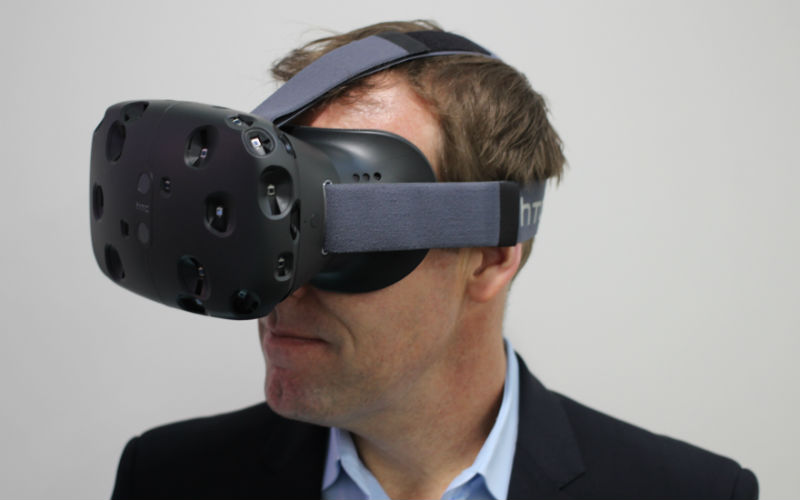
Virtual reality is affecting actual reality in numerous ways in industries ranging from medical to education. According to a post on Search Engine Land, Google has recently made 360-degree virtual reality videos and images “optimizable for organic search”. While it’s too early to worry about whether or not your SEO strategy will be affected by VR, this is something you might want to at least keep an eye on.
The effect virtual reality has on the gaming industry is obvious. Gaming is what most people think of when they hear the term “virtual reality”. But what about other industries?
Here are some ways VR technology will affect other industries:
Real estate - The real estate industry will likely see a large transformation with virtual reality technology. Listing agents are already virtually staging the homes and properties they are offering. According to Forbes, Sotheby International Realty is offering VR tours remotely for multi-million dollar homes. Home buyers and real estate investors alike will be able to make better purchasing decisions as they are able to explore more properties without having to physically travel to them all.
Healthcare - One of the best things about virtual reality is its benefits in the healthcare industry. It can be used to help surgeons train and prepare for future surgeries. Patients can use it to help stay calm and relaxed. Instead of a hospital bed, a patient can “visit” peaceful landscapes or “relax” on a beach somewhere. Virtually Better is one of many organizations developing VR technologies to help patients. The company currently has more than 50 different virtual environments, through which it provides psychological services to help adults and children of all ages.
Education - VR is expected to play a HUGE role in education, as it can be used to teach anybody just about anything. Costs will be cut as well, as there won’t be as much of a need for many physical training materials and equipment. Immersive VR Education and Unimersiv are two companies developing some incredibly interesting virtual reality software and courses: Titanic VR, Apollo 11 Experience, Mars Curiosity, International Space Station Exploration, Anatomy VR, and more. If this technology continues, there may come a point when the traditional classroom setting becomes a thing of the past.
Travel - Real locations are being replicated by virtual reality technologies. Travelers no longer have to rely on two-dimensional photographs or videos. Even 360-degree tours have to be viewed on a computer or smartphone screen. VR makes it possible to actually experience the destination by walking around virtually before deciding whether or not the destination is worth visiting physically. The hotel industry will have to start offering VR tours of their rooms, which will put more responsibility on the staff to make sure that the rooms look just as luxurious and clean when the guest arrives as they did during the VR tour.
Retail - The one advantage that physical shopping has always had over online shopping is that the former allows consumers to try before they buy. If there is a problem with the product, it’s easier to just take it back in person than it is to repackage it, mail it back, and wait for a refund or repair. Virtual reality will affect the retail industry by allowing online stores to offer fully-immersive and interactive shopping experiences. As a result, there will be a decrease in returns and customer complaints.
Web design - Like SEO, it’s too soon to tell if virtual reality will have much of an impact on web design and development. There is already a virtual web browser called the Janus VR, which is designed to let HTC Vive, Oculus Rift and VR headset users to “explore” URLs and interact with other users in a virtual environment. However, the vast majority of internet users still browse the usual way on PCs, tablets and smartphones. There is no reason to invest in VR technology for web design anytime soon. A Bluehost or Weebly website is still perfectly fine.
While virtual reality is working its way to becoming mainstream, there is still a long way to go. For many people, it almost falls in the realm of sci-fi.
Michael Peggs is the founder of Marccx Media, a digital marketing agency specializing in Search Engine Optimization (SEO) and Search Engine Marketing (SEM). Before Marcxx, Peggs worked at Google in business development, forming digital media and advertising partnerships in the United States and Asia. He is also a contributor to The Huffington Post, FastCompany and Business Insider as well as and podcaster, hosting the iTunes Top 10 New & Noteworthy Podcast You University.