Rapid Prototyping is transforming not just manufacturing, but the way we do business and bring products to market. The possibility gained from on-demand manufacturing in comparison to the cost, time, and resource use of producing parts at machine shops is substantial.
How Does Rapid Prototyping Work?
Rapid prototyping services are the very fast machining or printing (or both) of parts of any number and variety of materials, often plastic or metal, into a representative model. It often involves the use of 3D computer-aided design (CAD) to produce digital modeling prior to the rapid prototyping.
3D CAD, sometimes grouped with services as additive manufacturing, is often used to produce rapid prototypes. More traditional processes can also be used to create prototype designs. Other modeling processes are also frequently added, such as casting and high-speed machining.
Services for Rapid Prototyping
Services offered for rapid prototyping are extensive. Common ones are:
3D Printing
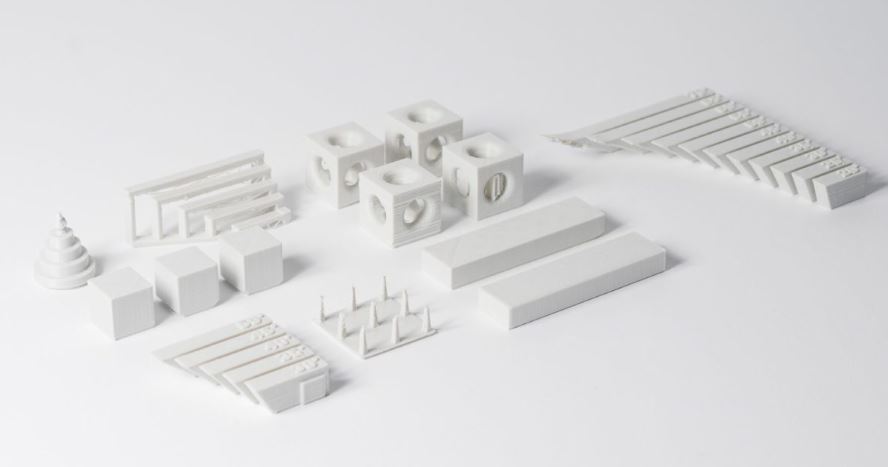
3D printing is best suited for prototypes that require intricate designs, fine detail work, difficult support structures, and slim edges.
CNC Machining
Also known as CNC rapid prototyping, this method works well for detailed work that requires slim edges, angled corners, and a material's mass that is difficult to remove. This process includes milling, turning, and post-processing activities.
SLA
Also known as Stereolithography or Vat Photopolymerization, SLA rapid prototyping is a speedy budget-conscious path to prototyping that began its history as the first-ever type of 3D-printing that was used for commercial products. It employs the use of a photosensitive liquid, which transmutes to a solid prototype design through printing levels, and using ultraviolet light that is monitored and directed using computer software, usually CAD-based.
What are the Advantages?
Rapid prototyping has many advantages, including:
-
A prototype is a visualization aid. It is much easier to test the soundness of a design and to finish the development and manufacturing process using a visual aid of any model than to discuss and design using only conceptual data or CAD. A model that is eventually mass-produced will go a long way in helping the entire product team to see it in its near-final form, and allow for design adjustments and manufacturing plans to be much more fluid.
-
Parts, an injection mold for example, being created can be used to create a second part of the product build.
-
Is known for its cost effectiveness. It’s a way to prototype a product in an automated fashion, requiring less resources to accomplish.
-
It has the advantage of being highly accurate and detailed, as most prototyped models issue from CAD-based designs, which assists in a significant decrease of materials consumption.
-
The process doesn’t demand the use of highly specific tools for prototyping products. Instead, it allows for speedy action to solve design and manufacturing issues as they arise, which further reduces the risk of errors in the manufacturing of individual parts during the product creation process.
-
Designers and product managers can demonstrate new or in-progress concepts to stakeholders of a product not yet mass-produced. Investors, board members, and clients can see and sign-off on the development levels or the finished model of product. This also allows the designers to receive critically needed input from their stakeholders and other design and development team members, based on the physical models or parts prototyped, rather than on the conceptual CAD or traditional drawings. Studies show that model prototyping presents us with better opportunities for decision-making.
-
Rapid Prototyping allows product requirements to be baked into designs in a highly cost-effective manner. Customized products are not needed for the process and clients and stakeholders gain more freedom and flexibility in their decisions and over the entire bring-to-market cycle before significant resources are committed.
How Much Does It Cost?
Instant quotes are frequently available for these types of prototyping services and the costs vary widely, depending on the methods selected for the prototyping tasks. Some methods will have minimum runs. It’s often best to balance the prototype volume minimum costs with design and time-savings to quantify the ROI.
The cost is also affected by the urgency of order time and the number of processes or parts needed to complete the desired prototype. The ability to gain quotes quickly and in some cases, achieve prototypes within 1-2 days at significantly lowered costs has transformed prototyping heavily in recent years.
There are many services available to achieve rapid prototyping goals. How long rapid prototyping takes for a project can be anywhere from a day or two to several months, dependent upon the various prototyping tools and methods selected. Design is now an unfettered process with rapid prototyping and the various services that support it.
This article does not necessarily reflect the opinions of the editors or management of EconoTimes.