


 ICE Agent Arrested in Minneapolis Over Venezuelan Man Shooting
  UK PM Andy Burnham Set for First Trump Meeting in New York
  Hong Kong Unveils First Five-Year Plan to Boost Finance, Tech and Housing
  European Stocks Rally After Fed Hike, Iran Peace Hopes
  Banking scandal rocks Brazil’s politics and the country’s presidential election in October
  Asian Stocks Rise as Investors Brace for Fed Rate Decision
  Asian Stocks Rise After Fed Rate Hike
  Trump Hopes Iran War Nears End as Yemen Fighting Escalates
  Rodrigo Duterte Makes First Public Appearance at ICC in 18 Months
  AI is supercharging money scams – here’s what you can do to protect yourself
  Iran Economic Crisis Forces Afghan Families to Return Home
  Ukraine Races to Counter Russia’s Faster Jet-Powered Drones
  Oil Prices Fall as Saudi Supply Improves, Middle East Fears Ease
  U.S. Imposes New Visa Restrictions Over South Africa Policies


 Add as a preferred source on Google
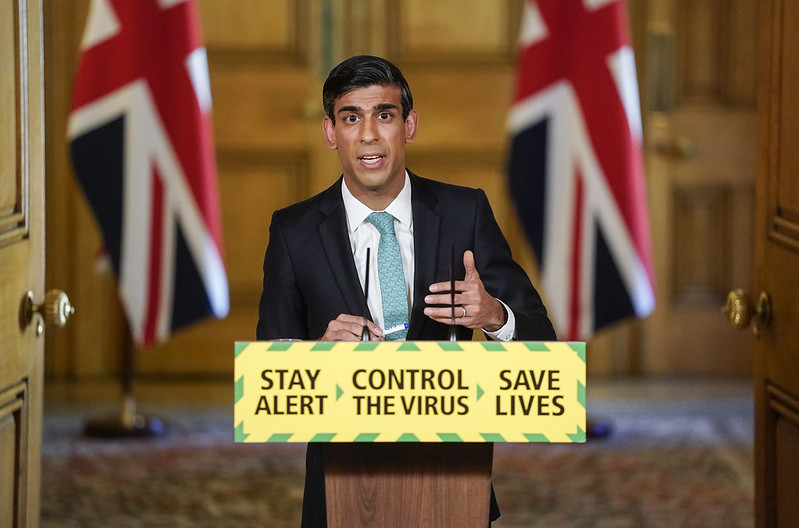

The announcement of July 4 for the UK general election took many by surprise. A key question is why it was called then when it did not have to be? The decision to call an election is always a gamble – there is perhaps no right time – and many factors feed into that call.
Legally, a general election had to be called in 2024. Behind the scenes, those in Number 10 will have been modelling when the vote should be held with the help of key economic indicators such as inflation and gross domestic product (GDP), as well as analysing the polls and speaking to focus groups.
In the UK, the power to request a dissolution of parliament and call an election lies with the prime minister. The party in power uses a process known as “evidence-based diagnostics”, in which evidence is collected regarding the state of the UK and analysed alongside voter perceptions, in an attempt to identify the best time – for them – to call an election.
This is complex, as it includes an assessment of the strengths and weaknesses of rival parties, and of independent analyses published by organisations such as the World Bank, the Organisation for Economic Co-operation and Development (OECD), and the International Monetary Fund (IMF). Increasingly, artificial intelligence is applied to sift through these vast amounts of data to spot patterns and make predictions.
Recently, there has been some very good economic news highlighting that Britain is not as broken as politicians or some journalists might like us to believe. The UK inflation rate in April dropped to 2.3%, and GDP was estimated to have grown by 0.6% in the three months to March 2024.
The quest for economic stability
These two indicators played an important role in the decision to call a general election for July 4. It may be that, in terms of the economy, this is the best time for the Conservatives to take the fight to the Labour party, especially as Labour’s offer hinges around the promise of economic stability.
The UK economy has experienced an early recovery from the technical recession it experienced in the second half of 2023. Household incomes have improved and this is bolstering consumer spending. Some of this reflects alterations that were made in the 2023 Autumn Statement, including the four percentage point reduction in National Insurance contributions paid by employees.
In addition, financial markets now assume the Bank of England will begin cutting interest rates in August or September 2024, rather than in June. The anticipated timing of these cuts suggests the government had little to gain by waiting until the autumn to hold this election, because of the lag time between an interest rate cut and its impact.
As such, the Conservative party can claim there is evidence the UK has already reached a time of economic stability that provides a platform for growth. Vote for us, they say, and we’ll build on this work.
Meanwhile, Labour has unveiled its pledge card with six key policies, including economic stability. These are the six initiatives that its analysis will have identified as being most attractive to voters and party members.
Today Labour is launching our first six steps for change.
— Rachel Reeves (@RachelReevesMP) May 16, 2024
All of these steps lie on the bedrock of economic stability. A fully costed plan to make working people better off.
It’s time for change. That’s what a changed Labour Party will deliver.https://t.co/segAbiz0SK
Above all, Labour is arguing that now is the time for change. But to argue for change by itself is insufficient. Not all change is desirable and change also tends to disrupt, resulting in uncertainty and instability.
My experience in evidence-based diagnostics leads me to believe that neither party has made best use of this process in identifying the key challenges the UK faces.
In many respects, it is good for countries to experience regular changes in their leadership. Diagnostics to identify the most important challenges to tackle should be central to this, but politics – that is, the effort to please voters – will dominate this and many more general elections. There is a tension in all countries between the interests and needs of citizens as identified by the evidence, compared with the desires of politicians to form the next government.
Voters will hope the next UK government can rise to the challenge and ensure both economic growth and national security. But they might feel more confident if UK political parties looked at policy identification and prioritisation through the same evidence-based lens that informed Rishi Sunak’s choice of July 4 for the election date.







