A four-peaked pattern in light from white dwarf J1328−1450 is best explained by two gas rings, researchers say, adding evidence that could help constrain models of debris discs around stellar remnants.
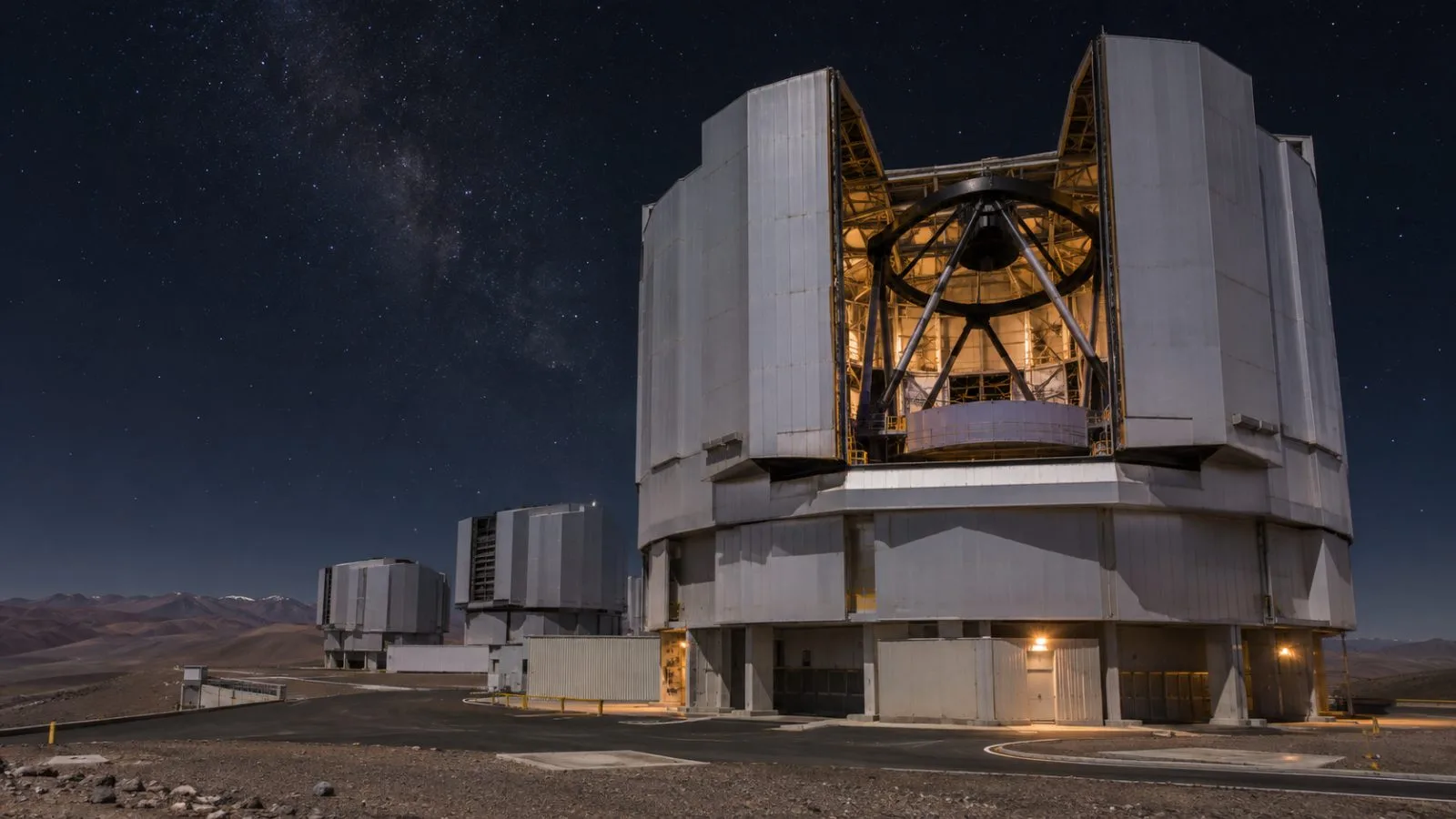
The system is about 1,600 light-years from Earth. Spectra collected with the X-shooter instrument on the European Southern Observatory’s Very Large Telescope showed four peaks across calcium and oxygen emission features. The study was published in Nature Astronomy on Oct. 26, 2026.
The researchers modeled the inner ring as extending from 0.14 to 0.34 solar radii from the white dwarf. The outer ring reaches from 0.54 to 1.93 solar radii. The emission profile showed no change over more than two years, consistent with a stable arrangement. Among 21 earlier gas-disc systems, the study says, the observed emission profiles had two peaks rather than four.
The rings also differ in composition: the outer one has less magnesium than the inner one. The authors say this contrast could reflect separate parent bodies with different histories, or material from distinct layers of a single body that underwent internal separation.
To explain how the gas could be replenished, the researchers propose that planetesimals interacting with dust generate it in separate regions. The objects have not been detected directly. Their possible sizes, from a few kilometers to Pluto-sized, are estimates based on models and depend on location and physical properties.
The paper also considers whether one disc, extended vertically and casting shadows on itself, could create a similar signal. The authors say existing theory does not provide a model for that explanation.
A white dwarf is the dense remnant left when a Sun-like star sheds its outer layers. Rocky bodies that survive can break apart around it, forming debris discs. The study says its observations add constraints to theories of how gaseous debris discs form and evolve, while challenging current explanations.